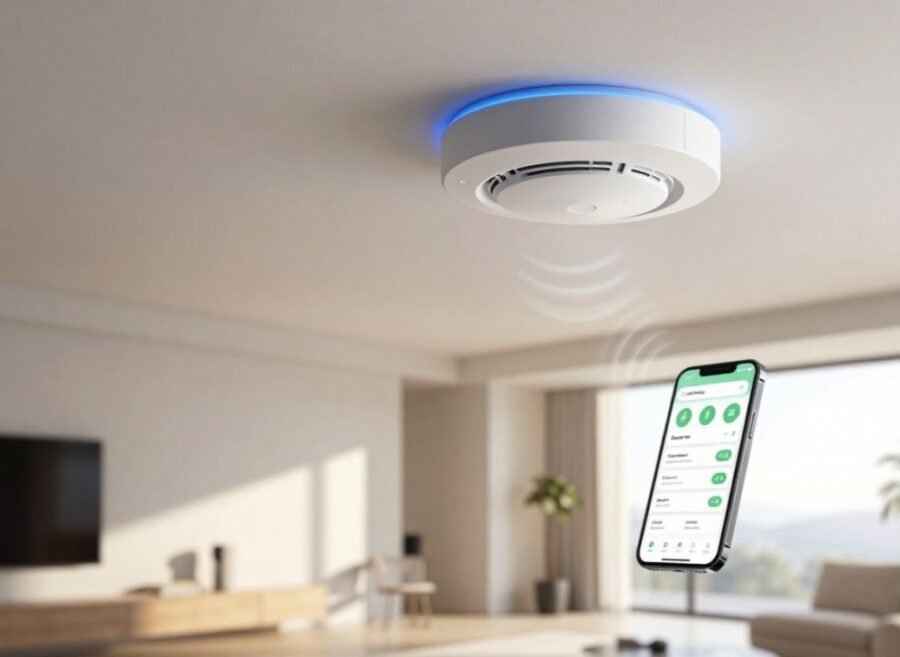

If you’re considering replacing your smoke alarms, you may be wondering whether a smart smoke detector is worth the extra cost.
The short answer is: sometimes. Smart smoke detectors don’t necessarily make the basic smoke-detection function better simply because they connect to Wi-Fi. Their main advantage is the additional information and control they can provide, such as smartphone alerts, remote status checks, interconnected alarms, and smart-home integration.
For a household where remote notifications are useful, those features can be valuable. But if your main goal is reliable local fire detection and you already have properly installed, interconnected smoke alarms, a traditional system may meet your needs without the added connected features.
Quick Answer: Are Smart Smoke Detectors Worth It?
Smart smoke detectors can be worth the extra cost if you want smartphone notifications, remote monitoring, connected-home integration, or additional status information when you’re away from home.
However, you shouldn’t assume that a smart detector automatically provides better fire protection than a properly installed traditional alarm. Basic fire-safety priorities still include having enough working alarms, placing them correctly, testing them regularly, and replacing older units.
The U.S. Fire Administration recommends smoke alarms inside every bedroom, outside each separate sleeping area, and on every level of the home, including the basement. It also recommends interconnected alarms so that when one sounds, the others sound as well.
So the better question isn’t simply “Are smart smoke detectors worth it?”
It’s:
Will the connected features solve a problem that matters in your home?
What Makes a Smoke Detector “Smart”?
A traditional smoke alarm primarily performs one job: it detects smoke and produces an audible alarm.
A smart smoke detector adds connectivity and software-based features around that core function.
Depending on the model, smart features can include:
- Smartphone notifications
- Remote alarm status
- Low-battery notifications
- App-based testing or status checks
- Wireless interconnection
- Smoke and carbon monoxide detection
- Smart-home integration
- Voice alerts
- Integration with other safety devices
For example, the current First Alert SC5 can send mobile alerts when smoke or carbon monoxide is detected and can interconnect with compatible alarms.
Kidde also sells connected smoke and CO alarms that provide mobile notifications through its app, while some models can integrate with existing hardwired interconnected alarms.
The important distinction is that “smart” describes the connected functionality; it does not by itself tell you how the alarm detects smoke.
What Are You Actually Paying Extra For?
This is one of the most important questions when deciding whether a smart smoke detector is worth the money.
You’re generally paying for features such as:
The exact features vary by model, so don’t assume every smart smoke detector offers everything in the table.
The main value of a smart detector is usually connectivity and awareness, not simply the word “smart” on the packaging.
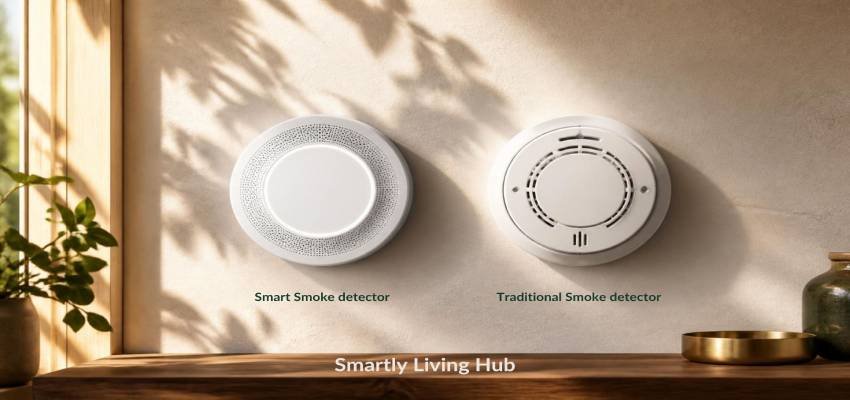
Smart vs. Traditional Smoke Detectors
A traditional smoke detector can be perfectly appropriate when your main priority is local fire detection.
A smart detector becomes more interesting when you want information beyond the sound coming from the device.
Traditional smoke detector
A traditional alarm generally makes sense when:
- You want a straightforward smoke alarm.
- You don’t need phone notifications.
- Everyone in the household can hear the alarms.
- You’re trying to keep the total replacement cost down.
- You don’t need smart-home integration.
Smart smoke detector
A smart model may make more sense when:
- You frequently leave the house empty.
- You travel often.
- You own a second home.
- You want to know about an alarm while you’re away.
- You want app-based status information.
- You already use a compatible smart-home ecosystem.
- You want smoke and CO alerts sent to your phone.
This is why there isn’t one universal answer to whether smart smoke detectors are worth it.
Smart vs. Interconnected Smoke Alarms: What's the Difference?
These two concepts are easy to confuse.
Interconnected alarms communicate with one another so that when one detects a fire, the other compatible alarms can also sound.
The U.S. Fire Administration recommends interconnected smoke alarms because they can alert occupants throughout the home when one alarm detects smoke.
A system can be interconnected without necessarily being connected to the internet.
That’s important because a homeowner who wants whole-home audible protection doesn’t necessarily need Wi-Fi-connected alarms.
Think of the choices this way:
- Traditional: local alarm
- Interconnected: multiple alarms communicate with each other
- Smart: adds connected features such as app notifications and remote status
- Smart + interconnected: combines whole-home alarm communication with connected features
The exact combination depends on the model and installation system.
Do Smart Smoke Detectors Work Without Wi-Fi?
Often, the local alarm functions can continue working when Wi-Fi is unavailable, but connected features such as smartphone notifications may stop working.
The exact behavior depends on the product.
Google’s documentation for Nest Protect provides a useful example: Nest Protect units can continue detecting smoke and carbon monoxide and communicating with one another when Wi-Fi is down, but users won’t receive app notifications or be able to view status through the app during the outage.
That means a Wi-Fi outage doesn’t automatically mean the smoke detector stops functioning.
Instead, think of the system as having two layers:
Local safety layer: detection + audible alarm + compatible local interconnection
Connected layer: internet/app communication + remote notifications + remote status
This distinction is worth checking in the manual before purchasing any smart smoke detector.
The Biggest Benefit: Smartphone Alerts
For many homeowners, smartphone alerts are the main reason to consider a smart smoke detector.
Imagine you’re:
- At work
- Shopping
- On vacation
- Staying at a hotel
- Visiting family
- Away from a second property
A traditional smoke alarm can alert people who are physically close enough to hear it.
A connected alarm can potentially send an alert to your phone as well.
Current smart products from First Alert and Kidde advertise remote smoke and CO notifications.
That doesn’t replace a local alarm. Instead, it adds another way to become aware of an emergency.
When phone alerts are especially useful
They can be particularly useful for:
- Large homes
- Frequently unoccupied homes
- Vacation properties
- Rental properties, where permitted and appropriate
- Homeowners who travel frequently
- People managing a home remotely
The value is lower if someone is almost always home and can easily hear all interconnected alarms.
What About Smart Smoke and CO Detectors?
Many connected alarms combine smoke and carbon monoxide detection in one device.
This can be convenient because one unit can monitor for two different hazards.
The CPSC recommends CO alarms on every level of the home and outside sleeping areas See CPSC carbon monoxide alarm guidance, while combination smoke/CO alarms are available to consumers.
For example, First Alert’s SC5 combines smoke and carbon monoxide detection with mobile notifications.
Kidde also offers smart combination smoke and CO alarms with app notifications.
However, don’t assume every smart smoke detector detects CO. Before choosing a model, compare the smoke detection technology, CO detection, connectivity, power source, and other important features in our smoke detector buying guide.
Are Smart Smoke Detectors Worth the Extra Cost?
The answer depends largely on how much you value the connected features.
Smart detectors can be worth the extra cost if you:
1. Leave your home empty frequently
Remote notifications provide information you wouldn’t get from a basic alarm.
2. Travel often
A notification can tell you that an alarm event occurred while you’re away.
3. Have a larger or multi-level home
Connected status information can make it easier to identify which alarm reported an issue, depending on the system.
4. Already use a compatible smart-home ecosystem
Integration can make smoke and CO alerts part of the same app or connected-home environment.
5. Want remote status information
Some smart alarms provide information about device status, connectivity, or battery condition through an app.
What About Subscriptions?
Don’t assume that every smart smoke detector requires a monthly subscription.
Subscription requirements vary by product and feature.
Some smart alarms provide app notifications as part of the device’s connected functionality, while other ecosystems may offer optional professional monitoring or additional services.
For example, Kidde’s Ring-compatible smart alarm advertises real-time Ring notifications and also offers an optional subscription for 24/7 smoke and CO monitoring and emergency response.
Before buying, check:
- Are basic smartphone alerts included?
- Is a subscription required for remote notifications?
- Is professional monitoring optional?
- Does the device require a hub?
- What features continue working without the subscription?
This prevents an inexpensive-looking device from becoming more expensive than expected over time.
What Should You Prioritize When Buying a Smart Smoke Detector?
Don’t start with the app.
Start with the alarm itself.
1. Appropriate certification
Look for a product that meets the applicable safety and certification requirements for your market.
UL 217 is the key U.S. smoke-alarm standard, and its 10th edition introduced additional performance requirements.
2. Correct placement
Even an advanced connected alarm is less useful if it isn’t installed where it is needed.
USFA recommends alarms inside bedrooms, outside sleeping areas, and on every level of the home.
3. Interconnection
If you want every alarm to sound when one detects smoke, verify that the models support compatible interconnection.
Don’t assume two alarms can communicate simply because both are wireless.
4. Smoke and CO detection
If you want both functions in one device, verify that the model is actually a combination smoke/CO alarm.
5. Phone notifications
Check whether notifications are included and what network or account requirements apply.
6. Power source
Determine whether the model is:
- Battery-powered
- Hardwired
- Hardwired with battery backup
- Designed for another specific power configuration
If you’re replacing hardwired alarms, don’t assume a battery model is a direct substitute. Follow the manufacturer’s installation requirements and local electrical requirements.
7. Maintenance
Check how the manufacturer expects you to test, clean, maintain, and replace the alarm.
Smart Features Should Come After Basic Fire Safety
The most important point in this entire article is simple:
A smart smoke detector is an upgrade to a fire-safety system, not a substitute for having the basics right.
USFA recommends testing smoke alarms monthly and replacing them 10 years from the manufacture date.
CPSC similarly recommends working smoke alarms on every level, inside bedrooms, and outside sleeping areas, along with replacing alarms that are more than 10 years old.
If you’re replacing old alarms, start by fixing coverage and maintenance.
Then decide whether connected features are worth adding.
If you need help with testing, see our guide on how to test smoke detectors.
What Happened to Google Nest Protect?
Nest Protect is an important example when researching smart smoke detectors, but its current availability needs to be understood.
Google currently says Nest Protect is no longer available for sale, although existing units remain supported. Google points U.S. customers toward a compatible third-party partner device, the First Alert SC5.
That matters because older smart-smoke-detector articles may still present Nest Protect as if it were a current product that consumers can simply purchase new.
If you’re researching a smart smoke detector today, verify that the product is currently sold and supported before building your entire home around its ecosystem.
Who Should Consider a Smart Smoke Detector?
A smart smoke detector may be a reasonable choice if you want:
- Remote awareness: You want smoke or CO alerts when you’re away.
- Smart-home integration: You already use compatible connected-home products.
- App-based information: You want to check device status from your phone.
- Whole-home connectivity: You want compatible alarms to communicate with one another.
- Smoke + CO functionality: You want both detection functions in one device.
The value comes primarily from those additional capabilities.
Who May Be Better Served by a Traditional Alarm?
A traditional or non-smart interconnected alarm may be sufficient if:
- Your priority is basic fire detection.
- Your home already has adequate alarm coverage.
- You don’t need smartphone notifications.
- You don’t travel frequently.
- You want to minimize the replacement cost.
- You don’t want to maintain another connected-home device.
The absence of Wi-Fi doesn’t make a smoke alarm ineffective.
For many homes, proper placement, working batteries/power, regular testing, and compatible interconnection are more fundamental than app connectivity.
A Simple Way to Decide
Before purchasing, ask these five questions:
1. Do I need to know about an alarm when I'm away?
If yes, smart alerts may provide meaningful value.
2. Do I already have interconnected alarms?
If yes, determine whether you actually need additional smart functionality.
3. Am I replacing one alarm or the entire home?
Calculate the total cost rather than comparing the price of a single device.
4. Do I need smoke detection, CO detection, or both?
Choose the appropriate alarm type rather than assuming “smart” covers both.
5. What happens if Wi-Fi or the manufacturer's service is unavailable?
Read the product documentation and determine which functions continue locally.
These questions will usually give you a better answer than simply asking whether smart smoke detectors are “better.”
Final Takeaway: Are Smart Smoke Detectors Worth It?
Smart smoke detectors can be worth the extra money when their connected features solve a real problem for your household.
The strongest reason to pay more is usually remote awareness: getting smoke or CO information on your phone when you’re away from home. Smart-home integration, remote status information, and connected alarm systems can provide additional convenience.
But smart connectivity shouldn’t be confused with superior basic fire protection.
If you don’t need remote notifications, a properly installed and maintained traditional or interconnected smoke-alarm system may provide what you’re looking for without paying extra for connected features.
The best approach is to prioritize adequate alarm coverage, appropriate placement, compatible interconnection, regular testing, and timely replacement first. Then decide whether smartphone alerts and other smart features justify the additional cost for your particular home.
FAQs
Are smart smoke detectors safer than regular smoke detectors?
Not automatically. A smart detector adds connected features such as smartphone notifications and remote status information, but “smart” does not by itself mean the detector has superior smoke-detection performance. Sensor technology, certification, placement, maintenance, and interconnection also matter.
Do smart smoke detectors work without Wi-Fi?
The local alarm may continue to detect smoke and sound an alarm when Wi-Fi is unavailable, depending on the model. However, remote app notifications and status information may stop working. Always check the manufacturer’s documentation for the specific detector.
Do smart smoke detectors require a subscription?
Not necessarily. Some models provide smartphone alerts without requiring a subscription, while others offer optional professional monitoring or additional subscription services. Check which features are included before purchasing.
Are interconnected smoke alarms better than smart smoke alarms?
They solve different problems. Interconnected alarms allow multiple compatible alarms to sound together, while smart alarms can add connected features such as phone notifications. Some products provide both.
Are smart smoke detectors worth it for a small home?
It depends on what you need. If a small home already has adequate, working interconnected alarms and you don’t need remote notifications, the additional smart features may provide limited value. If you frequently leave the home unattended, smartphone alerts may be more useful.