
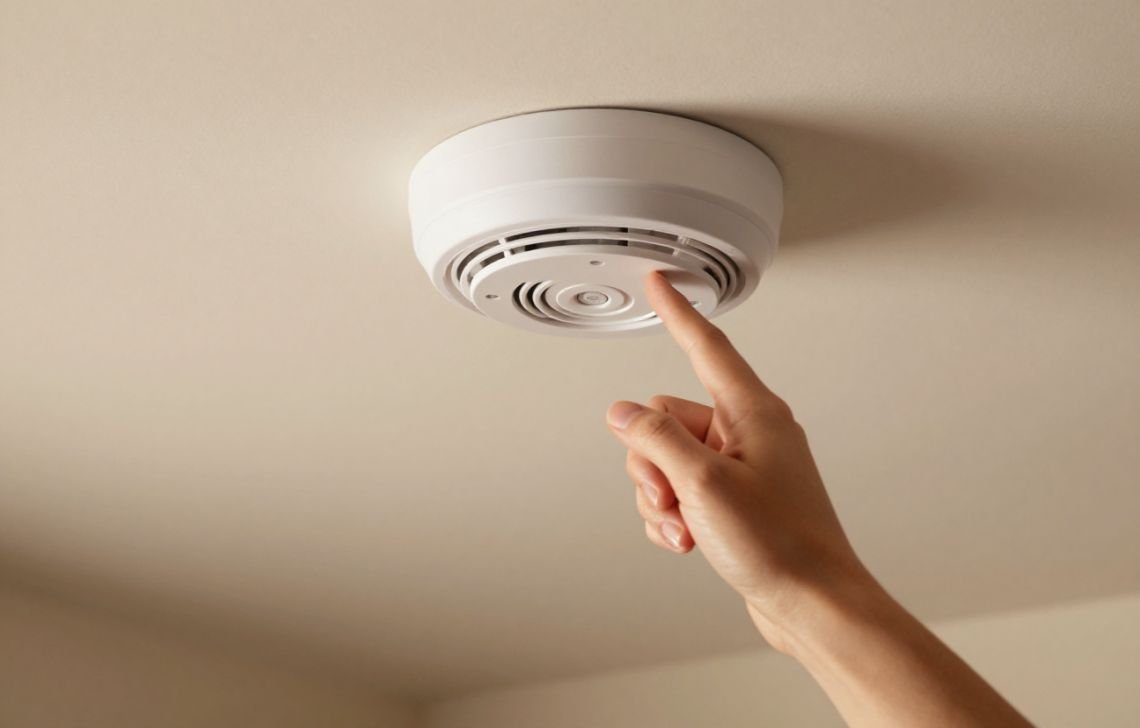
To test a smoke detector, press and hold the “Test” button on the face or side of the device until the siren sounds. This procedure should be performed at least once a month to ensure the unit’s power supply and internal circuitry are fully operational.
As a home’s first line of defense, a working smoke alarm reduces the risk of fire-related fatalities by nearly 50%. Because every second counts during a fire emergency, regular maintenance is the only way to ensure your family has the early warning necessary to escape. This guide provides professional steps for testing, maintenance schedules, and replacement guidelines to maximize your home safety.
Why Testing Smoke Detectors Is Important
The Survival Gap In a residential fire, the “survival gap” is the window of time between the start of a fire and the moment conditions become unsurvivable. Smoke detectors are designed to bridge this gap by providing an early warning. Regular testing confirms that the device will perform when every second matters.
Statistical Weight According to the Fire Marshal, having functional smoke detectors in the home reduces the risk of dying in a fire by 50%. A detector that has not been tested may have a dead battery or a faulty sensor, providing a dangerous false sense of security.
Reliability and Certification Manual testing is the only way to verify that the audible siren and the internal electronics are communicating correctly. To ensure maximum reliability, always install detectors that are listed by a qualified testing laboratory, such as UL (Underwriters Laboratories) or Intertek (ETL).
How Often Should You Test Smoke Detectors?
To maintain a high standard of fire safety, you must adhere to a strict maintenance schedule. Fire safety professionals and manufacturers recommend the following milestones:
- Monthly: Perform a button test to verify the siren and power supply.
- Annually: Conduct a deep cleaning (vacuuming or dusting) and replace the batteries.
- Decadal (10 Years): Perform a full unit replacement, as sensors degrade over time.
Pro Tip: Use the industry-standard slogan, “Change your clocks, change your batteries!” as a reminder to swap out power cells during daylight saving time transitions.
What You'll Need Before Testing
Gather these items to ensure a thorough and safe inspection:
- A sturdy step stool or ladder: To reach ceiling-mounted units safely.
- Fresh batteries: Usually 9V or AA (ensure they are new and never “borrowed” from other household electronics).
- Vacuum with a soft brush attachment: For removing dust and debris.
A helper: To stand in distant bedrooms and verify the alarm is audible throughout the home.
How to Test a Smoke Detector Step by Step
1. Locate the Test Button and Notify Occupants
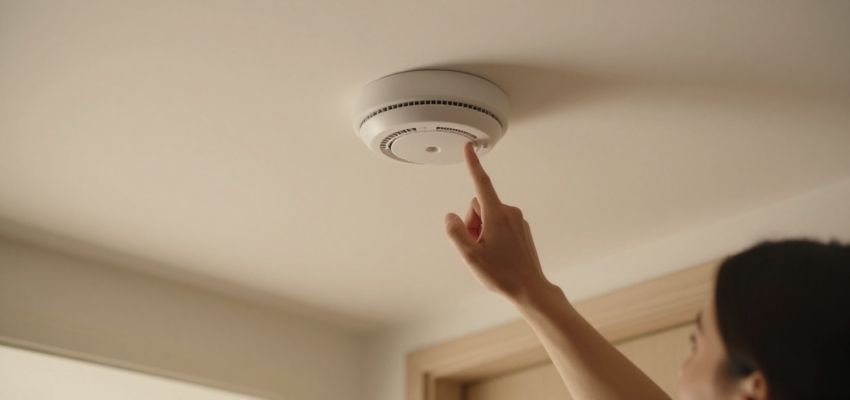
Find the test button on the unit’s exterior. Before pressing it, notify everyone in the home and any monitoring services (if your system is linked to a security company) to avoid false emergency dispatches.
2. Press and Hold the Test Button
Press and hold the button for several seconds. You should hear a loud, piercing siren immediately. If the sound is weak or nonexistent, the battery may be failing or the unit’s internal components may have reached their end of life.
3. Conduct an Auditory Range Check
Have your helper stand in the farthest bedroom with the door closed. It is critical that every person in the home can recognize the sound and hear it clearly from their sleeping area.
4. Verify Interconnected Alarms
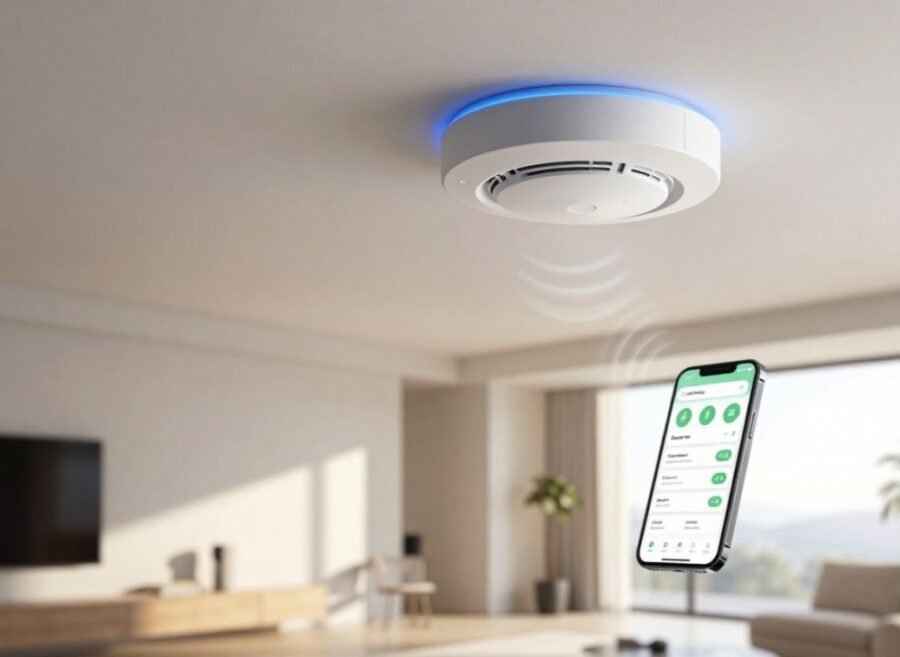
In modern fire safety, interconnection is a best practice. If your units are interconnected, triggering the test on one device should cause all alarms in the house to sound. Ensure your helper confirms that units on different floors are activating simultaneously.
Can You Test a Smoke Detector With Real Smoke?
For standard home maintenance, the built-in test button is the most reliable method. You should never use matches, candles, or open flames to test a detector; this poses a significant fire risk and can leave a waxy residue on the sensor that hinders its performance. While professional-grade “canned smoke” (aerosol) is available for testing sensor sensitivity, the Fire Marshal emphasizes the manual test button as the primary tool for homeowners.
Troubleshooting Your Smoke Alarm
Problem | Probable Cause | Immediate Action |
No sound during test | Dead battery or disconnected terminals | Replace battery; check for corrosion on contacts. |
Chirping sound | Low battery power or expired unit | Install a fresh battery; check manufacture date. |
False alarms | Drafts or proximity to steam/cooking | Relocate away from vents, bathrooms, or kitchens. |
Intermittent alerts | Dust or debris in sensing chamber | Vacuum the unit with a soft brush attachment. |
Expanded Troubleshooting Tips
- If the alarm still fails after a battery change: Check the battery terminals for dust or corrosion. If the unit still fails to sound, it is defective and must be replaced immediately.
- Addressing Persistent Chirping: If a unit chirps despite having a new battery, it may be a “fault” signal indicating the sensor is clogged or the unit has exceeded its 10-year lifespan.
How to Maintain Smoke Detectors for Long-Term Performance
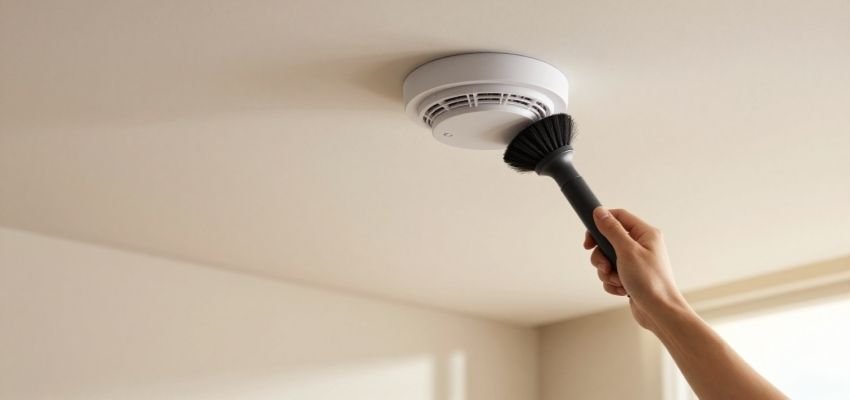
Cleaning Routine Dust and cobwebs can cause false alarms or prevent smoke from reaching the sensor. At least annually, use a vacuum with a soft brush attachment to gently clean the exterior and the vents of the unit.
Environmental Prohibitions
- Do Not Paint: Never paint your smoke detector. Paint can clog the vents and prevent the unit from detecting smoke particles.
- Avoid Drafts: Do not install units near windows, outside doors, or HVAC ducts. Moving air can blow smoke away from the sensor, delaying the alarm.
For more information on selecting the right hardware for your home, read our Smoke Detector Buying Guide.
When Should You Replace a Smoke Detector?
The 10-Year Rule Smoke detectors are not lifetime devices. The sensors lose sensitivity and reliability over time. Regardless of the battery type or how well it has been cleaned, you must replace the entire unit every 10 years.
Checking the Manufacturing Date To find the age of your device, remove it from its mounting bracket and look at the back. Locate the “Date of Manufacture” label. If the date is more than 10 years old, or if no date is present, the unit is obsolete and requires immediate replacement.
Smoke Detector Safety Best Practices
Strategic Placement and Logic
Because smoke rises, placement is the most critical factor in early detection. Follow these requirements:
- Level Coverage: Install a detector on every level of the home, including the basement.
- Sleeping Areas: Place detectors inside every bedroom and in the hallways immediately outside sleeping areas.
- Ceiling Mounting: Install at least 4 inches away from the nearest wall to avoid “dead air” pockets.
- Wall Mounting: If mounting on a wall, the unit should be placed between 4 and 12 inches from the ceiling.
Response Training
A functional alarm is only effective if your family is prepared. Ensure everyone recognizes the specific sound of your alarm and understands they must react immediately to your escape plan.
Final Thoughts
Fire safety is a continuous commitment. By testing your smoke detectors monthly, cleaning them annually, and replacing units every decade, you significantly increase your family’s chances of surviving a residential fire.
Take a moment right now to test your alarms and set a recurring reminder on your calendar for the first of every month. For the next step in protecting your household, learn [How to Create a Home Fire Escape Plan].
FAQs
How do I know if my smoke detector is working?
The only way to confirm a detector is operational is through a successful monthly button test. If the siren sounds loud and clear, the device is functional.
Should all smoke detectors go off during testing?
Only if they are part of an interconnected system. If your detectors are standalone battery-operated units, you must test each one individually.
Why is my smoke detector chirping after testing?
This usually indicates a low battery or that the battery was not seated correctly after the check. Ensure the battery is pushed firmly into the terminals.
How long do smoke detector batteries last?
While some lithium batteries last 10 years, standard batteries should be replaced annually. Always follow the “Change your clocks, change your batteries” rule.