
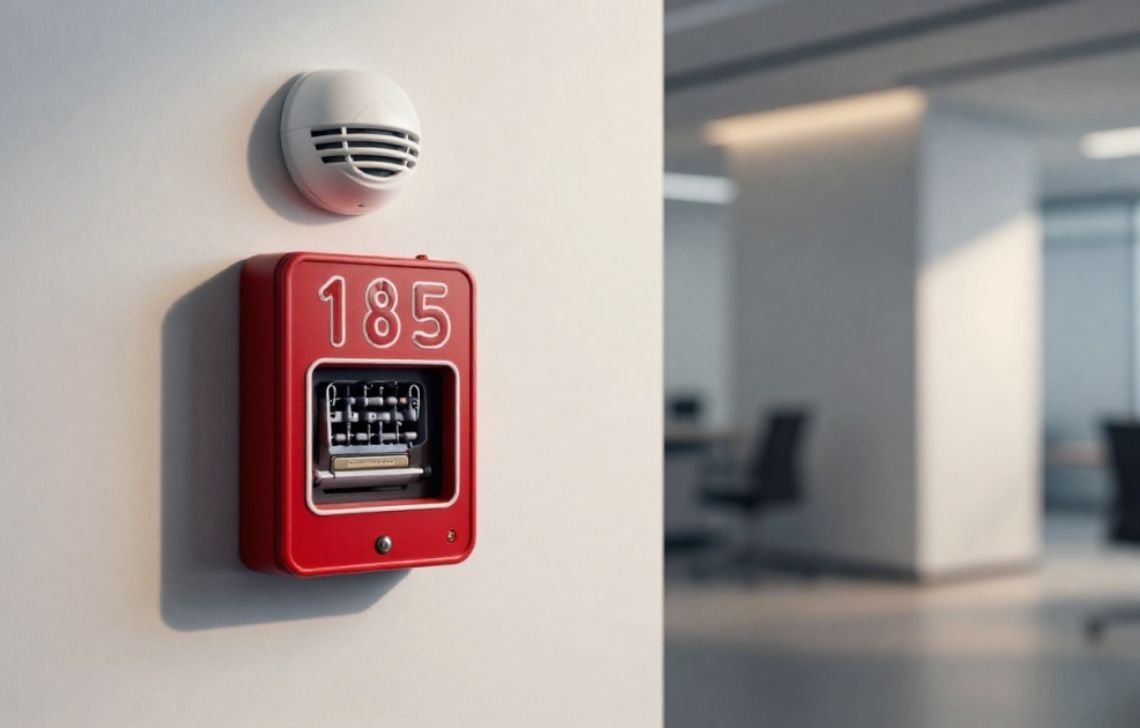
A fire alarm system (also known as a Brandmeldeanlage or BMA) is an integrated network of safety devices designed to detect smoke, heat, or fire at the earliest stages, provide immediate warning to occupants, and automatically initiate life-saving emergency protocols. As a cornerstone of preventive fire protection, this system acts as the central intelligence of a building’s safety infrastructure, ensuring that fire departments are notified the moment a hazard is identified.
Before selecting a system for your facility, ensure you read our comprehensive [Smart Fire Safety Buying Guide] to navigate technical requirements and compare the latest hardware.
What Is a Fire Alarm System?
In my experience as a fire safety consultant, I find that many property owners mistake simple smoke detectors for a full fire alarm system. A true BMA is a sophisticated network composed of automatic and manual detectors all linked to a central control unit. It is not merely a collection of sensors; it is a holistic solution for building monitoring.
The primary purposes of an integrated fire alarm system include:
- Early Detection: Identifying invisible particles of combustion, heat, or flames before a fire escalates.
- Rapid Evacuation: Providing building-wide notification to ensure occupants have the maximum time to exit safely.
- Damage Mitigation: Triggering automated fire control measures to contain the blaze and protect the building’s structural integrity.
Why Are Fire Alarm Systems Important?
For commercial and industrial operators in regions like Germany and the Netherlands, a fire alarm system is not just a safety recommendation—it is often a legal mandate. Their importance is defined by:
- Life Safety: Providing the earliest possible warning to prevent casualties.
- Legal Compliance: Adhering to strict building permits and fire safety regulations, specifically regarding the DIN 14675 and VDE 0833 standards.
- Optimized Response Times: By automatically alerting local fire departments, these systems eliminate the “human delay” during an emergency.
- Risk Management: Detecting hazards in unoccupied areas of a building (such as server rooms or warehouses) where manual detection is impossible.
How Does a Fire Alarm System Work?
A fire alarm system operates through a sequential, automated workflow that prioritizes speed and reliability:
- Detection: Sensors (smoke, heat, or flame) or a human activating a manual call point identify a hazard.
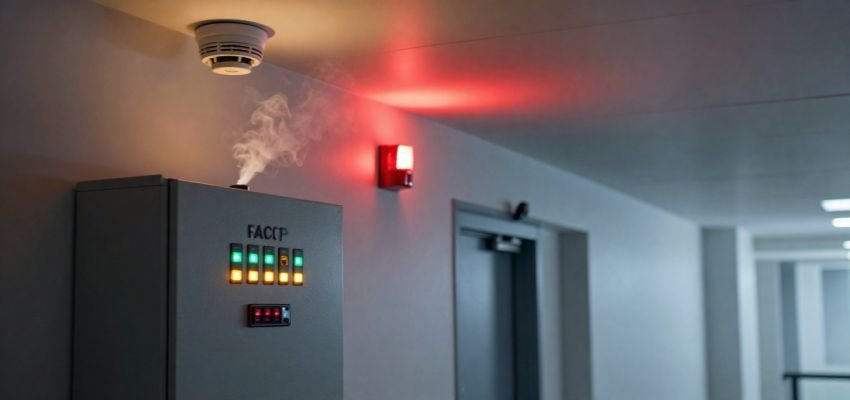
- Signal Processing: The device sends a signal to the Fire Alarm Control Panel (FACP), which determines the location and nature of the alarm.
- Alerting: The FACP activates internal sounders and strobes and simultaneously forwards an alarm to the fire department via a secure transmission path.
- Automatic Intervention: The system triggers pre-programmed safety systems, such as closing fire doors or activating smoke extraction.
Main Components of a Fire Alarm System
Fire Alarm Control Panel (FACP)
The FACP is the “brain” of the system. It monitors all connected devices, processes incoming signals, and executes the output logic. Modern FACPs must also be designed with data security in mind; as these systems become more integrated, ensuring the integrity of the signal path against interference is a legal and technical necessity.
Smoke, Heat, and Flame Detectors
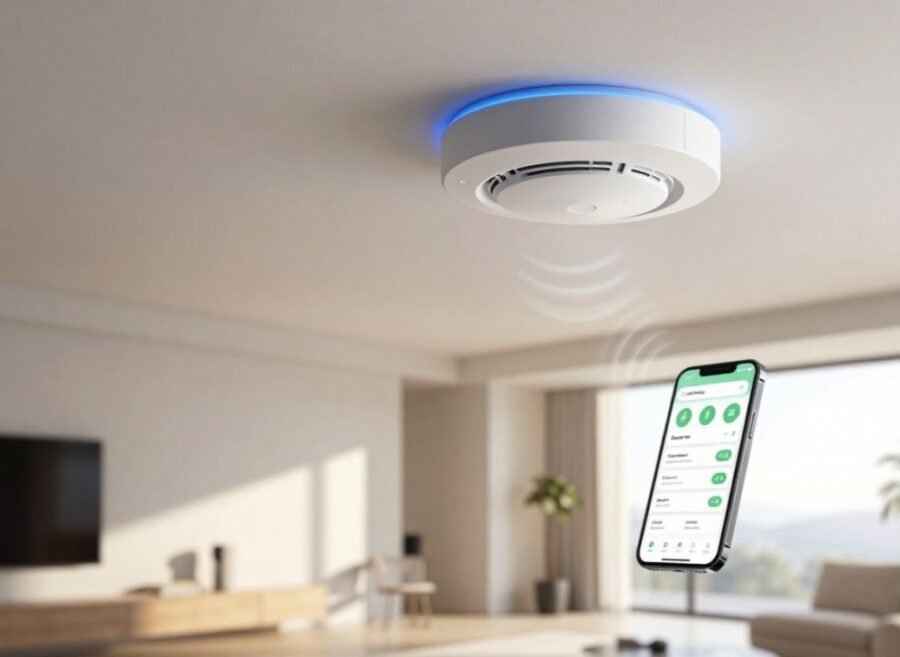
These are the “senses” of the system. Smoke detectors identify particles of combustion, heat detectors respond to specific temperature thresholds or rates of rise, and flame detectors sense light signatures. In high-stakes environments, a combination of these is often required.
Manual Call Points (Pull Stations)
Identified by their distinctive red housing, these allow occupants to manually trigger the alarm system. In my professional opinion, these are the most critical backup for any automatic system, as humans often detect odors or unusual conditions before sensors reach their threshold.
Alarm Sounders and Strobes
Notification appliances ensure the alarm is perceived by everyone. Sounders provide audible alerts, while strobes provide visual signaling for loud environments or to assist those with hearing impairments.
Communication and Monitoring Devices
This component is what separates a professional system from a residential one. It ensures the automatic forwarding of alarm signals to a permanently manned receiving center or the local fire department.
Backup Power Supply
Reliability is non-negotiable. Fire alarm systems include dedicated battery backups to ensure that even if the building’s main power fails—or is cut by the fire itself—the system remains fully operational for a regulated duration.
Types of Fire Alarm Systems
- Conventional Systems: These divide a building into zones. While cost-effective for smaller structures, they only identify the general area of a fire, not the specific room.
- Addressable Systems: Every detector has a unique “address.” This allows the FACP to pinpoint the exact location of a fire, which is essential for large-scale industrial or commercial complexes.
- Wireless Systems: Utilizing secure radio frequencies, these are ideal for historic buildings or locations where extensive cabling is structurally impossible.
- Hybrid Systems: These offer the ultimate flexibility by combining wired and wireless components to cover complex architectural layouts.
What Happens When a Fire Alarm Is Triggered?
When a BMA is activated, a sophisticated “emergency workflow” begins to manage the crisis:
- Verification: The system confirms the signal to prevent false alarms where possible.
- Notification: Building-wide alarms activate to facilitate evacuation.
- Safety Precautions: The system activates “Fire Controls.” This includes opening smoke vents (SHEV systems) to keep escape routes clear and closing fire barriers to compartmentalize the fire.
- External Alerting: The system automatically notifies the fire department with precise location data, ensuring help is on the way before the first 112 call is even placed.
Where Are Fire Alarm Systems Used?
The requirement for a BMA usually stems from the building permit or a specific Fire Protection Concept (Brandschutzkonzept). They are standard in:
- Industrial plants and manufacturing facilities.
- Hotels, restaurants, and gastronomic enterprises.
- Educational institutions (schools/universities).
- Hospitals and care facilities.
- Public buildings and assembly halls.
Benefits of Installing a Fire Alarm System
- ✓ Enhanced Life Safety: Maximum warning time for occupants.
- ✓ Regulatory Compliance: Meets the rigorous DIN 14675 and DIN VDE 0833 standards required in Germany and the Netherlands.
- ✓ Business Continuity: Rapid detection limits property damage, allowing for faster recovery and reduced insurance premiums.
- ✓ Professional Integration: Connects seamlessly with other building management systems for total control.
Fire Alarm System Inspection and Maintenance
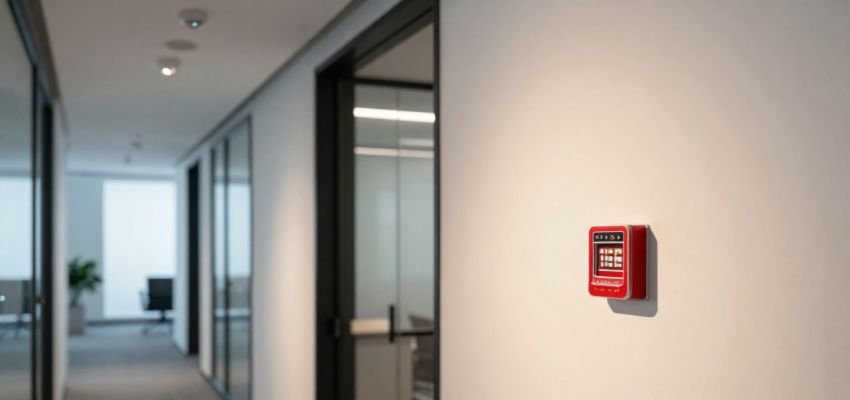
Proper maintenance is more than a recommendation; it is a legal obligation. Systems must undergo routine testing of sensors, control panels, and backup power to ensure they never fail when they are needed most.
Pro-Tip: In Germany and the Netherlands, professional maintenance is a requirement under DIN VDE 0833-1. Failing to document these checks can lead to the loss of insurance coverage and personal liability for the operator.
Ensure your facility remains compliant by booking our [Professional Fire Safety Maintenance Services].
Common Fire Alarm System Problems to Avoid
- False Alarms: Often the result of poor detector choice (e.g., placing a smoke detector near a kitchen).
- Detector Contamination: Dust and construction debris can cause malfunctions or “blind” the sensors.
- Power Management: Neglecting battery replacement cycles is a common failure point I see in the field.
- Uncertified Changes: Never allow non-professionals to modify your system. This voids certifications and often breaches building permit requirements.
How to Choose the Right Fire Alarm System
Selecting a system requires more than just picking hardware; it requires a strategy.
- Start with the Fire Protection Concept: This is the blueprint for your legal requirements.
- Assess Building Complexity: Large or complex layouts should always utilize addressable systems.
- Plan for Scalability: Ensure your FACP can handle future building expansions.
- Consult Experts: In the DACH and Benelux regions, consulting, planning, and documentation must be handled by certified specialists to ensure the system is accepted by local authorities.
Conclusion
A fire alarm system is an indispensable tool for the modern protection of life and property. By integrating early detection, automated notification, and mechanical fire controls, it provides a safety net that no individual device can offer. For total peace of mind and strict legal compliance in Germany and the Netherlands, professional planning, installation, and regular maintenance are not just options—they are essential requirements for any commercial or industrial facility.
FAQs
Why can’t I just use residential smoke detectors in my business?
Residential detectors only provide local sound. Commercial buildings require integrated systems that alert the entire facility simultaneously, trigger smoke extraction systems, and automatically notify the fire department to meet legal and insurance requirements.
What is the specific role of the FACP?
The Fire Alarm Control Panel acts as the central processor. It monitors the health of every sensor, manages the power supply, and executes the safety protocols (like closing fire doors) that prevent a fire from becoming a catastrophe.
How do modern systems reduce false alarms?
Advanced systems use multi-sensor technology (detecting both heat and smoke) and alarm verification delays to distinguish between real fire signatures and common interference like steam or dust.
What are DIN 14675 and VDE 0833?
These are the primary technical standards in Germany and many European markets that dictate how a fire alarm system must be planned, installed, operated, and maintained to ensure total reliability.
How often do I need professional maintenance?
Per DIN VDE 0833-1, systems typically require quarterly inspections and annual maintenance by certified technicians to remain legally compliant and functional.