
As a home technology consultant, I’ve seen the “choice paralysis” firsthand. You want “squeaky clean floors” without the weekend-ruining manual labor, but the 2025/2026 market is a minefield of technical specs. Deciding between a robot vacuum vs robot vacuum mop is no longer just about suction; it’s about choosing between AI-driven obstacle avoidance, self-cleaning water distillation stations, and “toe-destroying” threshold climbing capabilities.
The evolution of floorcare has reached a tipping point. Flagship models now promise a truly autonomous experience, but “hands-free” means something different to a parent with a golden retriever than it does to a minimalist apartment dweller. My goal is to guide you through the hype and data to find the machine that actually reclaims your time.
At-a-Glance: Robot Vacuum vs Robot Vacuum Mop Comparison Matrix
Feature | Robot Vacuum | Robot Vacuum Mop (Combo) | Manual Vacuum Mop |
Best for | Deep Carpet Cleaning | Mixed Flooring (Hybrid) | Heavy Spills & Hard Floors |
Automation Level | High (Set & Forget) | High (Auto-Empty/Refill) | Manual (Human-Operated) |
Wet Mess Capability | None | Maintenance Mopping | Heavy Liquid/Dry Messes |
Price Range (USD) | $250 – $900 | $600 – $1,800 | $100 – $600 |
Maintenance | Low (Dustbin/Filters) | High (Water Management) | Moderate (Manual Tank Cleaning) |
Understanding the Core Differences
Choosing the right tool starts with understanding where they live in your home’s ecosystem.
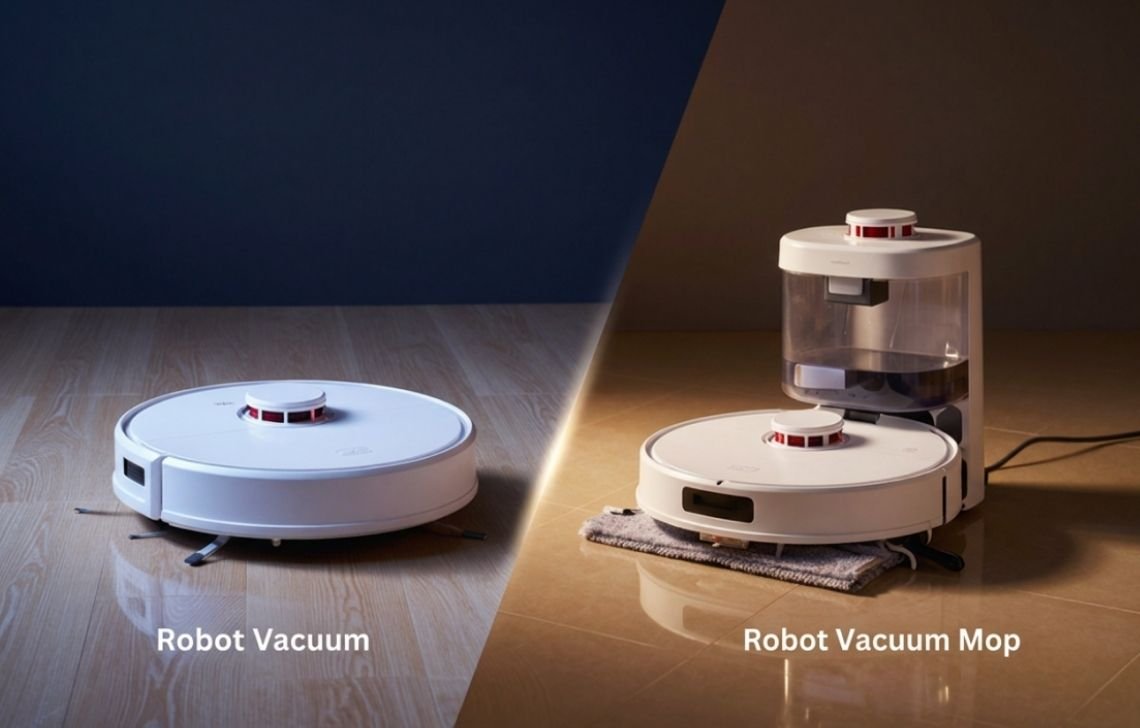
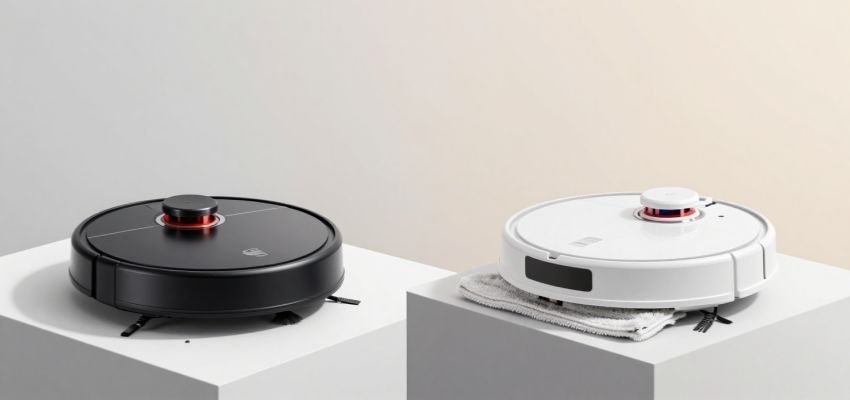
- The Robot Vacuum: Think of the classic iRobot Roomba series. These are dry debris specialists. They use LIDAR or the new StarSight navigation systems to map your home. Their biggest asset is a slim profile—the Roborock Saros 10R sits at just 78.3mm tall, while the ECOVACS X8 OMNI is 97.3mm. This allows them to reach dust bunnies under low furniture that a manual mop will never touch.
- The Robot Vacuum Mop (Combo): These are the modern “Swiss Army Knives.” Flagships like the Dreame X50 Ultra feature “mop lifting” to protect your carpets and extending pads to scrub edges. They handle the daily maintenance of both surface types in one pass.
- The Manual Vacuum Mop: These are upright, human-powered machines like the Bissell CrossWave or Tineco FLOOR ONE S5. They are the heavy hitters for “wet and dry” disasters—think spilled cereal or a dropped raw egg—where you need immediate, high-power intervention rather than a scheduled maintenance run.
Technical Deep Dive: Performance & Innovation
The latest benchmarks from The Hook Up reveal that we are in an era of raw power.
Performance Metrics
- Suction Power: We’ve jumped from the eufy S1 Pro’s 8,000Pa to a staggering 20,000Pa in the Dreame X50 Ultra. This is the difference between surface cleaning and actually pulling fine dust out of high-pile carpet fibers.
- Threshold Climbing: If you have transitions that used to stop a robot in its tracks, pay attention. While 20mm was the old standard, the Dreame X50 Ultra uses ProLeap wheels to vault over barriers up to 60mm. We call these “toe-destroyers” because if you can trip on it, the Dreame can likely climb it.
- The “Expert Warning” on Navigation: The Roborock Saros 10R includes a “Raise Body” feature for carpets. Disable this immediately. In testing, enabling this feature dropped carpet pickup scores from 72% to a record-low 9%.
Innovative Features The 3i S10 Ultra is a marvel of automation, featuring water distillation that captures moisture from the humidity in your air to fill its own tank. Just be prepared for a $8/month bump in your electric bill if you run this system nightly; it consumes 1.343 kWh compared to the 0.2 kWh of standard docks from Roborock or Dreame.
Maintenance: The "Hands-Off" Reality Check
“Hands-free” is a marketing term, not a literal truth. To keep these robots running, you have to manage their upkeep.
- Filter Efficiency: Not all auto-empty stations are equal. The Narwal Freo Z Ultra is the current champion of filter health, leaving only 0.6g of dust trapped in the fine filter after use. In contrast, the eufy S1 Pro can trap up to 8g, requiring much more frequent manual cleaning to prevent suction loss.
- Hair Management: If you deal with pet hair, look for specialized tech. Roborock’s DuoDivide and Dreame’s DuoBrush (a dual tapered roller system) are designed to funnel hair into the suction port rather than letting it mat around the axles.
Mopping Tech: The eufy S1 Pro uses a roller-style mop that is in a completely different league for hard floors compared to spinning pads. However, rollers require you to clean an onboard debris filter every 1-2 months, whereas spinning pads can simply be tossed in the laundry.
Use Cases: Which One Should You Buy?
- The Busy Parent/Pet Owner: You need raw cleaning power. The ECOVACS X8 Pro OMNI is your champion here, delivering the highest recorded cleaning scores for mixed debris and hair. Pair it with a Tineco manual mop for those “spilled juice box” emergencies.
- The Minimalist Apartment Dweller: Focus on clearance. The Roborock Saros 10R is the best fit for tight spaces. Its slim 78.3mm height and StarSight navigation ensure it won’t get wedged under a designer sofa.
- The Smart Home Enthusiast: If you want the “set and forget” dream, the 3i S10 Ultra (for its water reclamation) or the Dreame X50 Ultra (for its superior AI object labeling and threshold leaping) are the gold standards.
Pros & Cons: Category Breakdown
Robot Vacuums
- Pros: Slimmer profiles; superior carpet deep-cleaning; better value for homes with mostly rugs.
- Cons: Useless against liquid spills; often requires a second device for mopping.
Robot Vacuum Mops (Combos)
- Pros: Complete “one-and-done” floorcare; autonomous edge cleaning; advanced AI.
- Cons: Higher price point; dirty water tanks can develop odors if neglected; potential to dampen carpets if mop-lift height is low.
The 2025/2026 Verdict
If your home is a mix of carpet and hard floors, the Robot Vacuum Mop Combo has finally matured enough to be your primary cleaner.
The Roborock Saros 10R is my Best Overall recommendation. It was the only unit to score a perfect 5/5 on the “Hot Sauce” edge and corner test, proving its mechanical arm and extending pads actually work in real-world nooks. However, if you have a massive fleet of older bots, the iRobot Trade-In Program is an excellent way to upgrade to a Roomba Combo while maintaining the reliability and privacy protections iRobot is known for.
Final Call-to-Action
Ready to reclaim your weekends? If you’re currently using an older Roomba j7 or s9, check out the iRobot Trade-In Program for credit toward a new automated dream team. For those retiring a non-functional bot, please consult the EPA Electronics Recycling Guide to ensure your old tech doesn’t end up in a landfill.
FAQs
How many years will a robot vacuum last?
Expect a lifespan of approximately 5 years. This depends heavily on whether you replace the filters and brushes every 6-12 months and keep the sensors wiped down.
Can a robot vacuum mop replace a regular mop?
For daily maintenance, yes. For deep-cleaning grout or sanitizing after a flu outbreak, a manual mop or a high-end manual vacuum mop (like the Bissell CrossWave) is still necessary.
Do robot vacuums get stuck on high-pile carpets?
Modern flagships like the Dreame X50 Ultra use high-clearance wheels and mop-lifting (or pad detaching) to navigate high-pile. Warning: Ensure you disable the “Raise Body” feature on Roborock models if you notice poor pickup.
What are the downsides of a vacuum-mop combo?
You must manage the dirty water tank. If you leave dirty mop-wash water for a week, it will smell. Look for docks with “Hot Air Drying” to prevent mildew.