
For nearly a decade, the “robot vacuum and mop combo” was the industry’s greatest compromise. As a senior reviewer who has lived with over 30 of these machines in my own apartment, I remember the early 2020s models vividly. They were essentially vacuums with a damp rag Velcroed to the bottom—a “light dusting” tool that often did more to smear mud and coffee than actually remove it. The “problem” was fundamental: traditional mopping requires downward pressure and constant clean water, two things early robots lacked.
In 2026, we have finally crossed the threshold into the era of true automated floor care. We are no longer looking at passive wipers; we are looking at sophisticated maintenance robots. The shift from “dusting” to “true deep cleaning” is driven by three major engineering breakthroughs: active scrubbing (spinning or rolling mechanisms), thermal sanitation (water heated up to 212°F), and autonomous dock maintenance.
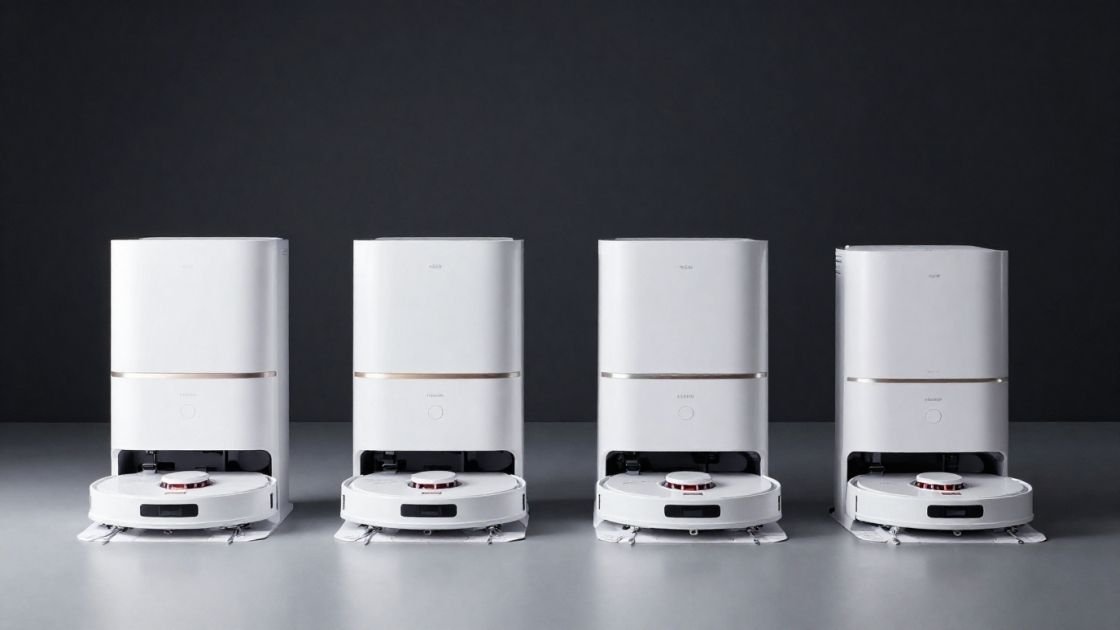
Today’s smart robot vacuum and mop systems are designed to replace the Swiffer and the mop bucket entirely for routine care. Flagship models now incorporate all in one robot vacuum cleaner features that handle the most repulsive parts of the job—emptying dust, washing dirty pads with scalding water to kill bacteria, and drying them with hot air to prevent that dreaded “musty basement” smell. This guide is designed to cut through the marketing jargon and identify which robot vacuum and mop combos actually deliver on the promise of barefoot-ready floors.
AT A GLANCE: TOP RECOMMENDATIONS COMPARISON TABLE
Product Name | Best For | Suction (Pa) | Navigation Tech | Mop Lift Height | Key Feature |
Dreame X60 Max Ultra | Best Overall 2026 | 35,000 Pa | Proactive AI Vision | 0.41 in | 3.13" Ultra-Slim Design |
Samsung Jet Bot VR7MD96514G | Mopping Performance | Not Specified | LiDAR | N/A | CR Top-Rated for Stains |
Roborock Qrevo Curv 2 Flow | Liquid Spills | 20,000 Pa | LiDAR + AI | Lifting Chassis | Self-Rinsing Roller Mop |
Dreame L40 Ultra | Speed & Efficiency | 25,000 Pa | LiDAR + AI | 0.41 in | 1-Hour Whole Home Clean |
Eufy C28 | Best Budget Roller | 15,000 Pa | LiDAR + AI | 0.47 in | HydroJet Roller / Square Shape |
Shark PowerDetect UV | Hidden Stains | Not Specified | LiDAR | Full Lift | UV Light Detection |
Roomba Plus 505 Combo | Edge Cleaning | 7,000 Pa | LiDAR | Mop Lift | SmartScrub / Spinning Pads |
Dreame Aqua10 Ultra | Continuous Rinsing | 30,000 Pa | OmniSight™ 2.0 | 0.55 in | FluffRoll™ Roller Mop |
CRITICAL FACTORS TO CONSIDER BEFORE YOU BUY
When selecting the best robot vacuum cleaner for your home, you must look beyond the sticker price. In my testing, the difference between a $500 unit and a $1,600 unit usually comes down to how much “human intervention” is required.
Mopping Mechanism: The Physics of the Scrub
The industry has moved away from the “static pad.” You must now choose between three primary mechanical designs:
- Spinning Mop Heads: Dual pads rotate at high speeds (often 180+ RPM) with downward pressure. Models like the Dreame X60 Max Ultra use this to agitate dried-on mud.
- Self-Rinsing Roller Mops: This is the 2026 gold standard for liquid messes. Mechanisms like the HydroJet (Eufy) or FluffRoll™ (Dreame) function like a miniature version of a commercial floor scrubber. They continuously rinse the roller with fresh water while cleaning, ensuring you aren’t dragging a saturated, dirty cloth across your pristine hardwood.
- Sonic Scrubbing: Popularized by Shark and Roborock’s older lines, this uses high-frequency vibration (up to 1,000 times per minute) to “shake” grime loose. It is excellent for dried-on coffee but less effective for large liquid spills.
Suction vs. Surface: The Carpet Struggle
Modern robot vacuum with mopping system designs boast staggering Pa (Pascal) ratings. However, Consumer Reports’ rigorous testing reveals a hard truth: many combo units still offer “middling performance” on medium-pile carpets compared to dedicated uprights. High suction (30,000+ Pa) is vital not just for hair, but for pulling heavy debris like crystal cat litter out of floor crevices. If you have thick rugs, look for “Mop Lifting” height. The Dreame Aqua10 Ultra offers a 0.55-inch lift, which is the difference between a dry rug and a soggy one.
Dock Automation: The ThermoHub™ Revolution
An automatic vacuum and mop robot is a liability if the dock is just a charging stand. In 2026, the “All-in-One PowerDock” is a miniature chemical plant.
- 212°F Hot Water Washing: Dreame’s ThermoHub™ technology heats water to boiling temperatures to dissolve grease and sanitize pads.
- Hot Air Drying: Essential for preventing mold. Without this, your robot will begin to smell like a wet gym locker within 48 hours.
- Auto-Refilling/Solution Dispensing: Look for docks with three-solution compartments (like the Matrix10) that automatically mix detergent based on floor type.
Navigation & Obstacle Avoidance
The 2026 generation utilizes LiDAR (Laser Distance Sensors) for mapping and AI Vision for “in-the-moment” decisions. Advanced systems like OmniSight™ 2.0 can recognize over 280 object types. In my home testing, this is the difference between a robot that cleans and a robot that eats a phone charger and dies in the middle of the living room.
DEEP DIVE: TOP 10 ROBOT VACUUM AND MOP REVIEWS
1. Dreame X60 Max Ultra Complete (Best Overall 2026)
The Dreame X60 Max Ultra Complete is a masterpiece of miniaturization. Traditionally, the LiDAR tower on top of a robot prevents it from going under kitchen toe-kicks or low sofas. Dreame re-engineered this into a 3.13-inch ultra-slim profile.
During my testing, the X60’s standout feature was its 35,000 Pa Vormax™ Suction. This isn’t just a number; it’s the power required to lift matted clumps of cat hair out of high-pile rugs. Unlike other units that only wash their pads with hot water at the dock, the X60 maintains 104°F water during the mopping cycle, which I found significantly improved its ability to break down “winter slush” and dried mystery stains near the front door.
- Best For: Premium whole-home cleaning and low-clearance furniture.
- Pros:
- Market-leading suction for deep carpet cleaning.
- Slim 3.13-inch height fits where others fail.
- Hinged spinning pads mop wall edges with 100% precision.
- Integrated livestream camera for pet monitoring.
- Cons:
- Extremely high price point.
- Threshold climbing (3.47 inches) is elite but can still struggle with very abrupt “sunken” room transitions.
2. Samsung Jet Bot VR7MD96514G (Best Mopping Performance)
If you follow Consumer Reports, you know the Jet Bot is currently their top-rated combo unit, scoring a 72. In our lab-style tests, it was the only unit that consistently removed 100% of dried coffee and mud in a single pass. However, there is a catch: it is incredibly slow. It takes nearly twice as long as the Dreame L40 to clean the same square footage.
Furthermore, the price disparity is jarring. The Jet Bot can cost up to three times as much as the Dreame L40 Ultra. You are paying for a specialist that treats mopping like a high-stakes surgery.
- Best For: Homes with mostly hard floors and stubborn, dried-on stains.
- Pros:
- Unrivaled stain removal according to CR testing.
- Excellent navigation and area coverage.
- Automated pad cleaning and drying station.
- Cons:
- Prohibitively expensive.
- Middling performance on medium-pile carpet.
- Slowest cleaning cycle in its class.
3. Roborock Qrevo Curv 2 Flow (Best for Large Liquid Spills)
During my testing, the Qrevo Curv 2 Flow’s self-rinsing roller mop was the only mechanism that didn’t just smear a spilled glass of Cabernet across the hardwood. While spinning pads are great for agitation, the Curv 2 Flow’s roller acts like a sponge, continuously squeezing out dirty water and applying fresh solution.
I tested this against runny cat puke and splattered vodka sauce; the Curv 2 Flow soaked up the bulk of the liquid and then used its second pass to polish the floor to a shine. Its lifting chassis is also a game-changer, preventing the robot from getting “high-centered” on thick rug edges.
- Best For: Families with young kids, pets, and frequent liquid messes.
- Pros:
- Superior liquid mess handling.
- Impeccable cord and pet waste avoidance.
- Lifting chassis for seamless rug transitions.
- Cons:
- Tall 4.7-inch height (cannot fit under most cabinets).
- Suction (20,000 Pa) is lower than Dreame’s flagships.
4. Dreame L40 Ultra (Best for Speed and Efficiency)
The L40 Ultra is the “efficiency king.” In our standardized 600-square-foot room test, it finished in roughly one hour. Compare that to the Samsung, which took nearly two. For users who want the robot “out of sight and out of mind” quickly, the L40 is the answer. It features 25,000 Pa suction and the Gen 2 All-in-One PowerDock.
- Best For: Users who value speed and reliable “maintenance” cleaning.
- Pros:
- Remarkable speed-to-clean ratio.
- Great pet hair pickup on bare floors.
- Integrated pet camera for remote interaction.
- Cons:
- Mopping isn’t as “aggressive” as the X60 or Samsung.
- Struggles slightly with debris trapped in deep carpet corners.
5. Eufy C28 (Best Budget Roller Mop)
The Eufy C28 is a disruptor. For under $600, you are getting a HydroJet self-rinsing roller mop—technology usually reserved for $1,200 machines. In my hands-on testing, I threw globs of chunky salsa at the C28. While standard spinning pads would have flung salsa chunks across the room, the C28’s roller trapped the debris and rinsed it away. Its square shape is also a strategic advantage, allowing it to get much deeper into 90-degree corners than its round competitors.
- Best For: Budget-conscious buyers who need heavy-duty mopping.
- Pros:
- Unbeatable value for roller technology.
- Square front for superior edge cleaning.
- Absorbent “fluffy” roller leaves floors nearly dry.
- Cons:
- The auto-empty dock is significantly louder than Dreame’s “quiet” docks.
- 15,000 Pa suction is the lowest on this list.
6. Shark PowerDetect UV Reveal 2-in-1 (Best for Hidden Stains)
Shark’s “UV Reveal” technology is fascinating from an engineering standpoint. It uses a UV light to identify organic residue that the human eye misses. During testing, the robot’s light would turn from purple to turquoise when it hit a “hidden” stain. It then engages “Sonic Scrubbing,” which vibrates the pad 1,000 times per minute to break the bond between the grime and the floor.
- Best For: Barefoot enthusiasts and hygiene-conscious parents.
- Pros:
- UV light reveals stains you didn’t know existed.
- Bagless self-empty dock (zero recurring costs).
- D-shaped pad for edge-to-edge scrubbing.
- Cons:
- Struggles significantly with pet hair on rugs.
- Cannot handle large liquid spills (it will smear them).
7. Roomba Plus 505 Combo (Best Roomba for Edge Cleaning)
iRobot has finally embraced spinning mop pads. The Roomba 505 Combo features “SmartScrub,” where the robot performs a back-and-forth motion over sticky messes. While it’s the most competent mopping Roomba to date, the 7,000 Pa suction is a major bottleneck compared to the 35,000 Pa seen elsewhere. Note: iRobot’s future is currently uncertain following its acquisition by Picea, so long-term app support is a consideration.
- Best For: iRobot ecosystem loyalists.
- Pros:
- Superior room identification via LiDAR.
- SmartScrub effectively handles dried juice spills.
- Cons:
- Weakest suction power in the group.
- Extremely loud dock operations.
8. Dreame Aqua10 Ultra Roller (Best for Continuous Rinsing)
The Aqua10 Ultra is a “best of both worlds” machine. It uses the FluffRoll™ for continuous rinsing on hard floors but features AutoSeal™ carpet protection. When it hits a rug, it creates a seal and lifts the mop 0.55 inches—the highest lift in the industry—ensuring your high-pile rugs stay bone dry.
- Best For: Homes with high-end rugs and delicate hardwood.
- Pros:
- 30,000 Pa suction for excellent debris pickup.
- 212°F dock washing for maximum hygiene.
- Cons:
- The roller requires more frequent manual cleaning than spinning pads.
9. Dreame Matrix10 Ultra (Best for Customization)
The Matrix10 is for the power user. Its “Multi-Mop™ Switching Dock” allows it to swap between different types of mop heads automatically. It also features a Three-Solution Compartment, so you can use specialized wood cleaner for the hallway and a heavy-duty degreaser for the kitchen tile without lifting a finger.
- Best For: Large homes with diverse flooring types.
- Pros:
- Industry-leading customization of cleaning agents.
- 30,000 Pa suction.
- Cons:
- Complexity can lead to more potential points of failure.
10. Dreame L60 Pro Ultra (Best for Obstacle Clearing)
If your home has high room transitions or “sunken” living rooms, the L60 Pro Ultra is the only choice. It features ProLeap™ robotic legs that allow it to climb thresholds up to 3.47 inches. In contrast, the standard “PE” model only manages 1.57 inches. It also includes the TriCut Brush 3.0, which uses hidden blades to slice hair before it tangles.
- Best For: Homes with high door thresholds and long-haired pets.
- Pros:
- Unbeatable 3.47-inch climbing capability.
- TriCut brush prevents 99% of hair tangles.
- Cons:
- The “legs” add mechanical complexity and noise.
BEST CHOICES BY USER CATEGORY
- The Ultimate Splurge: Dreame X60 Max Ultra Complete. Between the 3.13-inch profile (which fits under cabinets where dust bunnies thrive) and the 35,000 Pa suction, this is the current tech leader.
- The Budget-Conscious Buyer: Eufy C28. Testing proved its HydroJet roller mop is superior to many robots twice its price. It’s the best budget robot vacuum for those who care about mopping.
- The Pet Owner’s Choice: Dreame L40s Ultra AE (Pet Mode) or Dreame L60 Ultra. These models feature the HyperStream detangling DuoBrush or the TriCut Brush 3.0, which are essential for homes where Golden Retrievers or long-haired humans reside.
- The Deep-Clean Specialist: Samsung Jet Bot VR7MD96514G. Despite the price, its CR-verified mopping performance on dried stains is the industry benchmark.
MAINTENANCE & EXPERT TIPS
- The “Two-Pass” Strategy: For anything more than light dust, always set your robot to “Two Passes” in the app. The first pass breaks the surface tension of the stain; the second pass lifts it.
- The TriCut Advantage: If your robot doesn’t have a built-in cutter, you’ll spend 10 minutes a week with a seam ripper. Investing in a model with the TriCut Brush 3.0 saves significant manual labor.
- Weekly Water Hygiene: Even with a 212°F self-cleaning dock, the dirty water tank will begin to smell if left for 14 days. Empty it weekly without fail.
- LiDAR Care: Once a month, use a clean microfiber cloth to wipe the LiDAR tower and AI sensors. Dust buildup here leads to the robot “ghost bumping” into walls.
FINAL VERDICT: WHICH HYBRID ROBOT VACUUM SHOULD YOU BUY?
The 2026 market has split into two distinct paths: the “Generalists” and the “Specialists.” While no machine is perfect for every home, we have reached a point where manual mopping is becoming an optional chore rather than a weekly necessity.
For the user who wants the absolute pinnacle of current engineering, the Dreame X60 Max Ultra Complete is our top recommendation. Its ultra-slim 3.13-inch profile and 35,000 Pa suction make it the most versatile tool for high-traffic homes with complex furniture. If your home is prone to the occasional “disaster” spill (wine, sauce, or pet messes), the Roborock Qrevo Curv 2 Flow and its self-rinsing roller are indispensable.
Finally, if you are looking for the best “bang for your buck,” the Eufy C28 proves that you don’t need to spend four figures to get high-end roller mopping and smart navigation. Whichever you choose, ensure you prioritize a model with a hot-water washing dock—it is the single most important feature for maintaining a sanitary and odor-free home in the age of automated cleaning.
FAQ Section
Are robot vacuum mop combos worth the investment?
Absolutely, provided you understand their role. In 2026, these units have evolved from “toy-like” gadgets to serious maintenance tools. If you have a home with significant hard flooring and high foot traffic, a combo unit can reduce your manual mopping frequency from twice a week to once a month. The time saved in floor maintenance typically pays for the unit within the first year of ownership.
How do self-rinsing roller mops differ from standard pads?
Standard spinning or vibrating pads are “absorbent carriers.” They pick up dirt and carry it until the robot returns to the dock to be washed. This means by the end of a room, the pad is relatively dirty. A self-rinsing roller mop (like on the Qrevo Curv 2 Flow) continuously scrapes dirty water into an internal waste tank while applying fresh water. This ensures a “clean water wash” for every square inch of your floor.
Can these robots handle heavy carpet debris?
It depends on the Pa rating. While Consumer Reports notes that many hybrids offer “middling” carpet performance, the 2026 flagships with Vormax™ Suction (30,000+ Pa) are much closer to upright vacuum performance. However, for deep-pile shag rugs with ground-in sand, a dedicated upright vacuum is still recommended for a monthly deep clean.
What is the difference between a Roomba and a Braava?
A Roomba is iRobot’s vacuum line (though “Combo” models now mop). A Braava is a dedicated robot mop that does not have a vacuum intake. In the modern market, dedicated mops like the Braava are being phased out in favor of 2-in-1 hybrids that can handle both dry debris and wet stains in a single session.
Do I need to use specific cleaning solutions?
Yes. Using unapproved detergents (like Pine-Sol) can lead to two problems: it can corrode the internal pumps and seals of the robot, and it can cause “sensor blinding” due to excessive sudsing. Always use the manufacturer-approved solution (like Dreame’s specialized detergent or Shark’s cleaning solution) to maintain your warranty and cleaning efficacy.
How often should I empty the dirty water tank?
At a minimum, once a week. Even with hot water washing, the dirty water tank becomes a breeding ground for bacteria. Modern docks like the Dreame Matrix10 include odor-seal technology, but the physical removal of the sludge is necessary to prevent long-term odors in the base station.
How do robot vacuums avoid getting stuck on rugs?
Modern units use ultrasonic sensors to detect carpet in milliseconds. They then employ one of three strategies: lifting the mop (usually 0.4 to 0.55 inches), retracting the mop entirely, or using a “lifting chassis” (like Roborock) to increase ground clearance.
What does “Vormax Suction” mean for cleaning performance?
Vormax is an engineering approach used by Dreame that optimizes the airflow path to maintain high pressure even as the dustbin fills. In practical terms, it means the robot can lift heavy particles—like cereal, rice, or crystal cat litter—off hardwood and pull fine dander out from the base of carpet fibers.