
Choosing a smart thermostat is about more than just changing the temperature from your phone; it is a critical investment in your home’s infrastructure. These devices act as the “brain” of your HVAC system, directly impacting your monthly energy bills and the long-term health of your furnace and air conditioner. A poorly matched thermostat can lead to unnecessary system wear, while the right one can pay for itself within a few seasons.
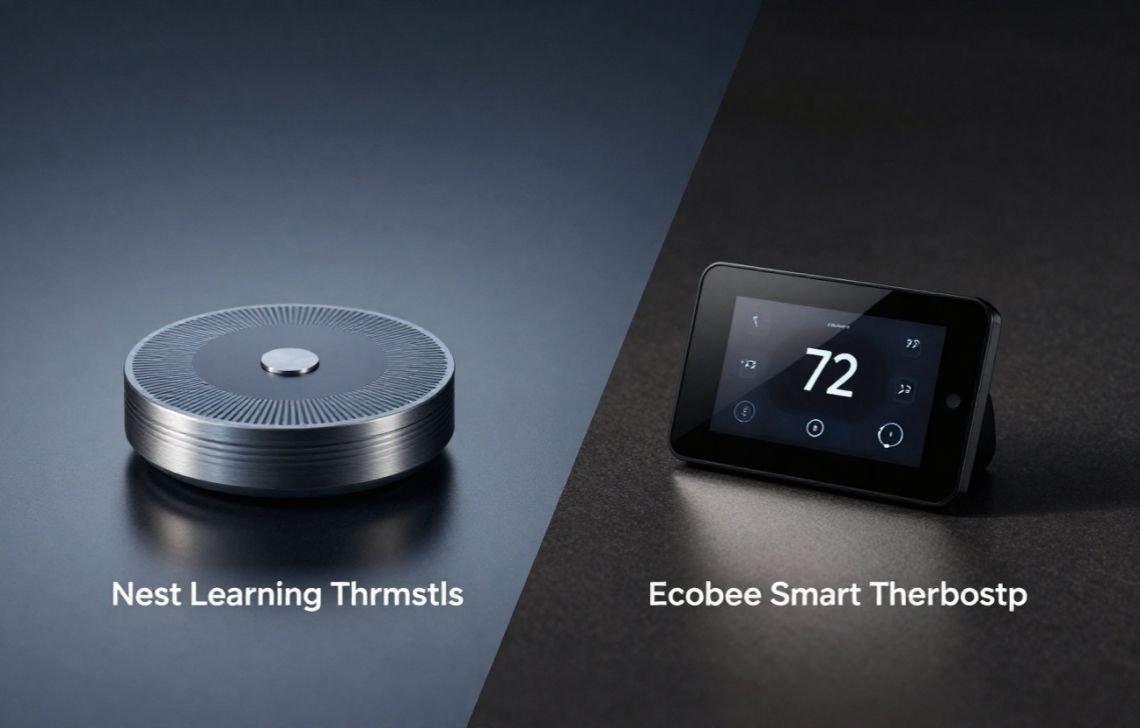
In this guide, we break down the definitive matchup: Nest Learning Thermostat vs Ecobee Smart Thermostat: Which One Wins. We evaluate the Google Nest Learning Thermostat (4th Gen) against the Ecobee Smart Thermostat Premium to see which flagship deserves a spot on your wall.
What You Will Learn:
- Design vs. Functionality: How physical interfaces affect daily use.
- Automation Philosophies: Algorithmic “learning” versus user-defined precision.
- System Longevity: Why “temperature swing” settings matter for your HVAC hardware.
- The Data Gap: The massive difference in energy history reporting.
Installation Realities: Navigating the C-wire conundrum and the “Two-Wire Rule.”
Side-by-Side Nest Learning Thermostat vs Ecobee Smart Thermostat Comparison
Feature | Nest Learning Thermostat (4th Gen) | Ecobee Smart Thermostat Premium | Mysa Smart Thermostat |
Price (MSRP) | $279.99 | $249.99 (Often discounted) | $159.00 |
Display | 2.7" Crystal Lens (600x600) | 4" Color LCD Touchscreen | LED Display |
Energy History | 2 Weeks | 2 Years (30-min intervals) | 2 Years |
Matter Support | Yes | No | Yes |
C-Wire Required | No (Power Sharing) | Yes (PEK included) | Yes |
Temp. Swing | Fixed (1 degree) | Customizable | Fixed |
Sensors | 1 Included (Temp Only) | 1 Included (Radar Occupancy) | N/A |
High Voltage | No | No | Yes (Baseboards/In-Floor) |
Design and User Interaction: Touchscreens vs. Rotating Rings
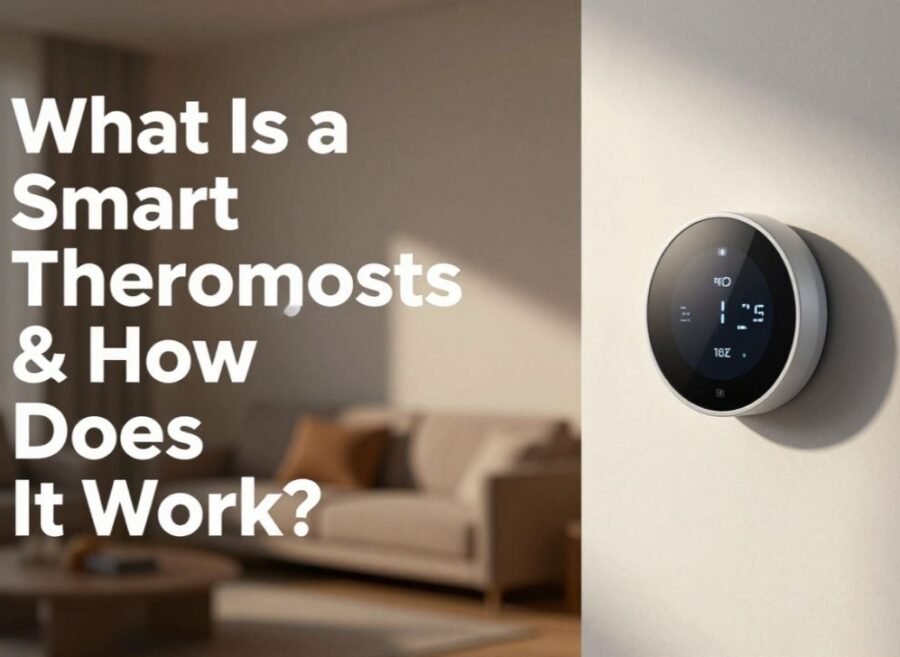
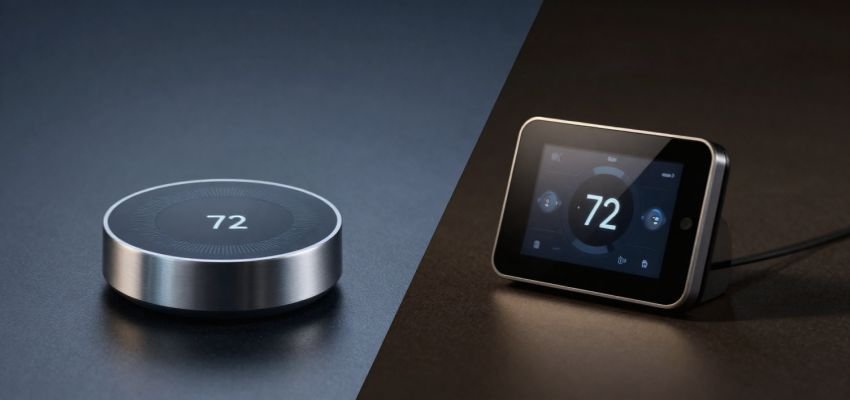
The Nest Learning Thermostat remains the aesthetic leader with its premium, watch-like curved glass and signature rotating ring. However, as a specialist, I must warn that this beauty comes with a functional cost. The curved crystal lens is prone to significant glare, which can obscure the screen in bright rooms. Furthermore, the brightness is fixed; in well-lit environments, the display can appear “washed out.” Nest’s “Farsight” feature is its saving grace, elegantly displaying the time or weather when it detects you across the room.
The Ecobee Smart Thermostat Premium opts for a “function-first” design with a zinc body and a 4-inch flat touchscreen. This interface is vastly more intuitive for deep menu navigation, mirroring a smartphone experience. Because the screen is flat, reflections are minimized, and viewing angles are superior. Ecobee also allows for adjustable brightness, ensuring the display is legible regardless of your home’s lighting.
Performance and Automation: Learning vs. Scheduling
Both devices aim to save you money, but they do so using very different philosophies:
- Nest’s Auto-Schedule: Nest watches your manual adjustments for 1–2 weeks to build a schedule. While convenient, users often complain that the thermostat can develop a “mind of its own,” overriding desired temps. The 4th Gen model adds a “Suggestions” mode, which acts as a better middle ground by notifying you before changing your permanent schedule.
- Ecobee’s Precision: Ecobee uses “Smart Recovery” to hit target temperatures exactly when your schedule starts. Crucially, Ecobee allows you to customize the Temperature Swing. While Nest is fixed at a 1-degree threshold, Ecobee lets you set a 2-degree swing. This prevents “short-cycling”—where your HVAC turns on and off too frequently—significantly extending the life of your equipment.
- The Mysa Alternative: For those with high-voltage systems (electric baseboards or in-floor heating), neither Nest nor Ecobee will work. The Mysa Smart Thermostat ($159) is the essential choice here. It ignores complex algorithms in favor of a strictly manual 7-day schedule: you set it, and it sticks.
Remote Sensor Technology: More Than Just Temperature
Both brands include a remote sensor in the box, but the technology inside is not equal.
Ecobee’s SmartSensors utilize Radar/PIR technology for occupancy detection. This enables “Follow Me” mode, where the thermostat prioritizes the temperature of the room you are actually in. Nest’s sensors are “dumb” temperature units; they lack occupancy detection. To prioritize a Nest sensor, you must manually schedule it or average it, meaning it cannot react if you unexpectedly move from the living room to the office.
Installation and Compatibility: The C-Wire Conundrum
The common wire (C-wire) provides constant power. Most smart thermostats require it, but many older homes lack one.
- The Two-Wire Rule: If your home has only two wires and no C-wire, the Nest is your only choice without running new wiring. It uses “Power Sharing” and a rechargeable battery to operate.
- The HVAC Warning: Note that many HVAC professionals caution against Nest’s Power Sharing, as it can strain certain systems by pulsing the fan circuit to charge.
- The Ecobee Solution: Ecobee requires a C-wire but includes a Power Extender Kit (PEK) in the box for 4-wire systems, making it a safer and more stable electrical choice for most.
Smart Home Ecosystem & Matter Integration
The Nest 4th Gen is Matter-certified, which theoretically makes it platform-agnostic. However, as a consumer advocate, I must highlight a major limitation: Matter functionality is currently “thin.” While you can adjust temperature in Apple Home via Matter, sensor data and fan controls are invisible to third-party apps. You still need the Google Home app for initial setup and advanced features.
Ecobee remains the king of deep integration. It offers local control for Apple HomeKit (no cloud dependency) and has Alexa and Siri built directly into the thermostat. It can act as a smart speaker, intercom, or even a Spotify endpoint.
Pricing, Subscriptions, and Long-Term Value
While the upfront gap is 30 (279.99 for Nest vs $249.99 for Ecobee), the real value is found in the data.
Nest only provides two weeks of energy history. This makes it nearly impossible to compare your usage from this winter to last. Ecobee and Mysa provide two years of granular, 30-minute runtime breakdowns. For a homeowner looking to truly audit their energy spend, Ecobee offers hundreds of dollars more in “data value.”
Pros and Cons Summary
Nest Pros:
- Most attractive, premium physical design.
- “Auto-Schedule” is ideal for users who hate programming.
- The only option for 2-wire systems without a C-wire.
- Matter support provides some future-proofing.
Nest Cons:
- Fixed 1-degree swing can cause HVAC short-cycling.
- Only 2 weeks of energy history.
- Significant screen glare; Matter integration lacks fan/sensor data.
Ecobee Pros:
- 2 years of granular energy data.
- Occupancy sensors enable “Follow Me” comfort.
- Customizable swing saves HVAC wear and tear.
- Built-in voice assistants (Alexa/Siri).
Ecobee Cons:
- Does not currently support Matter.
- Requires a C-wire or the installation of the PEK.
Which One Should You Buy?
The Set-it-and-Forget-it Minimalist: Buy the Nest Learning Thermostat. If you have a 2-wire system, or simply want a beautiful device that learns your routine so you never have to touch it, Nest is the winner.
The Smart Home Power User: Buy the Ecobee Smart Thermostat Premium. If you want to see exactly how your home performed last year, want occupancy-based comfort, and value local smart home control, Ecobee is the superior tool.
The High-Voltage or Budget Pragmatist: Buy the Mysa Smart Thermostat. It is the only viable choice for electric baseboard or in-floor heating. At $159, it offers the same 2-year data history and energy savings as the flagships without the $100+ “premium” markup for features you may never use.
The Final Verdict
While Nest wins on pure aesthetics and its “magic” learning algorithm, the Ecobee Smart Thermostat Premium is the smarter choice for most homeowners. Between the two years of energy data (versus Nest’s two weeks), the customizable temperature swing that protects your HVAC system, and the occupancy-aware sensors, Ecobee provides significantly more practical value for its $250 price tag.
FAQs
Is the Ecobee better than the Nest?
Technically, yes. Ecobee offers occupancy sensing, customizable temperature swing (preventing HVAC wear), and 24 months of energy data. Nest is superior only in its learning algorithm and ease of installation for 2-wire homes.
Does the Nest 4th Gen require a C-wire?
No, it uses “Power Sharing” and a battery. However, if your system is compatible, adding a C-wire is always recommended to prevent system strain.
Is Google killing off Nest?
No. While Google ended support for the 1st and 2nd Gen models in October 2025, the 4th Gen Learning Thermostat is the current flagship and is receiving active updates and Matter support.
Is Ecobee being discontinued?
Absolutely not. Ecobee is expanding; they recently launched the Smart Thermostat Essential in March 2025 and remain a leader in the North American market.
Can I adjust temperature sensitivity?
On the Ecobee, yes. You can adjust the “swing” to 2 degrees to stop your furnace from turning on and off too often. The Nest has a fixed 1-degree swing that cannot be changed.