
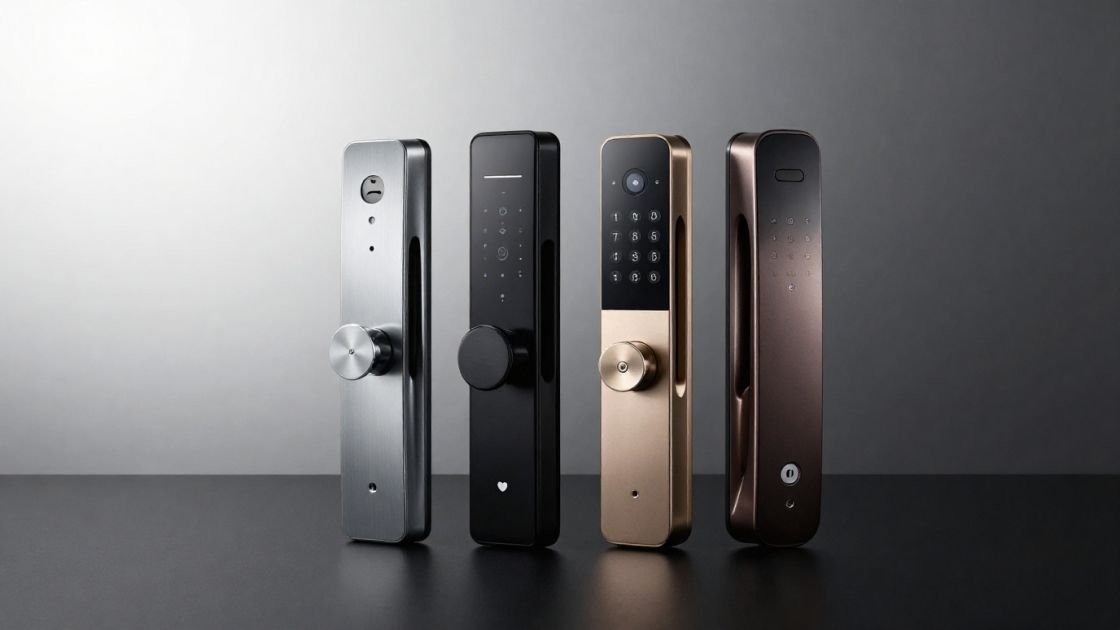
The traditional physical key, a design that has remained largely unchanged for over a century, is finally facing its obsolescence. For the modern homeowner, the shift toward the best smart door lock technology represents more than just a tech upgrade; it is a fundamental shift toward “peace of mind.” The common anxieties of the past—fumbling for keys with grocery-laden arms, worrying if the door was locked after a frantic school run, or the security risk of a “hidden” key under a mat—are systematically solved by digital access. Modern smart locks allow you to grant temporary digital keys to dog walkers, monitor real-time entry logs from your office, and ensure your home is secured the moment you leave.
However, as a Smart Home Security Specialist, I must emphasize that not all “smart” tech is secure tech. This guide is built upon the most rigorous technical evaluations in the industry. We have synthesized data from Consumer Reports’ grueling laboratory tests—including their signature “100-pound steel battering ram” kick-in trials—and CNET’s months of real-world connectivity assessments. We don’t just look at the app interface; we look at how these devices stand up to cordless drills and professional lock-picking. In this guide, we will navigate the complexities of ANSI grades and wireless protocols to find the absolute best smart door lock for your specific entryway.
Quick Comparison: The Top Smart Locks at a Glance
Product Name | Lock Type | Connectivity | Key Feature |
Yale Assure Lock 2 | Deadbolt | WiFi/Z-Wave/Matter (via Modules) | Compact; Apple Home Key; CR Score 84 |
August WiFi Smart Lock | Retrofit | WiFi / Bluetooth | Fits over existing deadbolt; SecureScore 9.4 |
Schlage Encode Plus WiFi | Deadbolt | WiFi / Apple Home Key | Grade 1 Security; built-in tamper alarm |
Ultraloq U-Bolt Pro | Deadbolt | WiFi / Bluetooth | 99.8% Fingerprint Accuracy; Grade 1 |
Eufy Video Smart Lock E330 | Deadbolt | WiFi / Bluetooth | 2K Camera; 10,000mAh battery |
Key Considerations Before Buying a Smart Lock
As a technical consumer advocate, I urge you to treat a smart lock purchase as both a software and a hardware investment. Before you hit “buy,” you must audit your door and your digital ecosystem against these five critical factors:
- Installation Type: Determine if you want a full deadbolt replacement or a retrofit. A full replacement provides the most features but requires removing your existing hardware. A retrofit—often the best smart lock for renters—installs over the interior thumbturn of your existing deadbolt, leaving the exterior keyhole and your landlord’s keys functional.
- Access Methods: Entry options range from traditional keys to biometrics. You can opt for the best fingerprint door lock systems using capacitive scanners, or choose models with touchscreen keypads, proximity-based auto-unlock, or Apple Home Key, which utilizes NFC technology in your iPhone or Apple Watch for “tap-and-go” entry.
- Connectivity Protocols: This dictates how your lock talks to your phone. WiFi locks are easy to set up but can be power-hungry. Z-Wave and Zigbee offer superior battery life and range but require a dedicated hub. The emerging Matter and Thread standards are vital for those building a future-proof smart home, as they allow local, high-speed communication between different brands without cloud reliance.
- Security Ratings: Always look for the ANSI/BHMA grade. Grade 1 is the strongest, designed to withstand massive brute force (kick-ins). Grade 2 is the standard for high-quality residential use, while Grade 3 is the minimum, often found in interior-only or basic retrofit models.
- Power Sources: While most use AA batteries, some premium smart door lock models now feature high-capacity rechargeable lithium packs. Always verify if there is an emergency power option, such as a physical key override or an external 9V battery jumpstart terminal.
Understanding these factors is the difference between a lock that simplifies your life and one that becomes a source of frustration. Reliability in smart security is born from the intersection of physical durability and software stability.
In-Depth Reviews: The Top 10 Best Smart Door Locks
1. Yale Assure Lock 2
Best For: Overall Performance and Modular Versatility
The Yale Assure Lock 2 is widely considered the premium smart door lock for the modern homeowner, earning a robust CR Score of 84 in lab testing. What sets this lock apart is its modular “game cartridge” system. Unlike competitors that lock you into one protocol, Yale allows you to swap out small modules to change connectivity from WiFi to Z-Wave or even Matter as your smart home evolves. In our lab-simulated kick-in tests, the Assure Lock 2 held up exceptionally well against brute force, and its keyless design (on specific models) makes it entirely immune to professional lock-picking or “bumping.”
From a technical advocacy perspective, the Yale Access app is one of the most stable on the market. It offers seamless integration with the Airbnb app, allowing hosts to automate the generation of guest codes that expire precisely at check-out. It also integrates natively with Apple Home Key and ADT Plus. During hands-on testing, the “DoorSense” sensor was a standout feature, providing accurate alerts if the door was left physically ajar, not just unlocked. However, I must warn consumers: while the base model is affordable, the WiFi and Matter modules are often sold separately or at a premium, which can quickly drive up the total cost of ownership.
- Check Latest Price
Pros
- Compact, sleek design that is significantly less bulky than its predecessor.
- Modular connectivity ensures the lock won’t be obsolete in three years.
- Highest-tier integration with Airbnb and Apple Home Key.
- Excellent lab performance against drilling and kick-in attacks.
Cons
- Fingerprint sensing is not standard on all configurations.
- Z-Wave setup can be temperamental with certain older hubs.
2. August WiFi Smart Lock
Best For: Apartment Dwellers and DIY Retrofitting
The August WiFi Smart Lock remains the best smart lock for renters because it respects the physical integrity of the rental agreement. By replacing only the interior thumbturn, you maintain the original exterior deadbolt and key. This earns it a top-tier SecureScore of 9.4. In lab testing for ease of use and remote operation, August received superb marks. Its “Auto-Unlock” feature, which uses a combination of Bluetooth and Geofencing to unlock the door as you approach, was found to be the most reliable in its class during CNET’s real-world trials.
While it is a Grade 3 device (due to being a retrofit that relies on your existing deadbolt’s strength), its digital security is Grade 1, utilizing AES 128-bit and TLS encryption. The current 4th-generation model is 45% smaller than the previous “Pro” version and connects directly to WiFi without a separate bridge. However, a technical specialist’s warning: the small form factor means it uses two CR123 batteries, which typically last only 3 to 6 months. If you have a high-traffic door, be prepared for frequent battery swaps. It also lacks native Matter support out of the box, though the company has promised future updates.
- Check Latest Price
Pros
- The most non-invasive installation possible; no new keys needed.
- Direct WiFi connectivity eliminates the need for extra bridges.
- Industry-leading geofencing and auto-unlock reliability.
- Comprehensive activity logs and guest access management.
Cons
- CR123 batteries are more expensive and harder to find than AAs.
- The interior unit, though smaller, still protrudes significantly from the door.
3. Schlage Encode Plus WiFi
Best For: High-Security Households and Apple Power Users
When the conversation turns to raw physical toughness, the Schlage Encode Plus WiFi is the best smart lock for security. This is a Grade 1 deadbolt, the highest rating available for residential use. In laboratory “battering ram” tests, it withstood multiple high-energy strikes that shattered the frames of lesser locks. It also features a built-in tamper alarm that will emit a high-decibel siren if it detects someone attempting to pry the lock off the door. This makes it a formidable deterrent for both digital and physical intruders.
For Apple users, the Encode Plus is a dream. It was among the first to support Apple Home Key, allowing for “tap-to-unlock” even if your iPhone’s battery has died (via Power Reserve). However, the technical review isn’t all glowing; CNET testers noted that the initial setup process can be “clunky” and less intuitive than Yale’s. Additionally, while it is physically robust, it was found to be slightly more susceptible to professional lock-picking than keyless-only models. If physical durability is your primary concern, this is the lock to beat.
- Check Latest Price
Pros
- Certified ANSI/BHMA Grade 1 for maximum physical durability.
- NFC-enabled Apple Home Key support for effortless entry.
- Built-in tamper alarm acts as a significant audible deterrent.
- No additional hub required for WiFi connectivity.
Cons
- Software setup can be frustrating for non-technical users.
- The physical keyway provides a traditional vulnerability to picking.
4. Ultraloq U-Bolt Pro
Best For: Reliable Biometrics on a Budget
The Ultraloq U-Bolt Pro is the rare cheap smart door lock that outperforms its price tag. Frequently cited as the best smart lock under $100 during promotional periods, it offers an incredible 8-in-1 entry system. The centerpiece is the capacitive fingerprint scanner, which boasts a 99.8% accuracy rate and identifies users in less than a second. Lab tests also highlighted its exceptional WiFi range, which remained stable even when installed on secondary buildings like detached garages or “granny pods.”
Despite its budget positioning, the U-Bolt Pro is an ANSI Grade 1 device, meaning it doesn’t compromise on the steel components inside. It features IP65 weather resistance, making it suitable for homes in rainy or dusty climates. One technical nuance: the lock uses a round keypad design that some users find “gadgety” or out of place on traditional homes. It also lacks support for Apple Home and Siri, focusing instead on Alexa, Google Assistant, and its own robust app. For those who want biometric convenience without the “premium” tax, this is the clear winner.
- Check Latest Price
Pros
- Most accurate and fastest fingerprint sensor in the budget category.
- Grade 1 physical security rating is rare at this price point.
- IP65 rating ensures durability against harsh weather.
- Excellent WiFi range for remote or detached installations.
Cons
- Polarizing “round” aesthetic doesn’t match all architectural styles.
- No compatibility with the Apple Home ecosystem.
5. Eufy Video Smart Lock E330
Best For: All-in-One Entryway Monitoring
The Eufy Video Smart Lock E330 is the definitive best smart lock with camera integration for 2026. This hybrid device combines a 2K resolution video doorbell with a biometric deadbolt. It features a massive 10,000mAh rechargeable battery designed to power both the WiFi-connected camera and the motorized bolt for up to 120 days. The camera uses advanced AI for object recognition, allowing it to distinguish between a package delivery, a stray animal, and a human intruder, which significantly reduces the annoyance of false notifications.
A major advocacy point for Eufy is the local storage: video is stored on the device itself, meaning there are no monthly subscription fees to view your recordings. However, there are technical trade-offs. The device is physically massive, taking up significant real estate on your door. Furthermore, the E330 lacks two-way audio, a feature standard on most standalone video doorbells. If you already have a doorbell camera, this lock may feel redundant, but for those starting with a “blank” door, it offers a powerful, subscription-free security suite.
- Check Latest Price
Pros
- Combines 2K high-definition video with biometric security.
- No monthly fees; all video is stored locally and securely.
- Large 10,000mAh battery handles high-power demands.
- Fast object recognition reduces false alert fatigue.
Cons
- Extremely large physical footprint may look awkward on small doors.
- Lack of two-way audio prevents talking to visitors via the app.
6. Kwikset Obsidian
Best For: Complete Resistance to Manipulation
The Kwikset Obsidian earned a stellar CR Score of 89, largely due to its ingenious keyless design. By removing the traditional keyway entirely, Kwikset has created a lock that is impossible to pick, bump, or manipulate with traditional locksmith tools. It is a Z-Wave deadbolt, meaning it is ideally suited for users with existing security systems like Ring Alarm, Samsung SmartThings, or Hubitat. In lab drilling tests, the reinforced interior components proved highly resistant to destructive entry.
The Obsidian features a sleek, “low-profile” touchscreen that remains dark until touched. It utilizes “SecureScreen” technology, which prompts you to touch two random digits before entering your code. This ensures that fingerprints are distributed across the screen, preventing an intruder from guessing your PIN by looking at the oil smudges on the glass. The primary risk with the Obsidian is power; because there is no keyway, if the batteries die and you ignore the weeks of low-battery warnings, you must use a 9V battery on the exterior terminals to “jumpstart” the lock.
- Check Latest Price
Pros
- Keyless design makes it 100% pick-proof and bump-proof.
- High CR Score of 89 reflects top-tier lab performance.
- SecureScreen tech prevents “smudge-based” code guessing.
- Beautiful, minimalist aesthetic that looks like black glass.
Cons
- Requires a Z-Wave hub for all remote functionality.
- No physical key failsafe; requires an external 9V battery if dead.
7. Level Lock Pro
Best For: Invisible Smart Home Integration
The Level Lock Pro is the “stealth” choice for those who despise the look of smart technology. It is designed to be invisible, hiding its motor, battery, and processor entirely inside the door itself. To the naked eye, it looks like a high-quality standard deadbolt. Despite its unassuming appearance, the “Pro” version is a technical powerhouse, supporting Matter-over-Thread for lightning-fast response times and native Apple Home Key support. It is rated as a BHMA Grade 3 device for durability.
Installing the Level Lock Pro is remarkably simple; CNET reviewers found it to be one of the easiest one-person jobs due to its lack of bulky exterior attachments. It comes with a contactless “NFC key” (fob) that can be kept on a keychain or in a wallet for tap-entry. The main drawback for a technical specialist is the battery: it uses a single CR2 battery hidden inside the bolt itself. While clever, this limits the motor’s torque, making the lock sensitive to doors that aren’t perfectly aligned. If your door requires you to “pull it tight” to lock it, the Level Lock may struggle.
- Check Latest Price
Pros
- The only “invisible” smart lock that preserves door aesthetics.
- Full Matter and Thread support for modern smart home hubs.
- Includes NFC key fobs and supports Apple Home Key.
- Easiest and cleanest installation process in the category.
Cons
- ANSI Grade 3 is lower than the heavy-duty Schlage or Yale options.
- Requires a perfectly aligned door to function reliably.
8. Lockly Visage Zeno Series
Best For: Cutting-Edge Biometric Entry
The Lockly Visage Zeno Series is where science fiction meets the front door. It is the most advanced lock we reviewed, featuring 3D face recognition that allows for completely hands-free entry as you approach. It also includes Lockly’s patented “Genie” keypad, where the numbers shift positions every time they are used. This prevents onlookers from memorizing your finger movements and ensures your PIN remains private even in crowded areas. It is an ANSI Grade 2 deadbolt that supports Apple Home and Home Keys natively.
From a specialist’s perspective, the Lockly provides the most redundant power system: it comes with two rechargeable battery packs, so you can always have one charging while the other is in the door. However, there is a significant “advocate’s warning” here: the external wired door sensor included in some kits is aesthetically unappealing and notoriously difficult to install correctly. Furthermore, the face recognition technology, while impressive, draws significant power, meaning you will be swapping those battery packs more frequently than you would change AAs in a standard lock.
- Check Latest Price
Pros
- Hands-free face recognition is fast and highly secure.
- The “Genie” shifting keypad is the best in the industry for privacy.
- Includes two rechargeable batteries for zero downtime.
- Massive array of unlock options (Face, Finger, PIN, App, Key).
Cons
- The wired door sensor is an “ugly” and frustrating add-on.
- Very expensive; one of the highest price points on the market.
9. Schlage Encode Smart WiFi Lever
Best For: Garage Side Doors and Home Offices
Not every door has a deadbolt, but every door needs security. The Schlage Encode Smart WiFi Lever is a Grade 1 solution designed to replace a standard door handle. This makes it the ideal choice for garage side doors, interior home offices, or basement storage rooms. It brings the full Encode feature set—including built-in WiFi, 100 customizable entry codes, and high-level encryption—to a handle-style format. It also works with Alexa and Google Assistant for voice-controlled locking.
During technical testing, the handle was noted for its exceptionally heavy-duty construction. It feels significantly more substantial than standard hardware store levers. However, it is an expensive investment for a handle-style lock, often costing more than full smart deadbolts. It also lacks any biometric or fingerprint options, relying entirely on the keypad and app for access. For those who need Grade 1 security on a non-deadbolt door, there is simply no better professional-grade alternative.
- Check Latest Price
Pros
- Certified Grade 1/AAA for durability and security on lever doors.
- Built-in WiFi allows for hub-free remote management.
- Supports a massive 100-user code capacity.
- Ideal for garage-to-house entry points.
Cons
- Higher price point than many full deadbolt replacements.
- No fingerprint scanner or biometric options.
10. Yale Approach Lock with WiFi
Best For: Damage-Free Upgrades for Renters
The Yale Approach is a specialized retrofit lock that was developed in collaboration with August. It uses the August software platform and app, which are widely considered the gold standard for user experience. This lock is the definitive smart lock for apartments because it includes a unique adhesive keypad. You can mount the keypad to your doorframe using 3M command strips, meaning you can enjoy full keypad entry without drilling a single hole in the building’s exterior.
Technical testing found the Approach to be much more compact and less intrusive than the standard August WiFi lock. It supports the same robust “Auto-Unlock” and “DoorSense” features but at a more accessible price point. The trade-off for renters to consider is that the keypad is a separate physical unit, which increases the chance of it being tampered with or stolen compared to a built-in keypad. However, for those who need a smart lock that can be removed in five minutes without leaving a trace, the Yale Approach is the most logical choice.
- Check Latest Price
Pros
- Adhesive keypad is perfect for strict rental agreements.
- Uses the highly stable August app and software platform.
- Much smaller and sleeker than traditional retrofit models.
- Excellent auto-unlocking performance via Bluetooth.
Cons
- Does not support Apple Home/HomeKit.
- Separate keypad increases the risk of exterior tampering.
Best Choices Categorized by User Needs
For those who need a quick recommendation based on specific home configurations, here are our top specialized picks:
- Best smart lock for home assistant: The Level Lock Pro and Aqara U200 are the champions here. Their native Matter-over-Thread support ensures they integrate locally with Home Assistant hubs without the latency of cloud-based APIs.
- Best smart lock for airbnb: The Yale Assure Lock 2 and Schlage Encode Plus are the industry standards. Their direct integration with the Airbnb and VRBO platforms automates guest code generation, saving hosts hours of manual work.
- Best smart lock for cold weather: The Danalock and August systems are specifically tested for extreme temperatures. They have been proven to operate reliably in environments as low as -20°F without the motor freezing or the battery failing.
Affordable smart lock: If you are seeking an affordable smart lock, the Wyze Lock offers basic retrofit features for under $100, while the Ultraloq U-Bolt Pro remains the best value for biometrics. For a truly cheap smart door lock, the Sesame system starts as low as $39, though it offers fewer advanced integrations.
Understanding Types of Smart Locks
Before finalizing your purchase, ensure you have selected the correct category from the three main types of smart locks:
- Full Deadbolt Replacement: These replace the entire lock mechanism on your door. They offer the highest security (often Grade 1) and integrated features like keypads and fingerprint scanners.
- Retrofit (Interior Only): These install over your existing thumbturn. They are the best smart lock for renters because they do not change the exterior appearance of the door or require new keys.
- Smart Levers/Handles: These replace the door handle itself and are used on doors without a deadbolt, such as interior offices or side garage doors.
Final Verdict and Recommendation
The transition to a smart entryway is no longer a luxury—it is a significant upgrade to your home’s security and convenience. After analyzing hundreds of data points and lab results, the Yale Assure Lock 2 remains our top recommendation for the average homeowner due to its modularity and high CR Score. For those who prioritize maximum physical resistance, the Schlage Encode Plus WiFi is the undisputed heavy-weight champion.
If you are a renter or on a strict budget, the August WiFi Smart Lock and the Ultraloq U-Bolt Pro offer incredible features without requiring a full renovation. Regardless of your choice, upgrading to the best smart lock for home ensures that your front door is no longer a vulnerability, but a smart, secure gateway. Finding the best smart door lock is about
Detailed FAQ
Are smart lock fingerprint scanners accurate?
Yes. Modern capacitive scanners from brands like Ultraloq and Kwikset boast a 99%+ accuracy rate and can identify a print even if it is slightly damp or dirty.
What happens if the battery dies?
Most locks provide low-battery alerts weeks in advance. If it dies completely, most models have a physical key override, while keyless models (like the Obsidian) have exterior 9V jumpstart terminals.
Can smart locks be hacked?
While theoretically possible, it is extremely difficult due to bank-level encryption. Using a strong password and 2FA makes your lock a very unlikely target for hackers.
Do I need a professional to install a smart lock?
No. Most models are designed for DIY installation and can be completed in 15–30 minutes with just a Phillips-head screwdriver.
Do smart locks work with physical keys?
Many do (Schlage, Yale Assure), but some “keyless” models purposely remove the keyhole to eliminate the risk of lock-picking.
Is there a best smart lock for home assistant?
Yes. Look for locks that support Z-Wave or Matter, as these provide the most reliable local control without relying on external cloud servers.