
For most homeowners, smart thermostats are absolutely worth the investment, as they typically reduce energy bills by 8% to 15% and pay for themselves within two to three years. By automating temperature setbacks when you are away or asleep, these devices eliminate waste without compromising your home’s comfort.
In my experience auditing HVAC systems and consulting on home automation, the shift to smart control is the single most effective low-cost efficiency upgrade a homeowner can make. However, the “intelligence” of the device is only as good as its compatibility with your lifestyle and your home’s existing infrastructure.
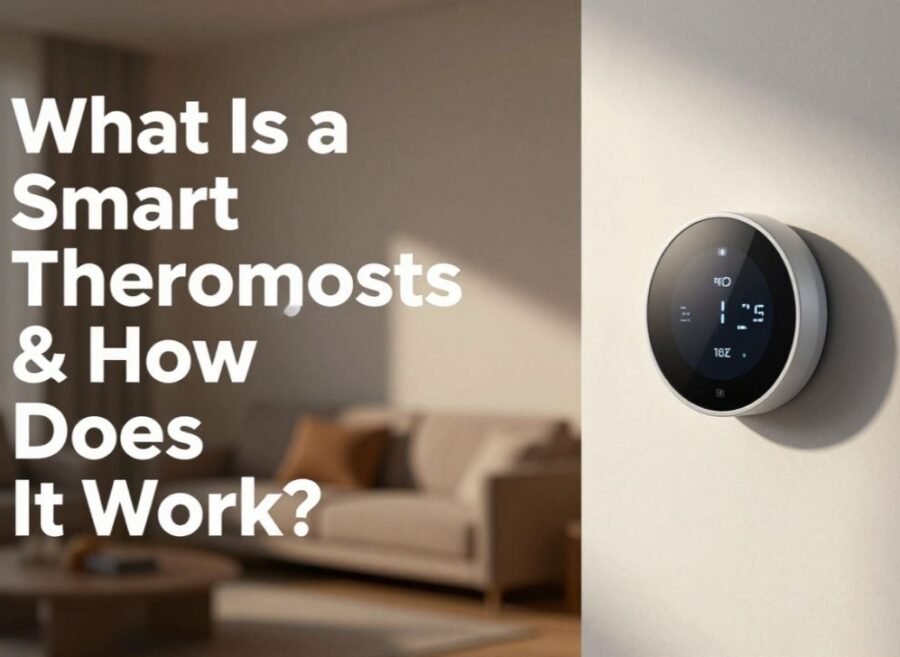
What Is a Smart Thermostat?
Think of a smart thermostat as a Wi-Fi-enabled “personal temperature assistant” for your home. While a traditional thermostat acts as a simple on/off switch based on the local air temperature, a smart model integrates your HVAC system into your broader digital life.
Key differences from traditional hardware include:
- Connectivity: Integration with Wi-Fi allows you to control the climate from a smartphone or via voice assistants like Alexa and Google Home.
- Intelligence: While Google Nest popularized “learning” algorithms that track your habits, many modern specialists now prefer manual app-based scheduling. Learning features can sometimes “puzzle” users with unexpected adjustments, making the ability to set precise schedules via a clean app interface the more reliable benefit.
- Accessibility: These devices replace the cumbersome, cryptic buttons of the 1990s with intuitive touchscreens and mobile apps, removing the barrier to efficient programming.
Are Smart Thermostats Worth It? The Quick Verdict
The value proposition is strongest for those who have significant “slack” in their current heating and cooling habits.
Ideal candidates for an upgrade include:
- Homeowners in regions with extreme weather and high utility rates.
- Individuals with unpredictable daily schedules who cannot rely on a static 7-day program.
- Frequent travelers who need to monitor home health, such as pipe-freeze risks, remotely.
An upgrade may not be worth it if:
- You live in a temperate climate where HVAC use is already minimal (8% savings on a small bill yields a very slow ROI).
- The home is occupied 24/7 (e.g., permanent work-from-home), leaving fewer opportunities for “away mode” savings.
- You are already a power user who perfectly manages a standard programmable thermostat.
If you decide that upgrading makes sense for your home, the next step is choosing the right model for your needs. Our guide to the best smart thermostat options can help you compare important factors such as HVAC compatibility, energy-saving features, smart-home integrations, remote control, and overall value before making a purchase.
How Much Can a Smart Thermostat Save? (The Data)
Hard data from the EPA and major manufacturers confirms that the primary benefit of going “smart” is the reduction of unnecessary system runtime.
Energy Savings at a Glance
- Average Energy Star Savings: 8% (approximately $50 per year).
- Heating Savings Potential: Up to 12%.
- Cooling Savings Potential: Up to 15%.
Note: The highest savings percentages are typically realized in regions with high electricity costs or extreme seasonal temperature swings.
The Payback Period While the upfront cost—typically between $130 and $250—is higher than a $30 manual unit, the annual savings recover that investment quickly. When you factor in utility rebates, which often range from $25 to $100, the payback period can drop to under 18 months.
Core Benefits: Beyond the Bill
Remote Temperature Control
The convenience of adjusting the air from the airport or the couch is the most immediate perk. If you forget to turn down the heat before a week-long trip, a single tap on your phone prevents you from heating an empty house.
Automatic Scheduling and Learning
Industry research indicates that 29% of people who own programmable thermostats never actually program them because the interfaces are too complex. Smart thermostats solve this with “set it and forget it” logic, either through geofencing (using your phone’s GPS to see when you leave) or easy drag-and-drop digital calendars.
Valuable Energy Insights
Knowledge is power. Smart thermostats provide monthly energy reports that track system runtime. These insights help you identify if your AC is struggling or if your home is losing heat faster than it should, allowing for proactive maintenance.
Improved Home Comfort
By using remote sensors, you can fix the “hot room” problem. If your thermostat is in a drafty hallway but you spend your day in a sunny home office, a remote sensor tells the system to prioritize the temperature of the room you are actually in.
Potential Drawbacks and Hurdles: A Reality Check
As a consultant, I always warn clients that smart thermostats are not “universal” plug-and-play devices.
- The C-Wire Requirement: Most smart models require a “C-wire” (common wire) for continuous power to run the Wi-Fi and display. Older homes often lack this. While “Power Extender Kits” exist, they are a workaround, not a perfect solution.
- Variable-Speed HVAC Issues: Many modern high-efficiency heat pumps use proprietary communication logic to modulate their speed. A generic smart thermostat can clash with this internal logic, potentially forcing a high-end system to run less efficiently as a basic single-stage unit.
- Wi-Fi Dependency: If your internet goes down, you lose remote access and smart features, though the device will still function as a basic manual thermostat.
Smart vs. Traditional: Side-by-Side Comparison
Feature | Traditional/Manual | Programmable (Non-Wi-Fi) | Smart Thermostat |
Features | Basic Temp Control | Basic Scheduling | Learning, Sensors, Reports |
Energy Efficiency | Low | Moderate (if programmed) | High (8-15% Energy Star) |
Convenience | Low (Manual only) | Moderate (Device-only) | High (App/Voice control) |
Long-term Value | Low | Moderate | High (Utility Rebates & ROI) |
Pre-Buying Checklist: What to Consider
Before purchasing, perform this quick audit to ensure a smooth installation:
- Safety First: Always turn off the breaker to your HVAC system before removing your current thermostat faceplate.
- Identify the C-Wire: Look for a blue wire connected to the “C” terminal. If it’s missing, you’ll likely need a power adapter or professional rewiring.
- Check System Type: Confirm if you have a standard central air system, a mini-split (which requires a specific “Smart AC Controller”), or a high-voltage baseboard heater.
- Ecosystem Match: If you use Apple HomeKit, ensure the model is specifically compatible, as some brands favor Google or Alexa.
Use Case Scenarios: Is It Best for You?
- The Traveler: Essential for peace of mind. Beyond “Vacation Mode,” remote alerts can notify you if your home temperature drops dangerously low, allowing you to act before pipes freeze.
- The Routine-Changer: If your “9-to-5” is actually a “12-to-8” or varies daily, geofencing uses your phone’s location to trigger energy-saving modes the moment you drive away.
- The “Work from Home” Pro: While your raw energy savings may be lower because the house is occupied, the comfort gains are massive. You can use remote sensors to prioritize the office during the day and the master bedroom at night.
How to Choose the Right Model
- Energy Star Certification: This is the gold standard for verified savings.
- App Ecosystem: Check the App Store or Play Store ratings. If the app is glitchy, the thermostat’s best features will go unused.
- Demand Response Compatibility: Check if your local utility offers “Rush Hour Rewards.” Some companies will actually pay you to own a smart thermostat if you allow them to make minor adjustments during peak grid demand.
Final Verdict: The Bottom Line
If you have a standard HVAC system and value either your time or your budget, a smart thermostat is a “must-have” upgrade. While the C-wire requirement and proprietary heat pump logic are technical hurdles to watch out for, the combination of a $50 average annual saving and superior home management makes it one of the few tech purchases that actually pays you back.
FAQs
Are smart thermostats really worth the money?
Yes. For the vast majority of households, the 8-15% reduction in annual heating and cooling costs covers the cost of the device within two years.
How much money can a smart thermostat save?
On average, Energy Star certified models save users about $50 per year. However, in regions with extreme weather or high electricity rates, savings can exceed $100 annually.
Do smart thermostats use more electricity?
The power used for Wi-Fi and the digital display is negligible—usually just a few watts. This is dwarfed by the massive energy reduction achieved by optimizing your HVAC system, which is typically the largest energy consumer in a home.
Can a smart thermostat work with any HVAC system?
No. They are generally incompatible with high-voltage electric baseboard radiators and some older “two-wire” heat-only systems. Additionally, some variable-speed heat pumps require proprietary thermostats to maintain their high-efficiency ratings.
Is it difficult to install a smart thermostat?
Most are designed for DIY installation and take about 30 minutes. The main hurdle is the C-wire; if your home lacks one, you may need a professional or a specialized adapter kit.
How long does a smart thermostat last?
You can expect the hardware to last approximately 10 years. However, the lifespan is often dictated by software support and Wi-Fi standards rather than mechanical failure. Choosing a major brand ensures longer support for app updates.