
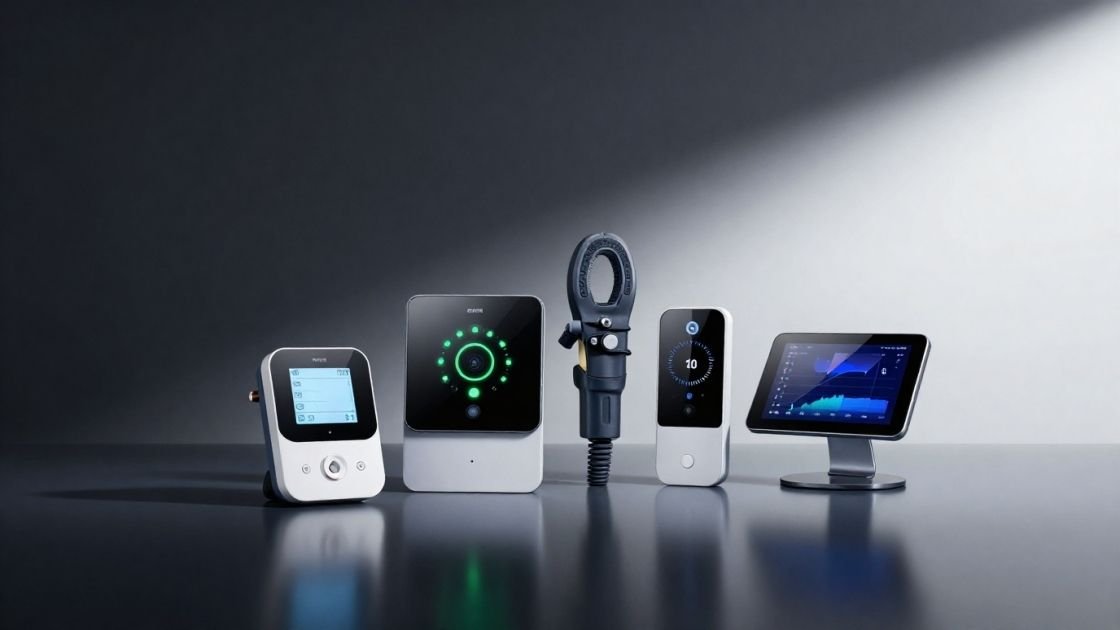
As electricity prices continue to climb nationwide, many homeowners are left frustrated by monthly utility bills that offer plenty of charges but zero detail. A standard bill tells you how much power you used over 30 days, but it won’t tell you which appliance is malfunctioning or why your usage spiked last Tuesday. To eliminate this guessing game, homeowners are turning to the best home energy monitor solutions to gain real-time visibility into their consumption.
A home energy monitor acts as a “gateway” to your home’s inner electrical workings. These devices connect to your electricity meter or electrical panel to track energy use as it occurs, breaking down consumption into kilowatts and even actual dollars and cents. By identifying “energy vampires”—devices that draw power even when turned off—and optimizing solar production, these systems allow users to change their behavior and potentially reduce monthly bills by approximately 10%.
Understanding Your Options: The Mechanics of Energy Tracking
Before selecting a home energy monitor system, it is vital to understand the two primary methods of tracking power. The right choice depends on whether you want to investigate a single suspicious appliance or gain a comprehensive overview of your entire property’s electrical health.
- Outlet Monitoring (Smart Plugs): These are the easiest entry point for energy tracking. You simply plug the device into a wall socket and then plug an appliance into it. These are ideal for tracking “energy-hog” appliances like space heaters or coffee makers, but they are generally limited to smaller 120V implements and cannot handle large loads like laundry machines.
- Whole-House Power Monitors: These systems use current transformer (CT) clamps—sensors that snap around your electrical service mains or individual breakers. They “read” the electrical current for the entire home, providing a high-level view of every circuit, from the HVAC system to the kitchen lights.
When choosing between them, consider your goals. If you live in a smaller space and only worry about a few specific devices, smart plugs are a cheap home energy monitor solution. However, for those seeking to implement improvements across an entire residence, a whole-house system is the best electricity usage monitor because it analyzes the data from every circuit simultaneously and transmits insights to a central dashboard.
Critical Factors to Consider Before Buying
Selecting the best smart energy monitor requires looking beyond the hardware to the software and compatibility features.
Appliance Recognition & Machine Learning
Some top home energy monitors use artificial intelligence to “read” the unique electrical signatures of your appliances. By identifying the specific way a refrigerator compressor kicks on compared to a toaster, the system can track individual devices without needing a sensor on every wire. Note that these systems require a “learning period” of several weeks to accurately distinguish between similar devices.
Solar Monitoring & Net Metering
If your home is equipped with solar panels, you need a monitor that supports net metering. These specialized systems track both energy production and consumption, allowing you to see how much excess power you are sending back to the grid versus what you are drawing from it. This data is essential for “self-consumption” strategies, helping you use your own solar power during peak hours rather than selling it back to the utility for pennies.
Smart-Home Compatibility & Voice Control
The best whole house energy monitor options often integrate with ecosystems like Alexa, Google Assistant, or Home Assistant. This allows for hands-free updates, where a simple voice command can provide a report on your current usage or turn off energy-draining appliances remotely.
Installation Requirements
There is a significant divide in installation needs. Smart plugs are DIY-friendly and require zero technical knowledge. In contrast, many whole-house systems must be installed inside the electrical panel. Because this involves proximity to service mains and potential shock hazards, I always recommend that a licensed electrician handle the installation of CT clamps and internal modules.
Comparison Table: Top Rated Energy Monitoring Solutions
Product Name | Type | Compatibility | Key Feature |
Sense Home Energy Monitor | Whole House | 240V Breaker | Machine Learning / Solar Ready |
Emporia Vue 3 | Whole House | 240V/480V Split/3-Phase | 16 Sensors / Solar Tracking |
Govee Smart Plug | Smart Plug | 120V Outlet | 1-Year Data Storage |
TP-Link Kasa HS300 | Smart Plug | 120V Outlet | 6 Outlets / Surge Protection |
Etekcity Outdoor | Smart Plug | 120V Outlet | IPX4 Waterproof / Dual Sockets |
Eyedro | Whole House | 120V (Module Power) | Ethernet / Non-invasive Clips |
Siemens Inhab | Whole House | Panel-integrated | Brand Backing / Configurable |
Schneider Electric | Whole House | Panel-integrated | Premium Ecosystem Integration |
Detailed Product Reviews: The Best Home Energy Monitors of 2026
1. Best Overall: Sense Home Energy Monitor
The Sense unit is widely considered the best energy monitor for home use due to its sophisticated machine learning. It is also the best energy monitor for home assistant users who want deep data integration. It doesn’t just tell you how much power you are using; it identifies when specific lights are left on or when the dryer finishes its cycle.
What We Like
- Provides a comprehensive whole-house energy tracker.
- Includes customized notifications for critical-use problems.
- Ability to identify patterns and waste even while you are away.
What We Don’t Like
- The machine learning can be slow to detect all household devices at first.
- Must be installed inside the electrical panel by a professional.
Consultant’s Verdict: Sense is the most “elegant” solution on the market. While the machine learning can occasionally struggle to distinguish between a toaster and a curling iron, its ability to provide a full-home overview without dozens of wires is unmatched for the average tech-savvy homeowner.
[Check Latest Price]
2. Best Upgrade & Most Detailed: Emporia Energy Vue Gen 3
For the data enthusiast, the Emporia Vue 3 is a premium home energy monitor that offers granular, circuit-level detail. Unlike many competitors, it is compatible with 240V/480V split-phase systems and 3-phase Wye systems, making it suitable for even the most complex residential electrical setups.
What We Like
- Includes 16 sensors for unmatched detail on individual circuits.
- Robust solar generation and net metering capabilities.
- Affordable price point despite high sensor count.
What We Don’t Like
- Professional installation is highly recommended due to the number of sensors.
- Retrieving raw data for external use can be difficult.
Consultant’s Verdict: If you want to know exactly what your HVAC, EV charger, and pool pump are doing at any given second, this is the hardware for you. It bypasses the “guessing” of machine learning by directly measuring each breaker with a dedicated CT clamp.
[Check Latest Price]
3. Best Smart Power Strip: TP-Link Kasa HS300
When you have a home office or entertainment center with multiple devices, the Kasa HS300 is an excellent tool. It acts as both a surge protector and an independent monitor for six different plugs.
What We Like
- Monitors up to six devices independently.
- Built-in ETL-certified surge protection.
- Compatible with Alexa, Google Assistant, and Cortana.
What We Don’t Like
- Requires a constant Wi-Fi connection to function.
- The power cord length is somewhat short for some setups.
Consultant’s Verdict: This is a fantastic “gateway” device. I often recommend the HS300 for home theaters where “phantom loads” from consoles and soundbars can silently add $50 to your annual bill.
[Check Latest Price]
4. Best Bang For The Buck: Govee Smart Plug
The Govee Smart Plug is the best budget home energy monitor for those who want to start small. It provides real-time monitoring of power, voltage, and current for a very low entry price.
What We Like
- Highly affordable with Bluetooth and Wi-Fi connectivity.
- Detailed dashboard that stores up to one year of historical data.
- Supports voice control and automated schedules.
What We Don’t Like
- Each plug can only track one device at a time.
Consultant’s Verdict: You can’t beat the price-to-data ratio here. For under $20, you get a full year of historical tracking, which is more than enough to diagnose a refrigerator that’s beginning to fail.
[Check Latest Price]
5. Best for Renters: Emporia Energy Smart Plug
If you cannot modify your electrical panel, this is the best energy monitor for renters and the best energy monitor for apartments. It offers simple plug-and-play functionality with the same high-quality app used by Emporia’s whole-house systems.
What We Like
- Zero installation required; simply plug into a 120V outlet.
- Can automate on/off settings to stop energy waste.
- Works with voice controls for easy management.
What We Don’t Like
- Limited to smaller appliances (up to 15A for short periods).
- Cannot provide a total picture of whole-home usage.
Consultant’s Verdict: This plug is a “must-have” for apartment dwellers who suspect their window AC unit is a power hog. It provides professional-grade software insights without risking your security deposit.
[Check Latest Price]
6. Best Outdoor Monitor: Etekcity ESO15-TB
Outdoor tools and holiday lights can be major energy drains. The Etekcity outdoor plug is designed to handle these environments while providing the same tracking features as indoor models.
What We Like
- IPX4 waterproof design suitable for outdoor use.
- Features two sockets that can be monitored and scheduled.
- Provides protection against overheating and surges.
What We Don’t Like
- Requires a strong Wi-Fi signal, which may be difficult to reach outdoors.
Consultant’s Verdict: This is my top recommendation for holiday lighting. The IPX4 rating ensures it survives the elements while allowing you to schedule “dark” hours to save on seasonal spikes.
[Check Latest Price]
7. Most Expandable: Siemens Inhab Energy Monitor
Backed by a major name in electrical infrastructure, the Siemens Inhab is a reliable middle-ground option for those who want brand security and a clear view of real-time consumption.
What We Like
- Strong brand backing and reliable hardware.
- Configurable to monitor both whole-house and individual circuits.
- Clear, real-time data visualization.
What We Don’t Like
- Lacks some of the “premium” ecosystem features found in more expensive models.
Consultant’s Verdict: Siemens is a “safe” choice for homeowners who want professional-grade reliability. It’s less “flashy” than Sense but offers more flexibility in how many circuits you choose to monitor.
[Check Latest Price]
8. Best for Large Ecosystems: Schneider Electric (Wiser)
The Schneider Electric monitor is ideal for homeowners who already use Schneider equipment and want a seamless, high-end integration into their electrical system.
What We Like
- Solar-ready configuration tracks production and consumption side-by-side.
- Offers recommended actions to reduce waste based on usage patterns.
- Highly polished user interface in the Wiser app.
What We Don’t Like
- Priced significantly higher than most competitors (375-550).
Consultant’s Verdict: This is a luxury-tier choice. While the price is high, the integration with a broader Schneider electrical ecosystem provides a level of “whole-home health” monitoring that budget plugs simply can’t match.
[Check Latest Price]
9. Best Easy-Install Whole House: Eyedro Home Energy Monitor
For those who want whole-home data without hiring an electrician, Eyedro offers a unique middle ground. It uses clip-on sensors that do not require an empty breaker and includes an Ethernet port for a “steadier connection.”
What We Like
- Easier setup than most whole-house monitors.
- No subscription fees for accessing data.
- Module can be connected via Ethernet for a steadier connection.
What We Don’t Like
- Comes with only two monitoring clips, limiting granular detail.
- Inaccurate readings can occur if the sensors are poorly installed.
Consultant’s Verdict: The Ethernet connection is a game-changer for installations in basements or garages where Wi-Fi signal is notoriously weak. It’s the best “non-invasive” way to see your total home load.
[Check Latest Price]
Recommendations: Which Monitor is Right for Your Needs?
- The Budget-Conscious: If you are looking for an affordable energy monitor, start with the Govee Smart Plug. These allow you to identify “energy vampires” for under $20.
- The Data Enthusiast: The Emporia Vue 3 is the best choice for those who want circuit-by-circuit granularity and don’t mind the more complex installation.
- The Solar Owner: Look to Sense or Schneider Electric. These units are specifically designed to handle net metering and help you maximize your solar investment by visualizing real-time “self-consumption.”
- The Smart Home Beginner: Smart power strips like the TP-Link Kasa HS300 are excellent entry points for learning how to use an affordable energy monitor to automate your home.
Final Verdict: Investing in Energy Intelligence
Investing in the best home energy monitor system is more than just a “nice-to-have” upgrade; it is a tool for long-term financial and environmental sustainability. While the Sense Home Energy Monitor remains the standout for its ease of use and machine learning, the Emporia Vue 3 offers incredible value for those who demand granular, circuit-level data.
By moving beyond the vague information provided by utility bills, you can take direct action to eliminate waste and optimize your home’s performance. Whether you choose a simple smart plug or a comprehensive whole-house system, the data provided by these monitors is the first step toward significant utility savings and a more efficient 2026 home.
FAQ Section
How accurate are home energy monitors?
Quality monitors are highly reliable, typically estimating usage accurately within a 1% range of your utility’s billing meter.
Do smart plugs waste electricity?
Smart plugs draw a small amount of “standby” power (about 1 watt) to stay connected to Wi-Fi. However, the energy they save by shutting down high-draw “phantom loads” far outweighs this minimal draw.
What is the difference between a smart meter and an energy monitor?
A smart meter is owned by the utility company for billing purposes. A home energy monitor is a consumer device owned by the homeowner to provide detailed, real-time insights for the purpose of increasing efficiency.
Can I install a whole-house monitor myself?
While some systems provide DIY instructions, any work inside an electrical panel involves shock hazards and proximity to 240V mains. I highly recommend that a licensed electrician handle the installation.
How much does a home energy management system cost?
Most systems range from $100 to $600. The cost depends on the sophistication of the software and whether the system includes solar monitoring or multiple circuit sensors.
Does unplugging appliances really save money?
Absolutely. According to the U.S. Department of Energy, standby power (or “phantom load”) accounts for 5% to 10% of total household energy use. Identifying these devices through home energy monitor reviews and unplugging them can lead to significant annual savings.