
Not long ago, the concept of a “smart home” felt like an expensive novelty pulled straight from a science fiction movie. Today, home automation has transitioned from a futuristic luxury into a practical, affordable, and incredibly accessible reality for the average person. As a smart home integration specialist, I have seen the market explode with options, but for most people, the entry point into this ecosystem comes down to a fundamental choice: the smart plug versus the smart switch.
While both devices offer the convenience of remote control, they serve drastically different roles within a home’s infrastructure. Choosing between a smart plug and a smart switch is not just about convenience; it involves weighing installation complexity—specifically the dreaded “neutral wire” requirement—upfront costs, and long-term value. For those living in apartments, this decision also carries a “lease risk” that could jeopardize a security deposit. In this ultimate guide, we will break down the technical differences, analyze the best use cases, and provide a tiered strategy to help you automate your space without unnecessary friction.
What is a Smart Plug?
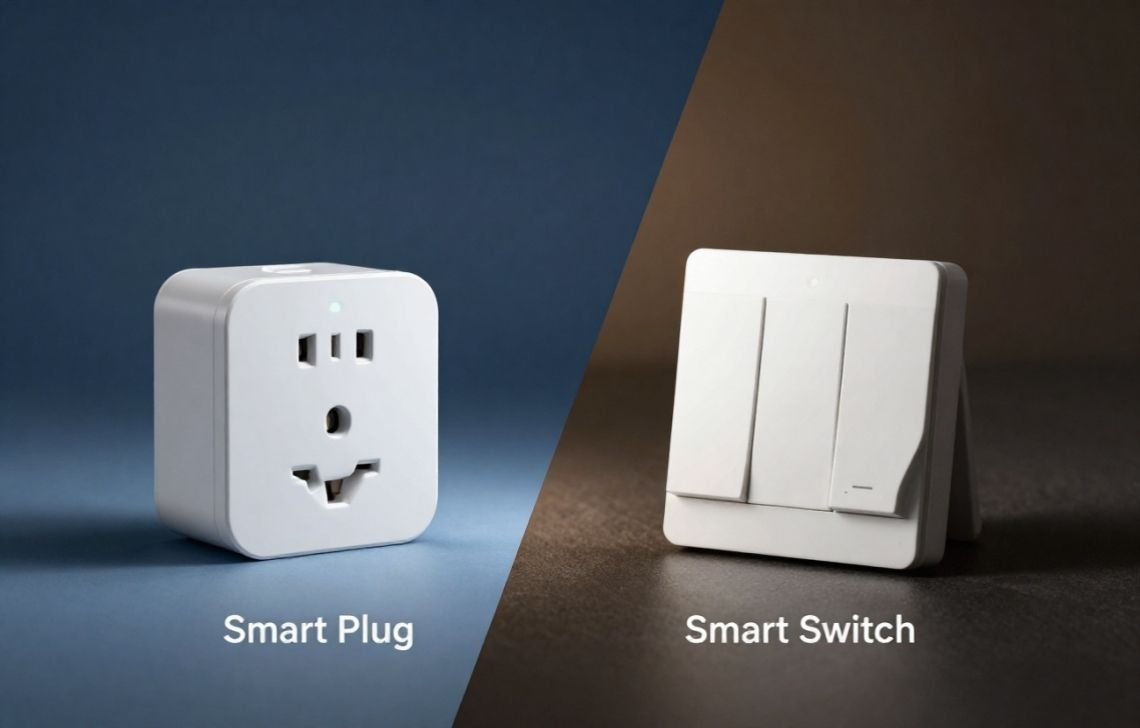
A smart plug is a small adapter that fits into your existing wall outlet, acting as an automated bridge between your home’s power supply and your electronics. It is the quintessential “plug-and-play” device, requiring no technical expertise to deploy. Once plugged in, you simply connect it to your Wi-Fi network to control the power flow to any “dumb” device via a smartphone app or voice command.
Based on technical performance standards, the key features of a smart plug include:
- Zero-Tool Installation: Truly a “set it and forget it” setup that takes less than two minutes.
- Universal Compatibility: Most reputable models work seamlessly with Alexa, Google Assistant, and Siri.
- Granular Scheduling: Create automated routines, such as ensuring your coffee maker begins brewing at 7:00 AM or your floor lamp turns on at sunset.
- Voice Control Mastery: Respond to simple commands like, “Alexa, turn off the lamp.”
- Advanced Energy Monitoring: Many high-end models, such as the TP-Link Tapo, provide real-time data on the electricity consumption of individual appliances.
- Maximum Portability: Because they are not hardwired, they are the ultimate choice for renters or anyone who plans to move soon.
The smart plug is the ideal solution for automating portable lighting, such as table and floor lamps, and small appliances like fans, humidifiers, or space heaters.
What is a Smart Switch?
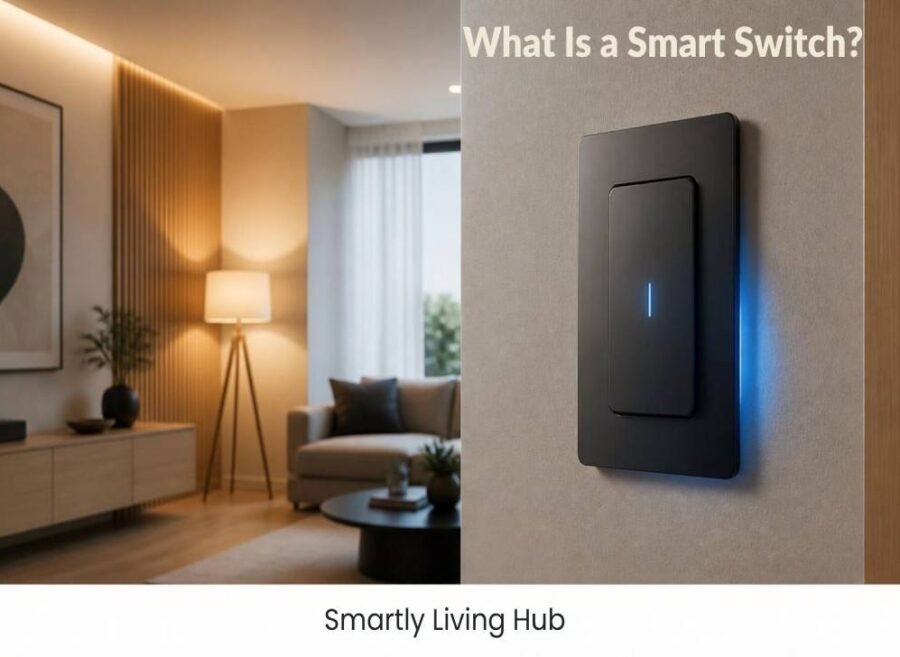
A smart switch is a Wi-Fi-connected wall switch that serves as a direct replacement for the traditional manual switches in your home. Unlike the smart plug, which controls whatever is plugged into a specific outlet, a smart switch controls the entire electrical circuit it is wired into. This makes it the primary method for managing built-in lighting fixtures, such as recessed ceiling lights, chandeliers, or outdoor floodlights.
A smart switch offers a seamless, professional aesthetic by integrating directly into the home’s electrical infrastructure. Key capabilities include:
- Circuit-Level Control: A single smart switch can manage multiple bulbs simultaneously if they are all on the same circuit, providing a more efficient way to control large rooms.
- Remote & Manual Functionality: Even if your Wi-Fi goes down, the smart switch still functions as a standard manual wall switch, ensuring you are never left in the dark.
- Sophisticated Automation: Link your smart switch to motion sensors or set timers so your porch lights turn off automatically at dawn.
- Built-in Sophistication: It avoids the “clutter” of having adapters sticking out of every wall outlet, maintaining the original look of your home’s interior design.
Side-by-Side Comparison: Smart Plug vs Smart Switch
The following table provides a comprehensive technical breakdown to help you visualize which device fits your current living situation.
Feature | Smart Plug | Smart Switch |
Installation | Very Easy (Plug-in) | Moderate (Requires Wiring) |
Best For | Lamps & Appliances | Built-in / Ceiling Lighting |
Cost | Lower Upfront | Higher Upfront |
Portability | High (Take it when you move) | Low (Permanent Installation) |
Renter-Friendly | Yes (Zero Lease Risk) | No (Requires Permission) |
Appearance | Visible (Bulky) | Seamless (In-wall) |
Power Control | Individual Device | Entire Circuit |
Energy Monitoring | Often Available (App-based) | Sometimes Available |
Works with Alexa | Yes (One-Step Setup available) | Yes (Requires Routine Setup) |
In-Depth Comparison
Performance & Reliability
One of the most critical distinctions between these two devices is their behavior during Wi-Fi outages. Because a smart plug is an external adapter, it typically loses its “smart” responsiveness if the internet fails. While many have a small physical button for manual override, the convenience of app control vanishes. Conversely, a smart switch remains a fully functional manual switch at all times. This reliability is why I often recommend a smart switch for high-traffic areas like hallways or kitchens.
Ease of Use & Installation: The Neutral Wire Factor
The smart plug requires “zero tools”—you simply need a smartphone and a 2.4GHz Wi-Fi connection. The smart switch, however, requires a hardwired installation that involves working with the home’s electrical system.
The biggest hurdle for the smart switch is the “neutral wire.” Most modern smart switch models require a neutral wire to provide constant power to the internal Wi-Fi chip. Without this constant low-level power, the switch could not remain connected to your network while the lights are off. Many older homes and apartments lack this wire in their wall boxes, making the installation of a smart switch technically impossible without major, expensive electrical work.
Pricing & Long-Term Value
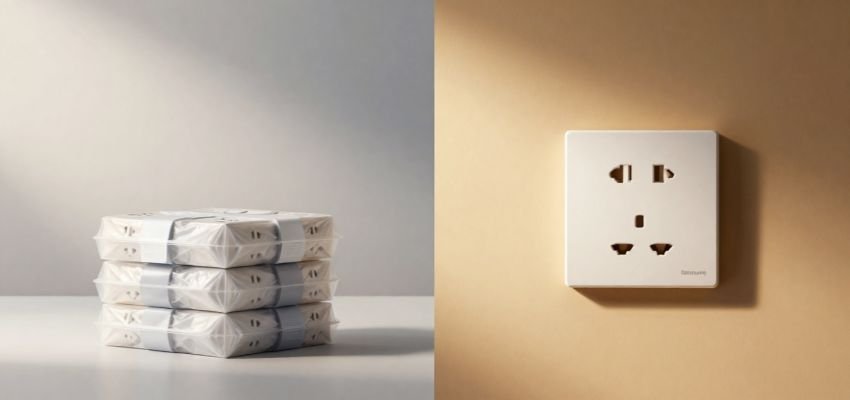
From a budget perspective, the smart plug is the entry-level king. You can buy them in multi-packs for a fraction of the cost of a single smart switch. However, for a homeowner, the smart switch offers better long-term ROI by enhancing the home’s permanent infrastructure. For renters, the smart plug is the only logical choice for value, as it moves with you to your next home, whereas a smart switch is typically left behind.
Technical Support & Ecosystems
Both devices integrate well with major ecosystems. For Alexa users, the Amazon smart plug is particularly impressive, offering a “one-step setup” that uses your existing Echo device to automatically pair the plug. Once integrated, you can use complex routines. For example, saying “Alexa, turn off the lamp” can trigger a smart plug, while “Alexa, turn off all lights” can sweep through both your smart plug units and smart switch fixtures simultaneously.
Pros and Cons Analysis
Section 1: The Smart Plug
Pros:
- No Tools Needed: Perfect for those who are not DIY-inclined.
- Budget-Friendly: Highly scalable for a few dollars per room.
- Renter-Safe: Does not alter the property’s electrical system.
- Versatile: Controls anything from a coffee maker to a Christmas tree.
Cons:
- Aesthetic Clutter: Can be bulky and block adjacent wall outlets.
- Limited Reach: Cannot control ceiling fans or recessed lighting.
- Internet Dependent: App control fails during network outages.
Section 2: The Smart Switch
Pros:
- Total Room Control: One switch manages an entire circuit of bulbs.
- Seamless Integration: Matches your wall plates and home decor perfectly.
- Manual Fallback: Works like a normal switch even without Wi-Fi.
- Energy Efficiency: Best for ensuring high-wattage ceiling lights aren’t left on.
Cons:
- Hardwired Installation: Requires turning off power at the breaker and handling wires.
- Specific Requirements: Many models won’t work without a neutral wire.
- Permanent: Generally stays with the property when you move.
- Landlord Friction: Often violates leases if installed without permission.
The Renter’s Perspective: Lease Risk and Portability
For apartment dwellers, the choice between a smart plug and a smart switch isn’t just about functionality—it is about protecting your security deposit.
Lease Risk and Deposit Protection
Installing a smart switch involves replacing an existing wall switch and modifying the property’s electrical wiring. According to the National Fire Protection Association, improper electrical modifications can significantly increase safety risks and fire hazards. Consequently, most lease agreements strictly prohibit unauthorized electrical work. If you install a smart switch without explicit, written permission from your landlord, you risk being fined, violating your lease, or losing your security deposit if you fail to restore the original switch perfectly upon move-out.
To avoid “landlord friction,” I recommend a tiered approach to smart home growth:
- Basic Setup (Plug-and-Play): Stick to the smart plug and smart bulbs. These are entirely removable and carry zero lease risk.
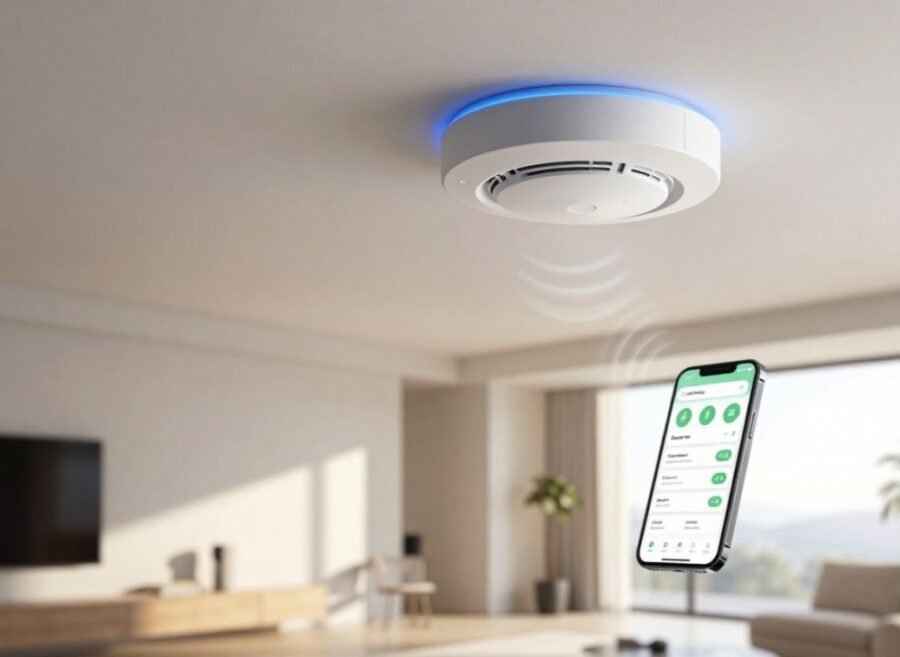
- Growing Setup (The Bridge): You may add a “bridge” or hub (like the Lutron Caséta bridge). These devices sit on your network or shelf and don’t alter the wiring, making them a safe secondary step for more reliable automation.
- Full Coverage (Hardwired): Only move to a smart switch if you are in a long-term rental, have received landlord approval, and are certain your apartment has a neutral wire.
App Experience & Smart Home Integration
- Eufy App: A “Lifestyle” leader. It’s polished and fast, with “Rich Notifications” that show a thumbnail of a face directly on your lock screen.
- Reolink App: A “Professional” dashboard. It provides granular control over bitrates and network protocols but feels more like a technical tool than a consumer app.
- Ecosystem: Eufy supports HomeKit Secure Video (on select models), offering AES-128/256 bit encryption via Apple. Reolink is more “open,” supporting ONVIF/RTSP for those who want to use third-party software like Blue Iris.
Best Use Cases: Which One Should You Choose?
The Decision Shortcut
If you are struggling to decide, follow this specialist rule of thumb: If you don’t need to touch wiring, use a smart plug; if you want to control the room’s main ceiling light, use a smart switch.
When to choose a smart plug:
- Living Room Lamps: For floor lamps that provide ambient lighting.
- Kitchen Gadgets: Coffee makers, kettles, or even slow cookers.
- Safety Items: Space heaters or curling irons that you may forget to turn off.
- Seasonal Displays: Perfect for holiday string lights.
When to choose a smart switch:
- Main Lighting: Chandeliers, hallway lights, and recessed kitchen lights.
- External Power: Porch lights or floodlights controlled by an indoor toggle.
- Ceiling Fans: When you want to control the fan’s power at the wall level.
- High-Bulb Fixtures: Any fixture with 3+ bulbs where smart bulbs would be too expensive.
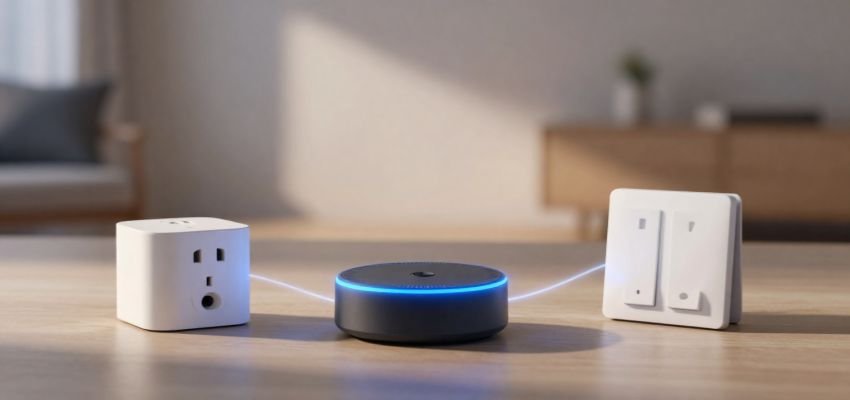
Top Product Recommendations
Best Smart Plugs
- TP-Link Kasa Mini (HS103P4): My top recommendation for renters. Its compact design ensures it doesn’t block the second outlet, and it is incredibly reliable with Alexa.
- Amazon Smart Plug: The gold standard for “zero-hassle” Alexa users. In a real-life scenario, like a studio apartment, you can have this running with a simple voice command in seconds.
- Meross & Eightree: These are excellent budget-friendly alternatives. Eightree plugs are particularly noted for their compact size and reliable Wi-Fi connectivity for those on a strict budget.
TP-Link Tapo: The best choice for those who want detailed energy monitoring to track down “energy vampire” appliances.
Best Smart Switches
- Lutron Caséta: Known in the industry as the most reliable. It uses a bridge to provide steadier automation and, crucially, often has models that do not require a neutral wire.
- TP-Link Kasa (HS200): A budget-friendly in-wall option that offers robust scheduling and “local dimming options” for a customizable feel.
- GE Cync: A versatile switch that integrates well with various ecosystems and offers a very clean, modern look.
- Leviton Decora: A professional-grade option for permanent lighting control that matches standard wall plate aesthetics.
- Treatlife: A strong contender for those looking for a high-performance smart switch at a lower price point than Lutron or GE.
Real-Life Scenario: Imagine a renter in a small apartment who wants to wake up to a lighted room. Using a TP-Link Kasa Smart Plug Mini, they can plug in a bedside lamp and set a 6:30 AM schedule. Because it is a smart plug, they can take it with them when they move next year. Compare this to a homeowner who installs a Leviton Decora smart switch in their dining room to control a 6-bulb chandelier. The switch provides a clean look and works manually for guests, while the owner enjoys sunset-to-sunrise automation.
Energy Efficiency and Automation
Both devices are powerful tools for reducing utility bills, but they save energy in different ways.
A smart plug is the superior tool for energy monitoring. It helps you identify which individual appliances are drawing “phantom power” even when turned off. By using a smart plug on a TV or a gaming console, you can cut power entirely during the night, effectively hunting down energy vampires.
Conversely, a smart switch is the better tool for circuit management. It ensures that high-wattage ceiling fixtures or outdoor floodlights are never left on accidentally. For renters, a smart plug paired with a lamp often provides sufficient energy savings without the lease risks associated with altering a smart switch.
Final Verdict: Smart Plug vs Smart Switch
The right choice ultimately depends on your housing status and your tolerance for electrical work.
- Recommend the smart plug for anyone who values flexibility, affordability, and portability. It is the only choice I recommend for renters who want to avoid “landlord friction” and protect their deposits.
- Recommend the smart switch for homeowners or long-term residents who want a permanent, professional lighting solution. It offers better reliability and a cleaner look for built-in fixtures.
The Specialist’s Best Solution: For the most comprehensive smart home, use a hybrid approach. Use a smart switch for your main overhead lighting to enjoy the convenience of wall-level control, and use a smart plug for your lamps and small appliances. This combination ensures every device in your home is automated, efficient, and easy to manage.
FAQs
Is a smart plug safer for deposits than a smart switch?
Absolutely. A smart plug is a non-permanent, “plug-and-play” device. A smart switch requires electrical modifications that most landlords consider a violation of the lease unless prior permission is granted.
Do smart switches require a neutral wire?
Most do. The neutral wire provides the constant power needed for the internal Wi-Fi chip to stay connected to your network. If you live in an older home, you must check your wiring or look for specific “no-neutral” models like certain Lutron Caséta options.
Can I install a smart switch in an apartment without permission?
It is highly discouraged. According to the National Fire Protection Association, improper electrical work can create safety risks. If discovered, you could face fines, lease termination, or a significant deduction from your security deposit to pay for professional restoration.
What happens to my smart plug if the Wi-Fi goes down?
You will lose the ability to use the app or voice assistants like Alexa. However, almost every smart plug has a physical button on the side that allows you to turn it on or off manually.
Which device is better for Alexa users?
Both are excellent, but the smart plug is easier for beginners due to the “one-step Alexa setup” found on Amazon-branded models. The smart switch is better for advanced users who want to control multiple bulbs with a single voice routine.