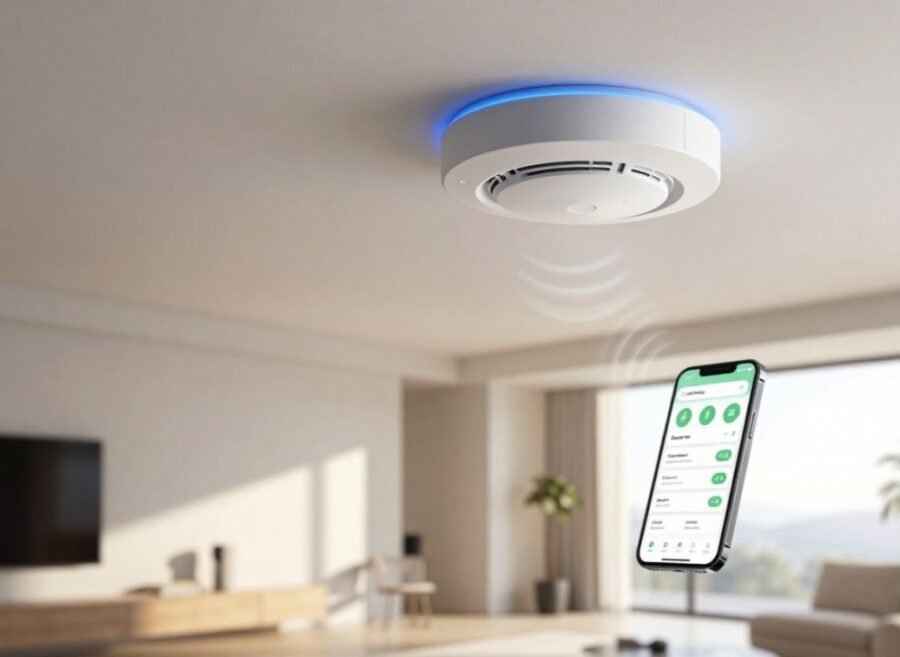

In my years testing life-safety systems, the most dangerous alarm is the one a homeowner has disabled out of frustration. Home safety is a high-stakes responsibility, and the data underscores the urgency of making the right choice. In 2023 alone, the U.S. Fire Administration estimated there were approximately 344,600 fires. While traditional alarms have been a staple of home safety for decades, they are frequently ignored or even disabled due to the frustration of false alerts. This is where the best smart smoke and carbon monoxide detector differentiates itself, moving beyond a simple siren to provide actionable, real-time data.
We are currently seeing a critical transition from basic sensors to interconnected life-safety systems. The “Smart Advantage” lies in the ability of these devices to offer remote notifications, seamless interconnectivity, and precise voice alerts. According to the National Fire Protection Association (NFPA), the death rate in home fires is 50% lower in residences with working smoke alarms. By integrating smart technology, homeowners can address the leading cause of alarm failure—non-functional or disabled units—through mobile health checks and instant smoke detector with app notifications.
This guide, backed by over 250 research hours and 25+ in-home tests, is designed to help you select the best smart smoke and carbon monoxide detector to ensure your family remains protected by the most reliable technology available today.
The Smart Buyer’s Checklist: What to Consider Before You Buy
Selecting a smart smoke detector for home use requires understanding several technical specifications that determine how quickly a device reacts to a threat.
Sensor Technology
The type of sensor in your alarm dictates which fires it detects fastest. Note that a “Dual Sensor” (detecting two types of smoke) is technically different from a “Combo Sensor” (detecting both smoke and Carbon Monoxide).
- Photoelectric Sensors: These use light beams to detect smoke particles, making them superior at identifying smoldering, smoky fires.
- Ionization Sensors: These use a small amount of radiation to detect the small particles produced by fast-flaming fires.
- Dual Sensors: These units combine both Photoelectric and Ionization technologies. In the field of fire safety engineering, dual sensors are considered the safest option because they provide comprehensive coverage for both smoldering and flaming fire types.
Power Source
You must decide between a best battery powered smart smoke detector and a best hardwired smart smoke detector. Battery-powered models are wireless and easy to install anywhere, often featuring 10-year sealed lithium batteries. Hardwired models connect directly to your home’s electrical system but must include a battery backup to remain functional during a power outage.
Smart Interconnectivity
The top smart smoke alarms feature interconnectivity. If one alarm in the basement detects smoke, every alarm in the house will sound. Smart alarms often bridge the gap between traditional hardwired “traveler” wires and wireless RF frequencies to ensure total home coverage.
Carbon Monoxide (CO) Integration
Carbon monoxide is a colorless, odorless gas. An electrochemical sensor is required to detect this “silent killer.” A combo unit is essential for comprehensive safety, as it monitors for both fire and CO simultaneously.
Quick Comparison: Top Rated Smart Smoke & CO Detectors
The following table provides an at-a-glance comparison based on smart smoke detector reviews for 2026’s leading models.
Product Name | Best For | Sensor Type | Power Source | Price Bracket |
X-Sense | smart smoke detector with voice alerts | Photoelectric & Ionization | Battery | $35 – $45 |
First Alert SMICO100 | smoke detector with longest battery life | Ionization | Battery | $40 – $50 |
First Alert SMCO100V-AC | best hardwired smart smoke detector | Electrochemical & Photoelectric | Hardwired | $70 – $80 |
Kidde Smart P4010DCSCO-W | smart smoke detector with phone alerts | Photoelectric & Ionization | Battery | $90 – $100 |
Siterwell GS886W | Lab-Tested Value | Photoelectric & Ionization | Battery | $30 – $40 |
Google Nest Protect | premium smart smoke alarm | Photoelectric & Ionization | Battery or Wired | $110 – $130 |
Kidde Hardwired | smart smoke detector for professionals | Ionization | Hardwired | $35 – $45 |
First Alert Precision | Reducing False Alarms | Photoelectric & Ionization | Battery | $60 – $70 |
Deep-Dive Reviews: The Best Smart Smoke and Carbon Monoxide Detectors
1. X-Sense: Best Voice Alerts
The X-Sense stands out as a high-value smart smoke detector with voice alerts. It provides clear instructions during an emergency, such as “Warning! Smoke detected in Dining Room!” A critical technical feature is its “triple-sample air check” system. By analyzing the air three times before triggering, the device ensures the alarm isn’t a reaction to a transient spike of steam or dust—the primary reason users disable their units.
- Pros:
- Wi-Fi connected with 17 preset locations for voice alerts.
- 10-year lithium battery eliminates the need for yearly swaps.
- Includes a digital display for real-time status updates.
- Cons:
- Requires a separate base station for full smart functionality, which increases initial setup cost and complexity.
Best For: Homeowners seeking an affordable smart smoke detector with premium voice features.
2. First Alert SMICO100: Long-Life Battery
The First Alert SMICO100 is designed for those who want a “set it and forget it” solution. Known as the smoke detector with longest battery life, it uses a 10-year lithium battery to ensure the unit remains active for its entire service life.
- Pros:
- Detects both smoke and carbon monoxide.
- Full 10-year operational life with zero maintenance required.
- Cons:
- Lacks voice alert capabilities and phone notifications.
Best For: Users who prioritize long-term reliability and low maintenance.
3. First Alert SMCO100V-AC: Top Wired Performance
The SMCO100V-AC is the best hardwired smart smoke detector for those replacing existing wired units. It utilizes an electrochemical sensor for CO and a photoelectric sensor for smoke, offering high accuracy for smoldering fires.
- Pros:
- Reliable hardwired power with battery backup.
- Voice and location alerts make emergency response faster.
- Easy plug-in design for faster installation.
- Cons:
- Lacks home automation/app compatibility; purely a local interconnected system.
Best For: Newer or renovated homes with existing hardwired infrastructure.
4. Kidde Smart P4010DCSCO-W: Lab-Tested Accuracy
In rigorous lab testing, the Kidde Smart P4010DCSCO-W earned an impressive score of 93. This smart smoke detector with phone alerts is highly effective at identifying both smoke and CO levels with speed and precision.
- Pros:
- Exceptional performance in independent lab testing.
- Interconnects with other Kidde smart devices.
- Cons:
- Higher price point; requires a compatible smart home hub for full remote features.
Best For: Safety-conscious users who rely on high-performance lab data.
5. Kidde i12010SCO: The Gold Standard for Safety Scores
While it may lack the flashy app interfaces of some “smart” models, the Kidde i12010SCO is the highest-rated detector in our context, earning a near-perfect lab score of 97.
- Pros:
- Unmatched accuracy in detecting both flaming and smoldering fires.
- Trusted hardwired reliability with a 10-year battery backup.
- Cons:
- No Wi-Fi/Smartphone notifications; relies on a 10-year sealed battery and local sirens.
Best For: Those who prioritize pure life-safety lab performance above all else.
6. Siterwell GS886W: Reliable Lab Alternative
The Siterwell GS886W is another top-tier performer, scoring a 92 in laboratory evaluations. It offers a robust battery-powered solution for those who need a reliable combination detector.
- Pros:
- Consistently high ratings for detection speed.
- Easy wireless installation with a 10-year battery.
- Cons:
- Brand recognition is lower than First Alert or Kidde, which may impact customer support availability.
Best For: Homeowners looking for a cheap smart smoke detector that doesn’t compromise on testing scores.
7. Google Nest Protect: The Premium Benchmark
Considered the premium smart smoke alarm, the Google Nest Protect is the gold standard for ease of use. It integrates seamlessly into smart home ecosystems and provides a highly intuitive app experience.
- Pros:
- Industry-leading app interface with advanced self-testing.
- Split-spectrum sensor detects both fast and slow fires.
- Cons:
- One of the most expensive units on the market; may require multiple units to be effective, leading to high total costs.
Best For: Tech enthusiasts wanting the most polished smart home experience.
8. Kidde Hardwired with Quick-Change: Ease of Maintenance
The Kidde Hardwired (with Quick-Change) is the smart smoke detector for professionals and landlords who value maintenance efficiency. Its unique slide-load battery door allows battery swaps without removing the detector from the ceiling.
- Pros:
- Interconnectable with up to 18 other devices.
- Fastest battery change mechanism available.
- Cons:
- Lacks voice features and CO detection; uses standard ionization sensors only.
Best For: Large properties where maintenance speed is a priority.
9. First Alert Precision Detection: The Dual-Sensor Specialist
This model is designed specifically to reduce “nuisance alarms” common in kitchens. By using dual sensors, it can better distinguish between steam and an actual fire threat.
- Pros:
- Dual-sensor technology (Photoelectric/Ionization) reduces false triggers.
- Highly sensitive to both smoldering and flaming fires.
- Cons:
- Lacks carbon monoxide detection; requiring the homeowner to purchase and install separate CO units.
Best For: Placement near kitchens or bathrooms where false alarms are frequent.
Categorized Recommendations: Finding Your Perfect Match
- Best for Tech Enthusiasts: We recommend a best smart smoke and carbon monoxide detector home assistant compatible model like the Nest Protect or Kidde Smart models for seamless integration.
- Best for Budget-Conscious: The X-Sense is the clear winner for an affordable smart smoke detector that still includes voice alerts and Wi-Fi.
- Best for Large Families: Focus on interconnected models like the Kidde Hardwired series to ensure the alarm sounds in every room simultaneously.
- Best for Renters: A smart smoke detector with no subscription like the First Alert battery-powered units offers easy installation and no monthly fees.
- Best for Beginners: Look for a smart smoke detector for beginners with the easiest app setup, such as the X-Sense or Google Nest.
Installation & Maintenance: Maximizing Your Protection
Even the top smart smoke alarms will fail without proper placement and upkeep. As an expert, I advise strictly following NFPA 72 (National Fire Alarm and Signaling Code) standards:
- Arm Every Level: Install a detector on every floor, in every bedroom, and outside every sleeping area.
- The 12-Inch Rule: Since smoke rises, detectors must be mounted on the ceiling or on a wall within 12 inches of the ceiling. For vaulted ceilings, mount the alarm 3 feet below the peak.
- Dodge Drafts: Keep units away from windows, doors, and air ducts. Moving air can blow smoke away from the sensors, delaying detection.
- Maintenance Schedule:
- Test Monthly: Use the “test” button to verify the siren and internal circuitry.
- Keep it Clean: Use a vacuum or cloth to remove dust and debris.
- Check Expiration: All smoke detectors must be replaced every 10 years from the date of manufacture.
Final Verdict
After evaluating features, lab scores, and ease of use, the X-Sense remains a top recommendation for its balance of price and voice-alert technology. However, for those seeking the ultimate in lab-tested reliability and smart home integration, the Google Nest Protect and Kidde Smart P4010DCSCO-W are the premium choices for 2026.
Investing in the best smart smoke and carbon monoxide detector is the single most important smart home upgrade you can make. It transforms a passive device into an active life-safety system. Check the expiration date on your current alarms today—if they are over 10 years old, it is time to upgrade to a smart system.
Detailed FAQ
How do I stop my smoke detector from beeping?
A regular beep or “chirp” usually indicates low batteries. Replace them immediately. If the beeping persists with new batteries, the unit may be dirty or has reached its 10-year expiration date.
Are smart smoke detectors better than traditional ones?
Yes, because they provide a smoke detector with app notifications. This allows you to receive alerts when you are away from home, and interconnectivity ensures the whole house is alerted instantly.
How often should I test my smart smoke detector?
You should test your unit once a month using the physical test button or the integrated app feature to ensure the circuitry and siren are working properly.
How many smoke detectors do I need per floor?
Per NFPA 72, you need at least one per floor, plus one in every bedroom and one in the hallway outside sleeping areas.
Can I use a smart smoke detector without a subscription?
Yes. Most units, including those from X-Sense and First Alert, offer a smart smoke detector with no subscription, providing app alerts and local sirens for free.