
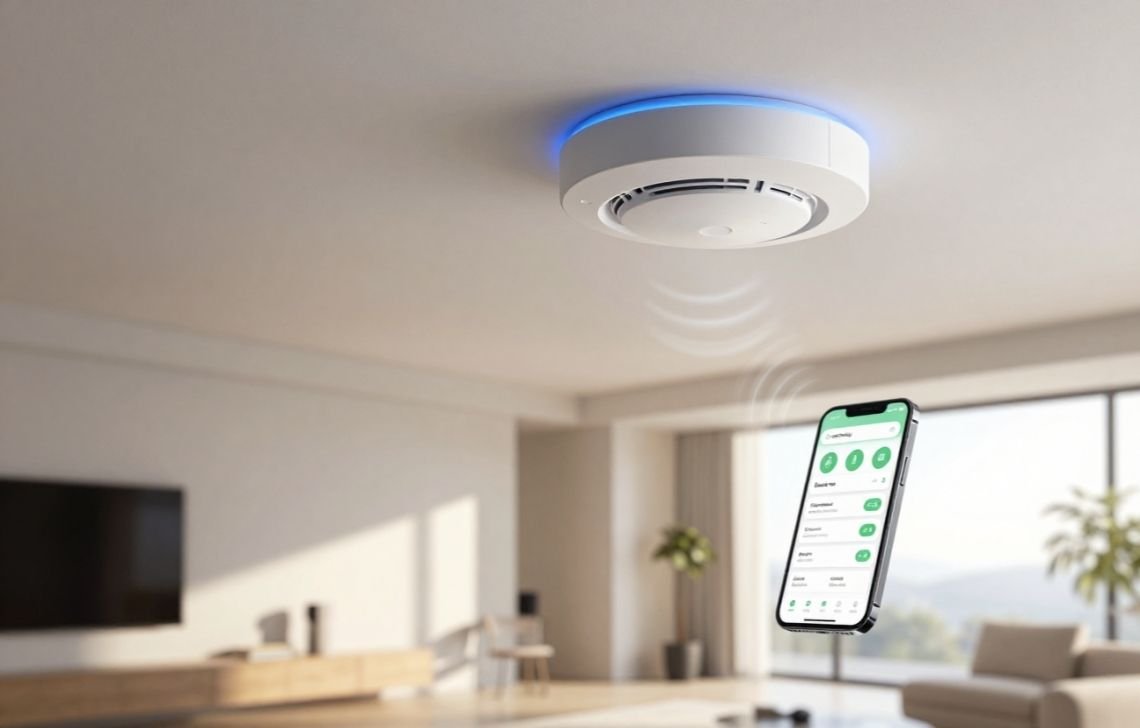
A smart smoke detector is an internet-connected fire safety device that alerts your smartphone in real-time the moment a hazard is detected, even when you aren’t home. By upgrading the traditional “dumb” alarm into a proactive home fire safety system, smart technology provides faster response times, integrates with other security devices, and eliminates the common frustrations of older hardware.
Defining the Smart Smoke Detector
A smart smoke detector is a modern, connected safety tool engineered for the early detection of smoke, heat, and often carbon monoxide. Unlike standard alarms that rely solely on a localized siren, these devices utilize Wi-Fi or a dedicated security hub (like SimpliSafe) to enable remote monitoring capabilities.
The primary differentiator is the “communication layer.” While a traditional unit only alerts the people within earshot, a smart detector acts as a gateway, ensuring you are notified of an emergency via your mobile device regardless of your location.
How Does a Smart Smoke Detector Work?
Smart detectors function through three distinct layers of technology to ensure maximum protection and reliability.
Wi-Fi and Mobile Connectivity
When the sensor is triggered, it doesn’t just beep; it sends a digital signal to a cloud server via your home’s Wi-Fi or a wireless smoke alarm hub. This server then pushes an instant notification to your smartphone. This ensures that if a fire starts while you are at work or on vacation, you can take immediate action.
Smart Home Integration
As an expert consultant, I believe the true value of these devices lies in their ability to communicate with other IoT ecosystems like Alexa, Google Home, or Apple HomeKit. In a fire event, a smart detector can trigger lifesaving automations—such as pausing the HVAC system to prevent smoke from circulating through vents, turning on smart lights to illuminate exit paths, or unlocking smart locks for first responders.
Key Benefits of Smart Smoke Detectors
Faster Emergency Response
The most critical benefit is the integration of professional monitoring. When a smart detector is linked to a monitoring service, agents are notified the second smoke is detected. They can verify the emergency and call the fire department for you, saving “precious time” (as noted in safety standards) and potentially saving your home from total destruction while you are unreachable.
Instant Mobile Notifications
Total peace of mind comes from knowing your home is safe 24/7. Whether you have pets at home alone or are worried about a kitchen appliance, receiving a notification the moment a hazard is sensed allows for a proactive response rather than a reactive one.
Smart Home Automation
Beyond fire detection, these devices serve as safety triggers. By integrating with your smart home, they can automatically shut down fans that might feed oxygen to a fire or turn on outdoor lights to help fire crews locate your home more quickly at night.
Self-Testing & Maintenance
Smart detectors solve the “chirping at 2 AM” problem. The accompanying app monitors the device’s health, sending a notification to your phone when batteries are low or if a sensor has failed. This proactive maintenance ensures your home fire safety system is never accidentally disabled.
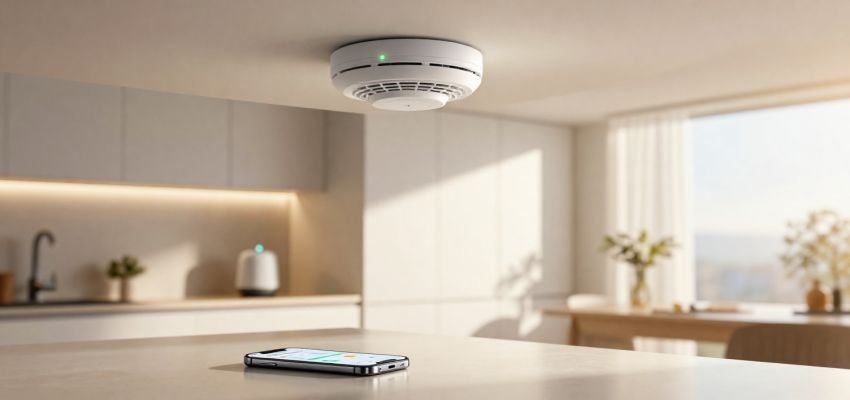
Features to Look for (Buyer’s Guide)
- 2-in-1 Functionality: Look for units that detect both smoke and Carbon Monoxide (CO). This provides comprehensive protection against both fire and the “silent killer” with a single device.
- Interconnectivity: This is a vital safety feature. Ensure your detectors are interconnected so that if one alarm sounds in the basement, every alarm in the house triggers simultaneously.
- Voice Alerts: Modern units often use voice alerts to tell you exactly where the danger is (e.g., “Smoke detected in the Master Bedroom”) rather than just a generic siren.
- Battery Life & Power Source: Decide between a DIY wireless setup for easy installation or a hardwired version for constant power. Most smart units include a long-life battery backup to ensure functionality during power outages.
Are Smart Smoke Detectors Worth It?
Pros:
- Remote alerts provide protection even when the home is empty.
- Advanced sensing reduces annoying false alarms from cooking.
- Professional monitoring agents can dispatch emergency services automatically.
Cons:
- Higher upfront cost compared to basic 10–20 alarms.
- Requires a stable Wi-Fi connection for smart features to function.
Verdict: They are a “must-have” for frequent travelers, families with pets, and anyone already invested in a smart home security ecosystem.
Installation Best Practices
Placement is just as important as the technology itself. Follow these expert guidelines for your wireless smoke alarm setup:
- Bedrooms: Install a detector inside every room where someone sleeps.
- Hallways: Place units in the central hallway outside of sleeping areas.
- Kitchen Areas: Place detectors at least 10 feet away from cooking appliances to further reduce false alarms, even with advanced sensors.
- Basements and Garages: Ensure coverage on every level. Note: In garages, professional consultants often recommend heat-specific sensors, as car exhaust can occasionally trigger standard smoke sensors.
Expert Pro-Tip: Never place a detector in a “dead-air” corner. This is the 4-inch space where walls meet ceilings; smoke often curls and misses this pocket entirely. Always mount detectors at least 4 inches away from the corner on the wall or ceiling.
Common Problems Smart Smoke Detectors Solve
- The “Dead Battery” Anxiety: No more guessing if your alarm works; the app tells you the exact battery percentage.
- The “Kitchen False Alarm”: Advanced algorithms recognize the difference between a smoky steak and a kitchen fire.
- The “Unattended Home” Risk: Provides a safety net for your property and pets when no one is home to hear a traditional siren.
Final Thoughts
A smart smoke detector is a modern safety upgrade that transforms a passive alarm into an active protection system. By combining the precision of photoelectric sensors with the speed of mobile alerts and professional monitoring, these devices offer a level of security that traditional alarms simply cannot match. If you haven’t audited your home’s sensors in the last few years, now is the time to consider an upgrade—it’s a small investment that offers the ultimate peace of mind.
FAQs
Do smart smoke detectors work without Wi-Fi?
Yes. They will still function as a traditional, high-decibel local siren. However, the “smart” features—mobile notifications and professional dispatch—will be disabled until the connection is restored.
Can they call the fire department?
Yes, if you have a professional monitoring plan. Agents will receive the alarm signal and can contact emergency services on your behalf if they cannot reach you.
How long do they last?
The sensors are generally rated for 10 years. Expert Tip: Always check the manufacture date printed on the back of the unit when you install it to ensure you get the full decade of protection.
Can they detect Carbon Monoxide too?
Many models, such as those from SimpliSafe, are 2-in-1 units that monitor both smoke and CO levels simultaneously.
Are they hard to install?
Most are designed for DIY installation. Wireless models can be mounted with basic tools in minutes, making them far more accessible than older hardwired systems.