
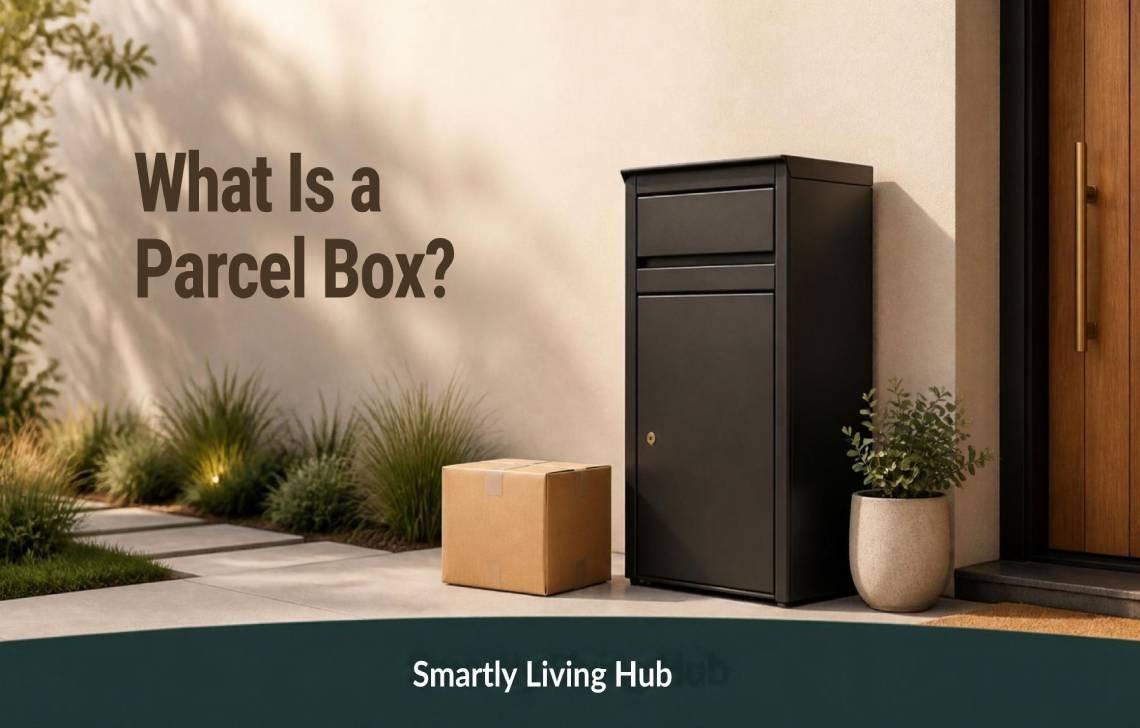
If you regularly order products online, you may have wondered what is a parcel box and whether you need one. A parcel box is a secure container designed to receive packages at a home or other private property when the recipient is not available to accept the delivery.
Unlike a traditional mailbox, which is primarily designed for letters and smaller mail, a parcel box provides a dedicated space for larger deliveries. Depending on its design, it may use a locking door, delivery flap, one-way opening, or another mechanism that lets a delivery driver place a package inside while keeping previously delivered items protected.
The important point is that not every parcel box is the same as a USPS mailbox or a parcel locker. Those systems can have different purposes and delivery requirements.
What Is a Parcel Box?
A parcel box is a receptacle designed to receive and temporarily store delivered packages at a property.
A technical specification for end-use parcel boxes, CEN/TS 16819, defines a parcel box as a receptacle intended to receive parcels delivered by postal or parcel operators. The specification also addresses areas such as parcel size, safety, water penetration, corrosion resistance, and delivery security.
In simple terms, think of a parcel box as a dedicated package container for your home.
A typical setup works like this:
- A delivery driver arrives at your property.
- The driver places the package into the parcel box using its designated opening or door.
- The package remains inside the secured compartment.
- You retrieve it later using the box’s intended access method.
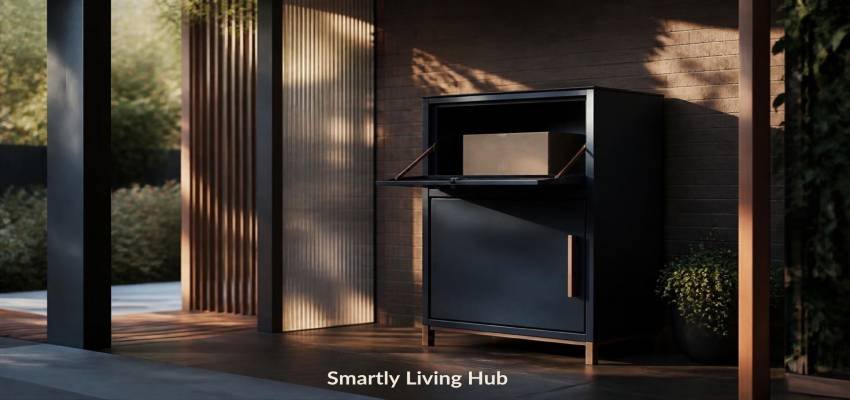
The exact mechanism varies between designs. Some boxes use a deposit flap or one-way mechanism, while others use a locking door or electronic access system.
How Does a Parcel Box Work?
The basic idea is simple: make package delivery possible without requiring someone to be home at the exact time the driver arrives.
A typical delivery process looks like this:
Delivery arrives → package goes into the box → box is closed or secured → recipient retrieves the package later.
For example, imagine you are at work when a package arrives. Instead of leaving the package exposed on your porch, the driver places it inside the parcel box. When you return home, you open the secured compartment and collect your delivery.
Some parcel boxes are designed around a one-way delivery principle. The delivery opening allows packages to go in while the design makes it difficult to retrieve them through the same opening.
However, this is not universal. Before buying a parcel box, check how its particular deposit and retrieval mechanism works. If you’re comparing options, see our guide to the best package delivery boxes to find a parcel box with a deposit and retrieval system that fits your needs.
What Is a Parcel Box Used For?
The main purpose of a parcel box is to provide a dedicated location for package deliveries.
It can be useful if you:
- Receive online orders frequently
- Are regularly away from home during delivery hours
- Want to keep packages out of the weather
- Prefer not to leave packages visibly on a porch
- Want a clearly designated delivery location
- Need more package capacity than a standard mailbox provides
A parcel box can also make delivery instructions easier to communicate because the driver has a specific location where packages are intended to be placed.
It is important, however, not to treat a parcel box as a guarantee against theft. Its effectiveness depends on the box’s physical security, installation, location, locking design, and whether the carrier actually uses it.
Parcel Box vs. Regular Mailbox
A parcel box and a traditional mailbox serve related but different purposes.
Feature | Parcel Box | Traditional Mailbox |
Main purpose | Packages and larger deliveries | Letters and smaller mail |
Typical capacity | Larger package-focused capacity | Primarily mail-focused |
Security | Often uses a lock or secure deposit mechanism | Varies by mailbox design |
Package protection | Designed specifically around packages | Limited by mailbox size |
Installation | Varies by model | Subject to applicable postal requirements |
Smart features | Some models offer them | Some models can be monitored with sensors |
Typical location | Porch, entrance, driveway, wall, gate, or property | Curb, wall, door, or approved location |
The distinction is particularly important in the United States because a generic private parcel box should not automatically be assumed to be a USPS-approved mail receptacle.
USPS has specific requirements for mailboxes and provides package-friendly mailbox options that are designed to accommodate both regular mail and packages.
Parcel Box vs. Package Delivery Box
In everyday consumer language, these terms usually refer to very similar products.
A package delivery box is generally a box designed to receive delivered packages. A parcel box describes essentially the same basic concept.
The terminology can vary by manufacturer and country, so don’t choose a product based only on its name.
Instead, check:
- Maximum package dimensions
- Internal capacity
- Locking mechanism
- Delivery opening
- Weather protection
- Mounting method
- Retrieval method
- Whether multiple deliveries can be placed inside
- Whether the manufacturer specifies particular carrier or delivery arrangements
These characteristics tell you much more about the product than whether the listing calls it a “parcel box” or “package delivery box.”
Parcel Box vs. Parcel Locker
A parcel locker is usually part of a larger shared delivery system, while a home parcel box is generally intended for one property or household.
For example, an apartment building may have a bank of individual locked compartments that multiple residents use. A homeowner, by contrast, might install one parcel box outside their house.
The main difference
Parcel box: Usually a private package receptacle at a home or business.
Parcel locker: Usually one or more secure compartments in a shared or managed delivery system.
A parcel locker can be useful in:
- Apartment buildings
- Condominiums
- Offices
- Residential communities
- Shared pickup locations
- Other multi-user environments
A home parcel box is more relevant when you want packages delivered directly to your own property.
Are Parcel Boxes Secure?
A parcel box can provide an additional layer of package security, but security depends heavily on its design.
Useful security features can include:
Locking compartment
A lock can prevent someone from simply opening the main storage area and taking packages.
One-way delivery mechanism
Some designs allow a driver to deposit a package while making it difficult to reach back through the delivery opening.
Anti-retrieval design
Certain parcel boxes are designed to prevent someone from pulling packages back through the delivery opening after they have been deposited.
Strong construction
A sturdy enclosure can be more resistant to forced entry than a lightweight container.
Secure anchoring
A heavy-duty box is less useful if someone can simply carry it away. Permanent mounting or anchoring can therefore be an important consideration.
Weather resistance
A parcel box should also protect packages from rain and other outdoor conditions. Technical specifications for parcel boxes specifically address resistance to water penetration and corrosion.
Still, no outdoor package box should be described as completely theft-proof. A determined attacker may still be able to damage, remove, or bypass a poorly installed or poorly designed unit.
If you want to add another layer of monitoring around your delivery area, consider where a security camera can provide useful coverage. Our guide on where to place outdoor security cameras explains common locations and factors to consider when positioning a camera outside your home.
Where Should You Put a Parcel Box?
The ideal location depends on the property and the delivery process.
Common locations include:
- Near the front entrance
- Beside a porch
- Near a driveway
- At a gate
- Against an exterior wall
- Near another designated delivery area
The box should be easy for an authorized delivery driver to identify and access without creating an unnecessary obstacle.
At the same time, consider whether the location makes it easy for an unauthorized person to access the box.
Before installation, check:
- Whether the delivery driver can reach it easily
- Whether the opening is accessible
- Whether the box can be securely anchored
- Whether the location exposes it to excessive water
- Whether the door or lid has enough clearance
- Whether the box is large enough for the packages you normally receive
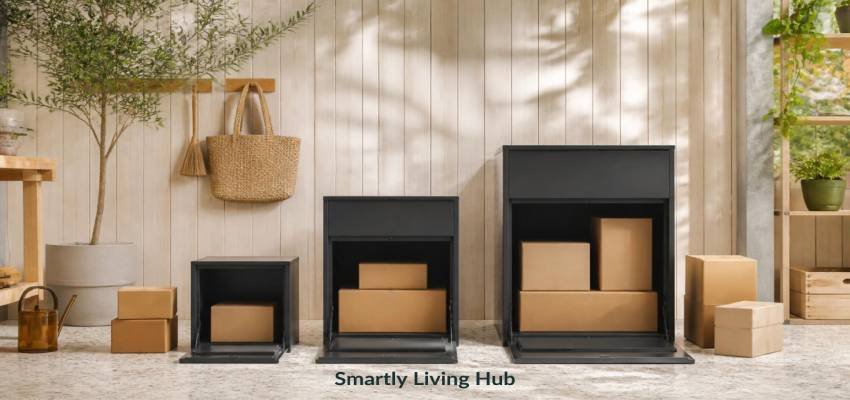
What Size Parcel Box Do You Need?
The right size depends on the packages you normally receive.
A small box may work if you mostly receive:
- Small electronics
- Books
- Accessories
- Small household products
- Small subscription shipments
A larger parcel box makes more sense if you frequently order:
- Clothing
- Household supplies
- Multiple items in one shipment
- Larger electronics
- Pet supplies
- Other bulky products
Don’t judge capacity only by the advertised internal volume. The maximum package dimensions can be more useful.
For example, a box might have plenty of total internal space but still reject a long or unusually shaped package because the delivery opening is too small.
Before buying, compare the box’s stated maximum package dimensions with several packages you commonly receive.
Can a Parcel Box Receive Multiple Packages?
Some can, but this depends on the design and capacity.
A parcel box with a large storage compartment may accommodate several smaller deliveries. A smaller unit may fill after one larger package.
The delivery mechanism also matters.
A box designed with a secure deposit system may allow another package to be deposited without exposing earlier deliveries. Other designs may require a different procedure.
Therefore, if you regularly receive several deliveries per day, check the manufacturer’s instructions for:
- Maximum package size
- Internal capacity
- Multiple-delivery capability
- Deposit mechanism
- Retrieval method
Don’t assume that every box can safely accept unlimited packages.
Package security also includes being careful about fake delivery messages. The FTC’s guidance on package delivery scams explains how scammers may use fake package problems or delivery notifications to trick people into clicking links or sharing information.
Can USPS Deliver to a Parcel Box?
Not necessarily.
This is one of the most important points for U.S. homeowners.
USPS has specific rules for mail receptacles and package delivery. USPS also sells or identifies approved package-friendly mailboxes that are designed to hold packages as well as ordinary mail.
USPS regulations also address parcels that are too large to fit into a customer’s mailbox and the circumstances under which such parcels may be left outside.
Therefore, don’t assume that purchasing a generic private parcel drop box automatically means USPS will use it for every delivery.
If USPS delivery is important to you, check the current USPS requirements and the specific receptacle’s approval or delivery instructions before installation.
Do Parcel Boxes Need Wi-Fi or Electricity?
No, not usually.
A basic parcel box can work entirely mechanically. It may only need:
- A physical locking mechanism
- A delivery opening or door
- A secure storage compartment
- Appropriate mounting hardware
Some newer products add smart features such as electronic locks, sensors, cameras, or delivery notifications.
Those features can require batteries, Wi-Fi, a hub, or another form of connectivity.
The important distinction is:
A parcel box does not need to be a smart-home device to perform its basic function.
If you only want a secure place for packages, a mechanical design may be sufficient. If you want notifications when the box is opened, additional technology may be useful.
Can You Add a Sensor to a Parcel Box?
Potentially, yes.
A compatible door, contact, vibration, or other sensor can sometimes be used to detect activity around a delivery box. The exact setup depends on the box construction and the sensor.
For example, a smart sensor could potentially notify you when a compartment is opened.
If you’re interested in monitoring a delivery receptacle, you can also explore how mailbox sensors work and how different sensor technologies connect to smart-home systems.
What Are the Benefits of a Parcel Box?
A parcel box can provide several practical benefits.
1. A dedicated delivery location
Drivers have a specific place to put packages rather than leaving them wherever they find convenient.
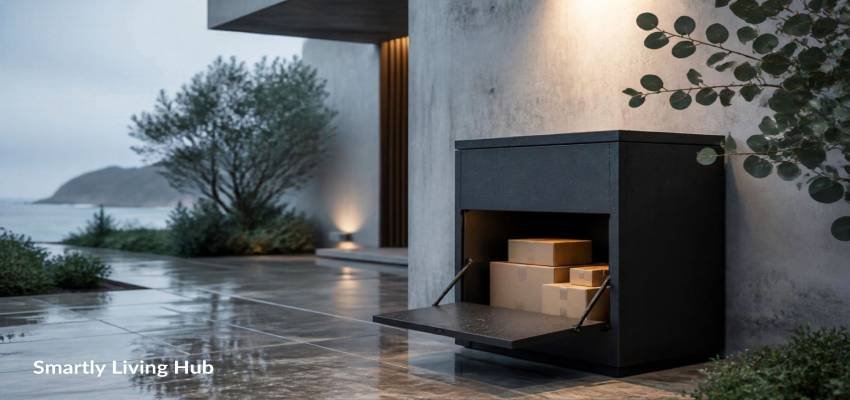
2. Protection from weather
A properly designed outdoor parcel box can shield packages from rain, snow, and direct exposure to the elements.
3. Less visible package exposure
Keeping a package inside an enclosed container can make it less visible than a package sitting openly on a porch.
4. More convenient package collection
You can retrieve deliveries when you return home rather than depending on being present when the driver arrives.
5. Greater package capacity
A parcel box can hold packages that would not fit inside a conventional residential mailbox.
What Are the Limitations?
A parcel box isn’t a solution for every delivery situation.
Carrier procedures can vary
A private parcel box does not automatically mean every carrier will use it for every type of shipment.
Oversized packages may not fit
Large or unusually shaped deliveries may still require another delivery method.
Signature-required deliveries can be different
A package requiring a signature or another form of handoff may not be suitable for unattended delivery.
Installation matters
An unsecured box may be easier to remove or damage than a properly anchored one.
It doesn't guarantee theft prevention
A parcel box can reduce exposure and add physical security, but it cannot guarantee that a package will never be stolen.
Who Should Consider a Parcel Box?
A parcel box may make sense if you:
- Frequently shop online
- Receive deliveries while away from home
- Have a suitable outdoor installation location
- Want a dedicated package drop point
- Regularly receive packages that don’t fit your mailbox
- Want additional protection from weather and casual package access
It may be less useful if you rarely receive packages, are normally home during deliveries, or don’t have an appropriate location for a secure installation.
What Should You Look for When Buying a Parcel Box?
If you decide that a parcel box fits your needs, focus on the following factors.
1. Package dimensions
Check the maximum package dimensions rather than relying only on total capacity.
2. Deposit mechanism
Understand exactly how the delivery driver places a package inside.
3. Retrieval method
Check whether you use a key, combination, electronic access, or another method.
4. Security construction
Look at the locking system, enclosure, hinges, access points, and anchoring options.
5. Weather protection
For outdoor installation, look for appropriate protection against rain and corrosion.
6. Installation requirements
Determine whether the box needs to be wall-mounted, bolted to a surface, post-mounted, or installed another way.
7. Carrier compatibility
Don’t assume compatibility simply because a product description says “package delivery box.” Check the manufacturer’s instructions and applicable carrier requirements.
8. Smart features
If notifications or remote monitoring matter to you, determine whether the box supports the technology you already use.
Is a Parcel Box Worth It?
A parcel box can be useful if you frequently receive packages and are not always available to accept them.
Its biggest advantage is straightforward: it creates a dedicated place for packages to be deposited and stored until you can retrieve them.
However, the right solution depends on your delivery situation. A private parcel box, a USPS-approved package-friendly mailbox, and a shared parcel locker solve different problems.
If you receive frequent home deliveries, focus on capacity, security, installation, weather resistance, and carrier compatibility rather than simply choosing the largest or most expensive box.
Final Verdict
A parcel box is a secure receptacle designed to receive and store delivered packages at a home or other property. Depending on the design, it may use a locking compartment, delivery flap, one-way mechanism, or electronic access system.
The terms parcel box, parcel drop box, and package delivery box often describe similar products, but they aren’t necessarily identical in design.
Most importantly, don’t confuse a private parcel box with a USPS-approved mailbox or a shared parcel locker. If USPS delivery is part of your plan, verify the applicable USPS requirements before installing a receptacle.
For most homeowners, the decision comes down to a few practical questions: How many packages do you receive, how large are they, where can you install the box, and which carriers need to use it?
FAQs
Can USPS deliver to a parcel box?
Not every private parcel box is automatically suitable for USPS delivery. USPS has specific requirements for mail receptacles and also provides approved package-friendly mailbox options. Check current USPS requirements before relying on a particular box for USPS deliveries.
Is a parcel box the same as a parcel locker?
No. A home parcel box is generally a private package receptacle for one property. A parcel locker usually refers to a secure compartment or group of compartments used by multiple residents or customers.
Are parcel boxes secure?
They can provide an additional layer of package security through features such as locks, enclosed compartments, one-way deposit mechanisms, and anchoring. However, no parcel box should be considered completely theft-proof.
Do parcel boxes need Wi-Fi?
No. Basic parcel boxes are mechanical and do not require electricity or Wi-Fi. Smart parcel boxes or boxes equipped with electronic locks, sensors, or notifications may require batteries, Wi-Fi, a hub, or another connection.
What size parcel box should I get?
Choose a box based on the dimensions of the packages you normally receive. Pay particular attention to the maximum package dimensions and delivery opening because an unusually shaped package may not fit even when the box appears to have plenty of internal volume.