
Have you ever found yourself shivering in your living room while your upstairs bedroom feels like a sauna? Or perhaps you’ve opened your utility bill in mid-July and felt a genuine sense of shock at the total. These are the moments when most homeowners realize their HVAC system management needs an upgrade.
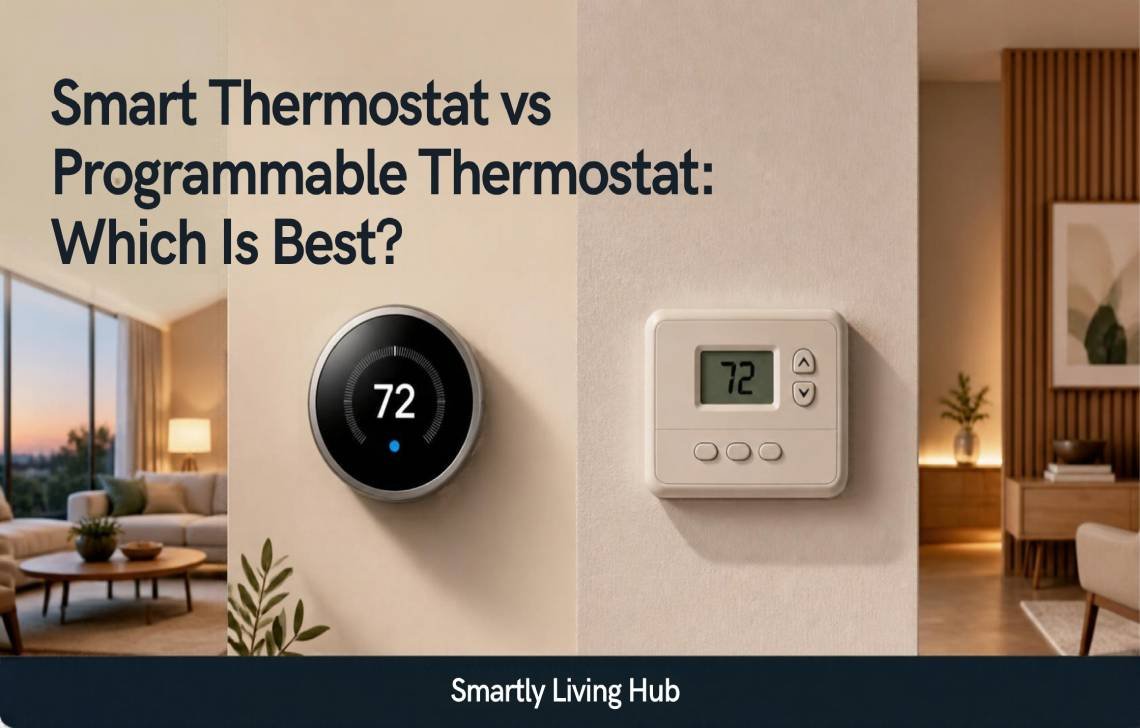
When you start looking for solutions, you are immediately confronted with a choice: the smart thermostat vs programmable thermostat. While both represent a significant leap forward from the old-fashioned manual dials that required constant physical adjustments, they operate on entirely different technological planes. One offers a reliable, fixed routine, while the other functions as a high-tech brain for your home that learns your habits and even tracks the weather.
In my years as an energy efficiency consultant, I’ve found that the “best” choice isn’t always the most expensive one—it’s the one that aligns with your daily rhythm, your technical comfort level, and your long-term financial goals. In this guide, we’ll dive deep into the mechanics of both systems, comparing everything from “Matter” integration to the nuances of geofencing, so you can stop guessing and start saving.
At-a-Glance: Comparison Table
To help you visualize the core differences, I’ve outlined the primary features of a programmable thermostat versus a smart thermostat below.
Feature | Programmable Thermostat | Smart Thermostat |
Connectivity | None (No Wi-Fi/Bluetooth) | High (Wi-Fi, Bluetooth, Matter) |
Control Method | Manual On-Device Buttons | Smartphone App, Voice Control, Manual |
Automation | Fixed/Static Schedule | Self-learning technology & AI |
Energy Efficiency | Moderate (Schedule-dependent) | High (Dynamic & Predictive) |
Average Upfront Cost | Lower ($20 – $50) | Higher ($120 – $250+) |
System Maintenance | Manual Tracking Only | Automated System Alerts |
Weather Response | None | Real-time & Historical Data Tracking |
Ecosystem Integration | None | Apple Home, Google, Alexa, Home Assistant |
Defining the Programmable Thermostat
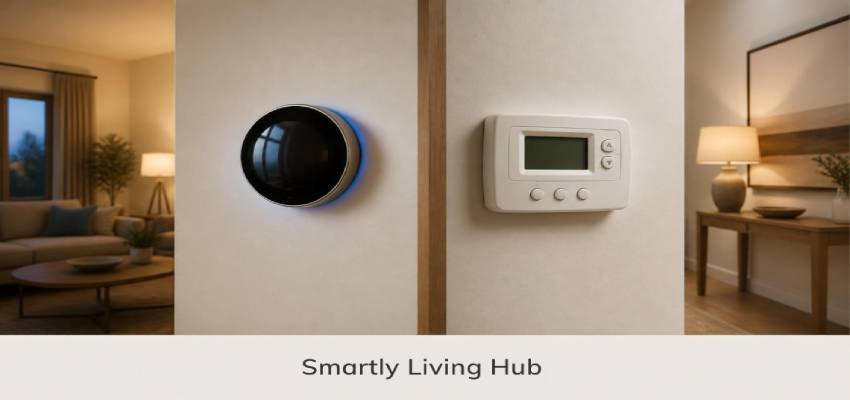
A programmable thermostat is a reliable, “offline” device designed to automate your HVAC system based on a rigid timeline that you input manually. Think of it as a digital alarm clock for your furnace and air conditioner. You tell it exactly what time to turn the air up and exactly what time to turn it down, and it follows those instructions without deviation until you change them.
For homeowners who live a very structured life—leaving for work at 8:00 AM and returning at 5:00 PM every single day—this is often all the technology they need. Because these units do not require an internet connection, they are incredibly stable and immune to Wi-Fi outages.
Core Functionalities:
- Fixed Routines: Most models offer 5-2 day scheduling (one routine for weekdays, another for weekends) or 7-day scheduling.
- Manual Updates: If you stay home sick or take a day off, the thermostat won’t know. You must walk to the wall and manually override the settings.
- No Internet Dependency: It operates purely on local wiring, making it a favorite for those in areas with spotty internet or those concerned about digital privacy.
- Single-Point Sensing: It measures the temperature at the wall where it is mounted, treating the entire home as a single, uniform zone.
Defining the Smart Thermostat
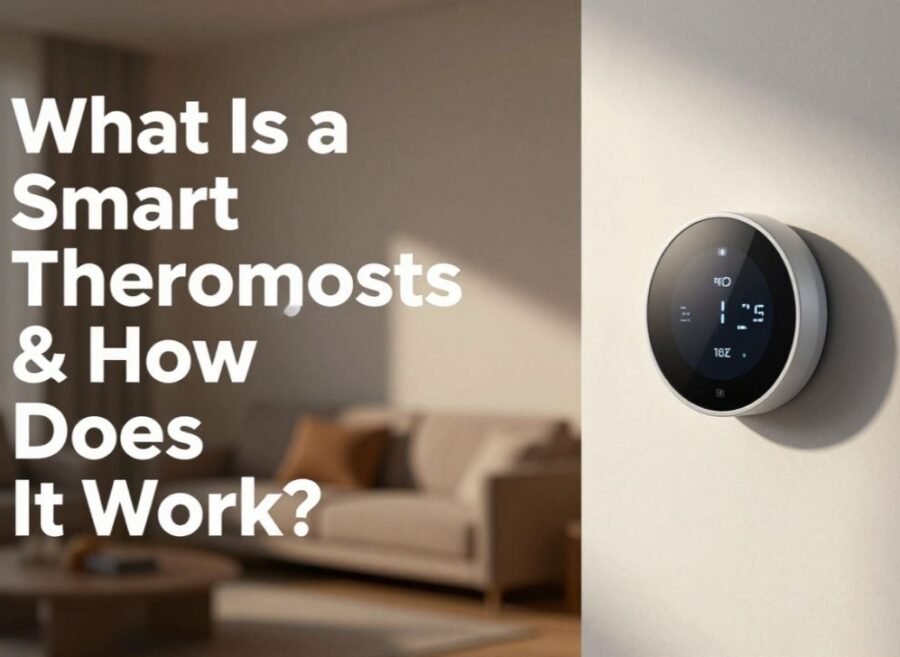
The smart thermostat represents the pinnacle of modern home climate control. Unlike its programmable cousin, a smart thermostat is a Wi-Fi-connected hub that uses self-learning technology to understand your preferences. Modern units, such as the LUX TQX or the LUX TQ1, don’t just wait for you to tell them what to do; they observe your behavior, use geofencing to track your proximity to home, and even analyze the weather to optimize performance.
The “smart” aspect comes from the device’s ability to process data. By connecting to your smartphone, the thermostat knows when you are approaching the driveway and can pre-cool the house so it’s perfect the moment you walk in. Furthermore, the inclusion of Matter technology in newer models ensures that these devices can “talk” to other smart home products across different brands, preventing the “ecosystem lock-in” that used to frustrate users who switched from Android to iPhone.
Advanced Features:
- Self-Learning Technology: The device tracks your manual adjustments over the first week or two, eventually building a custom schedule that mirrors your actual life.
- Geofencing (Location Tracking): By creating a virtual boundary around your home, the system automatically enters an energy-saving “Away” mode when your phone leaves the radius.
- Predictive Weather Planning: These units pull live weather alerts and historical records to predict how the home will respond to outside shifts, adjusting the HVAC system before a cold front even hits.
- Remote Access: Whether you’re on the couch or on vacation in another country, you have total control via a smartphone app.
In-Depth Feature Comparison
In-Depth Feature Comparison
When comparing smart thermostat vs programmable thermostat capabilities, the biggest differentiator is flexibility. A programmable thermostat is static; it assumes your life is a loop. If you get stuck in traffic or leave for a weekend getaway and forget to change the settings, a programmable unit will happily heat or cool an empty house for days.
In contrast, a smart thermostat utilizes dynamic adjustments. It uses self-learning technology to realize that you usually turn the heat up on Tuesday mornings at 7:00 AM but stay in bed until 9:00 AM on Saturdays. More impressively, it uses weather data to “plan and predict” how hard your system needs to work. If the internet reports a record-breaking heatwave is approaching, the smart unit can optimize the cooling cycle to maintain comfort without overtaxing the hardware.
Performance & Comfort
A common complaint among my clients is the “upstairs vs. downstairs” temperature gap. A programmable thermostat is often helpless here because it only knows the temperature of the hallway where it’s installed. Smart thermostats solve this through the use of remote sensors.
By placing motion and temperature sensors in bedrooms or home offices, a smart thermostat can prioritize the climate in the rooms you are actually using. If the motion sensor detects you are in the upstairs office, the system can adjust the HVAC system to ensure that specific room is comfortable, even if the main thermostat in the living room is already at the target temperature. This multi-room intelligence is a game-changer for overall home comfort.
Pricing & Value
From a specialist’s perspective, I always tell homeowners to look at “Upfront Cost vs. Long-Term ROI.” Yes, a programmable thermostat is significantly cheaper at the checkout counter. However, the energy efficiency gains of a smart model can often pay for the device within a year or two.
It is also important to look for a smart thermostat without subscription fees. Some brands charge a monthly “premium” for advanced data, but models like the LUX TQX provide full functionality—including system alerts and geofencing—without an ongoing cost. Additionally, a smart-enabled home typically sees an increase in home value, as modern buyers view these devices as essential infrastructure rather than luxury add-ons.
Ease of Use
The “ease of use” factor is a double-edged sword. For a non-tech-savvy user, a programmable thermostat offers a “no-tech hurdle” experience with physical buttons and a simple LCD screen. However, many people find programming those tiny buttons so frustrating that they eventually give up and just use it like a manual thermostat.
A smart thermostat is “app-driven and automated.” While the initial setup requires connecting to Wi-Fi and syncing an app, the day-to-day experience is much simpler because the device manages itself.
Pro Tip on Installation: One hurdle for smart units is the “C-wire” (common wire) which provides constant power. If your home is older, you might lack this wire. Attempting a DIY install without a C-wire is a leading cause of “HVAC callbacks,” where a technician has to come out to fix a system that won’t turn on. If you’re unsure, always consult a professional for the initial setup.
Customer Support & Maintenance
This is where the smart thermostat truly shines for the health of your HVAC system. These devices act as a diagnostic tool for your home. You will receive system alerts if your furnace is running longer than usual to reach a temperature, which can indicate a failing part or a clogged filter. By catching these issues early, you prevent total system failures and expensive emergency repairs. A programmable thermostat cannot monitor the “health” of your hardware; it only knows if it is “On” or “Off.”
Pros and Cons Analysis
Programmable Thermostat
Pros:
- Affordability: Lowest entry price for basic automation.
- Security: Impossible to hack via the internet; no data is ever shared.
- Reliability: No “offline” issues; it works regardless of your router’s status.
- Simplicity: Ideal for those who want to avoid apps and accounts.
Cons:
- Rigidity: No remote control; you must be physically present to change the temperature.
- Inefficiency: Can lead to higher bills if your schedule changes and you forget to manual-override.
- Limited Data: No maintenance alerts or weather integration.
Smart Thermostat
Pros:
- Maximized Savings: High energy efficiency through self-learning technology.
- Total Control: Remote access allows you to warm the house before you return from a trip.
- Predictive Maintenance: Automated alerts prevent system downtime and extend hardware life.
- Connectivity: Matter support ensures it works with your existing smart home ecosystem.
Cons:
- Cost: Higher initial investment for the device and potential professional installation.
- Security Risks: Like any IoT device, there is a risk that hackers could access the thermostat to gain entry to the wider home network or security system.
- Tech Dependency: Requires a stable Wi-Fi connection to utilize its most valuable features.
Use Cases: Which One Should You Choose?
Scenario A: The Consistent Routine
I recommend the programmable thermostat for homeowners who prioritize simplicity and have a highly predictable life. If you are a retiree who is usually home, or a professional with a strict 9-to-5 who isn’t interested in smartphone apps, the programmable unit is a perfect, budget-friendly fit. It provides the core benefits of energy saving without the “technology hurdle” or the need for a stable internet connection.
Scenario B: The Dynamic Household
I recommend the smart thermostat for busy families, tech enthusiasts, and anyone struggling with high energy bills. If your “9-to-5” often turns into a “9-to-7,” or if you have kids coming and going at odd hours, the geofencing and self-learning technology will save you a fortune by ensuring you never pay to heat an empty house. Furthermore, if you deal with uneven temperatures between floors, the ability to add smart room sensors makes a smart unit the only logical choice for true comfort.
The Verdict
While the programmable thermostat remains a solid choice for those on a tight budget or those seeking total digital privacy, the smart thermostat is the clear winner for the modern home. The “step into the future” isn’t just about the convenience of an app; it’s about the integration of system alerts, weather-predictive logic, and the high energy efficiency that only a connected device can provide.
Models like the LUX TQX and LUX TQ1 represent the best of this technology—offering a subscription-free experience that adapts to your life. If you are looking to maximize the lifespan of your HVAC system while minimizing your environmental footprint, the smart path is the only way forward.
FAQs
Does a smart thermostat really save more money than a programmable thermostat?
Yes, significantly. While a programmable thermostat saves money over a manual dial, it relies on you having a perfect schedule. A smart thermostat uses geofencing and self-learning technology to catch the “waste” you miss, such as leaving the AC on when you run an unexpected three-hour errand.
Can I use a smart thermostat without Wi-Fi?
You can, but it’s like buying a Ferrari and never taking it out of first gear. Without Wi-Fi, it functions as a basic manual thermostat. You lose remote access, system alerts, and the ability to receive the “Matter” updates that keep the device secure and compatible with other tech.
Is it hard to install a smart thermostat vs programmable thermostat?
The physical mounting is similar, but the smart unit requires a Wi-Fi handshake and often a “C-wire” for power. If your existing thermostat has only two wires (common in older homes), you may need an adapter or professional help to avoid an HVAC service call.
What is geofencing in climate control?
Geofencing uses your phone’s GPS to create a virtual “fence” around your property. When you leave the fence, the thermostat drops into energy-saving mode. When you cross back into the fence on your way home, it signals the HVAC system to start working so the house is comfortable the moment you walk through the door.