
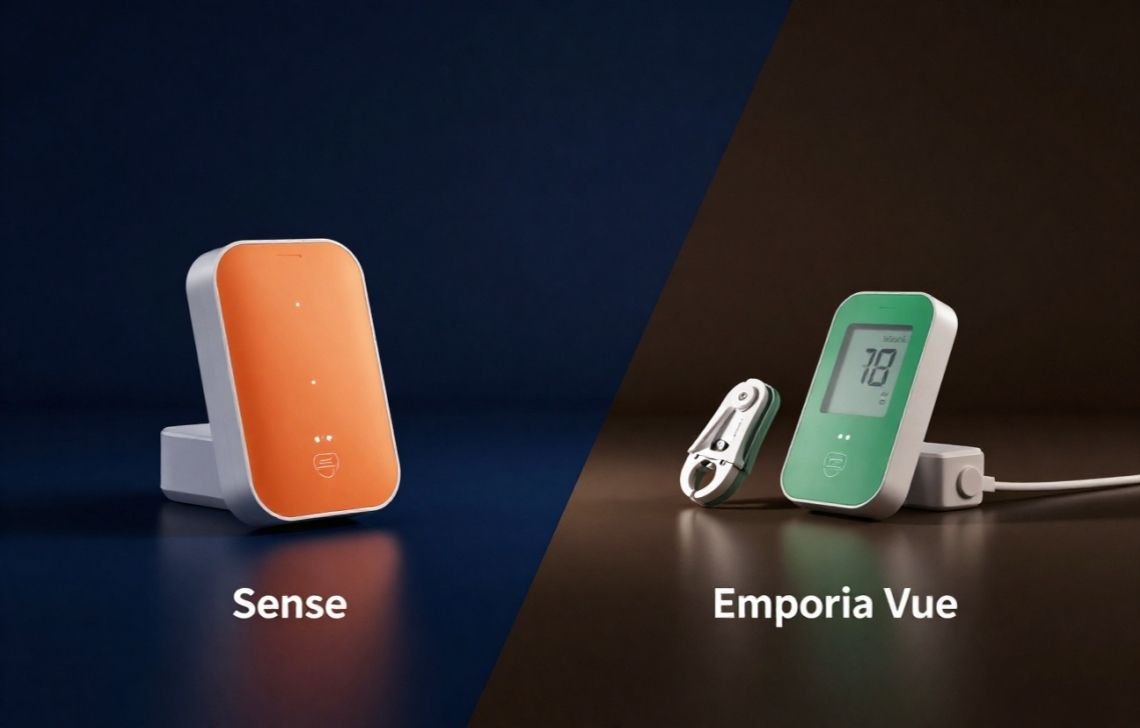
Smart home energy audits start with transparency. Electricity bills are rising, but most owners struggle to identify where the juice goes. In this Sense vs Emporia Vue comparison, we evaluate the top 2026 monitors.
While both provide real-time electricity usage data, they use fundamentally different technology. The Emporia Vue 2 relies on direct circuit-level monitoring for granular data. Sense uses AI-powered machine learning to identify appliance signatures. If you’re still comparing the broader category before choosing between these two models, our guide to the best home energy monitors explains what to look for in terms of accuracy, installation, circuit monitoring, and overall energy tracking.
Quick Comparison: At a Glance
Feature | Emporia Vue 2 | Sense |
Price Range | 150–250 | 300–400 |
Monitoring Method | Circuit-level CTs | AI/Machine Learning |
Solar Tracking | Included (Dedicated CTs) | Optional / Add-on Model |
Installation | Electrical Panel (Individual Breakers) | Mains Only (Two Clamps) |
Best For | EV/Solar Owners & Data Depth | Minimalism & Sleek UX |
How They Work: Circuit Clamps vs. AI Machine Learning
Emporia Vue 2: Circuit-Level Monitoring
Emporia uses physical CT clamps on individual breakers to measure energy usage directly. This provides real-time data with zero guessing, as the device knows exactly which circuit is drawing power. It is highly effective for large loads like heat pumps and dryers.
For devices not on dedicated circuits, Emporia offers optional smart plugs. These plugs bridge the gap by providing device-level tracking for smaller items like lamps or fans. This creates a hybrid monitoring environment that combines precision with flexibility.
Sense: AI-Powered Device Detection
Sense uses a machine learning approach to identify “electrical signatures” of different appliances. Instead of clamping every breaker, it monitors the total home load through the mains. It “learns” to distinguish a toaster from a vacuum cleaner over time.
While the system is elegant, the accuracy of this detection improves gradually as data accumulates. Some users find that the machine learning model takes weeks to identify specific appliances. This approach favors a minimalist installation over immediate, raw data.
Accuracy and Reliability: Which One Can You Trust?
The Emporia Vue 2 offers near-perfect accuracy for high-draw items. Because it is physically connected to the circuit, it tracks HVAC systems and water heaters flawlessly. This hardware-first method is essential for identifying “vampire loads” hiding on specific circuits.
Sense performs well when detecting simple loads with distinct signatures, like kettles. However, it can be inconsistent with complex loads like modern variable-speed heat pumps. Many homeowners report that certain “vampire loads” remain unidentified by the AI.
Winner: Emporia
The EV Owner’s Perspective: Tracking Charging Costs
For EV owners, Emporia is the preferred choice for tracking charging with circuit-level precision. The app calculates kWh per session and cost per mile based on your specific utility rate inputs. This allows for pinpoint accuracy in your monthly energy accounting.
Emporia is vital for Time-of-Use (TOU) optimization, ensuring you charge only during the cheapest windows. Sense may eventually detect EV charging, but it often confuses vehicles with other high-draw loads. This lack of precision makes Sense less ideal for multi-EV households.
Winner: Emporia
Solar and Battery Integration
Emporia includes dedicated solar CTs that provide real-time visibility into solar production. This makes it a superior choice for homes with hybrid inverters or battery systems. It clearly shows the solar contribution to EV charging and grid import/export flows.
Sense offers a dedicated solar model, but it is less precise when multiple large loads overlap. While production tracking is decent, it struggles to separate overlapping energy flows as accurately. Emporia’s direct-clamping method provides the technical depth required for modern solar setups.
Winner: Emporia
User Interface and App Experience
The two companies take very different approaches to data visualization:
- Emporia Vue 2 (Data-Rich): Features a functional interface with circuit-level tiles and real-time wattage. It prioritizes daily, weekly, and monthly trends for technical analysis.
- Sense (Sleek and Modern): Uses “device bubbles” and animations to show real-time usage. It is designed for casual monitoring and aesthetic appeal rather than deep data diving.
Installation: DIY vs. Professional Help
Sense is the easier option for DIYers who want a fast, minimalist setup. It typically only requires two CT clamps on the main service lines within the panel. This makes it a popular choice for those uncomfortable with extensive electrical work.
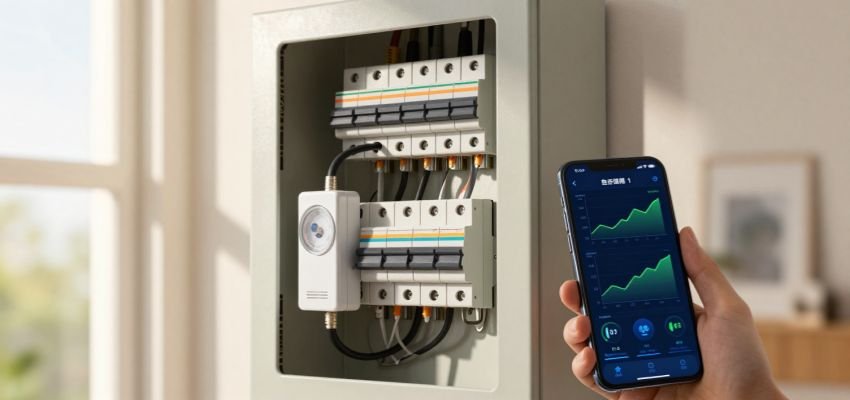
Emporia requires opening the electrical panel to install clamps on individual breakers. Due to the significant amount of wiring and the safety risks involved, I strongly recommend a professional electrician. Proper installation ensures your data accuracy and prevents panel overcrowding.
Pros and Cons: The Bottom Line
Emporia Vue 2
- Pros: Highly accurate circuit-level precision, affordable price point, and solar/EV ready. Includes optional smart plugs for device-level tracking.
- Cons: Complex installation requires an electrician and the app prioritizes data over design.
Sense
- Pros: Fast installation, beautiful user interface, and a minimalist hardware profile.
- Cons: Higher price point, AI detection takes time, and inconsistent with complex loads like heat pumps.
Verdict: Consultant's Final Recommendation
Choose Emporia Vue 2 if: You own an EV, solar panels, or a home battery. It is the superior choice for homeowners who want exact cost breakdowns and TOU window management. It provides the granular data needed for a true home energy audit.
Choose Sense if: You want a simple, elegant monitoring experience without extensive wiring. It is best for homeowners who value a beautiful app and don’t require the precision of dedicated circuit monitoring.
FAQs
Does Sense energy monitor work with solar?
Yes, but it requires a more expensive dedicated solar model and may struggle with accuracy when multiple large loads overlap.
Is Emporia Vue 2 accurate for EV charging?
Yes, it provides near-perfect accuracy by using a dedicated CT clamp on the charger’s breaker to track sessions and costs.
Can I install Emporia Vue myself?
While possible, the amount of wiring involved makes it a safety risk; a professional electrician is recommended for a secure installation.
Which energy monitor is best for identifying hidden energy drains?
Emporia Vue 2 is the best tool for finding “vampire loads” because it monitors individual circuits and specific devices via smart plugs.