
In the current landscape of consumer logistics, the “final mile”—the journey from the local distribution center to your front door—remains the most vulnerable stage of the supply chain. As a home security consultant, I frequently see the same pattern of frustration: homeowners forced to structure their lives around delivery windows, only to be met with the dreaded “Sorry We Missed You” card or, increasingly, the financial loss and violation of “porch pirating.”
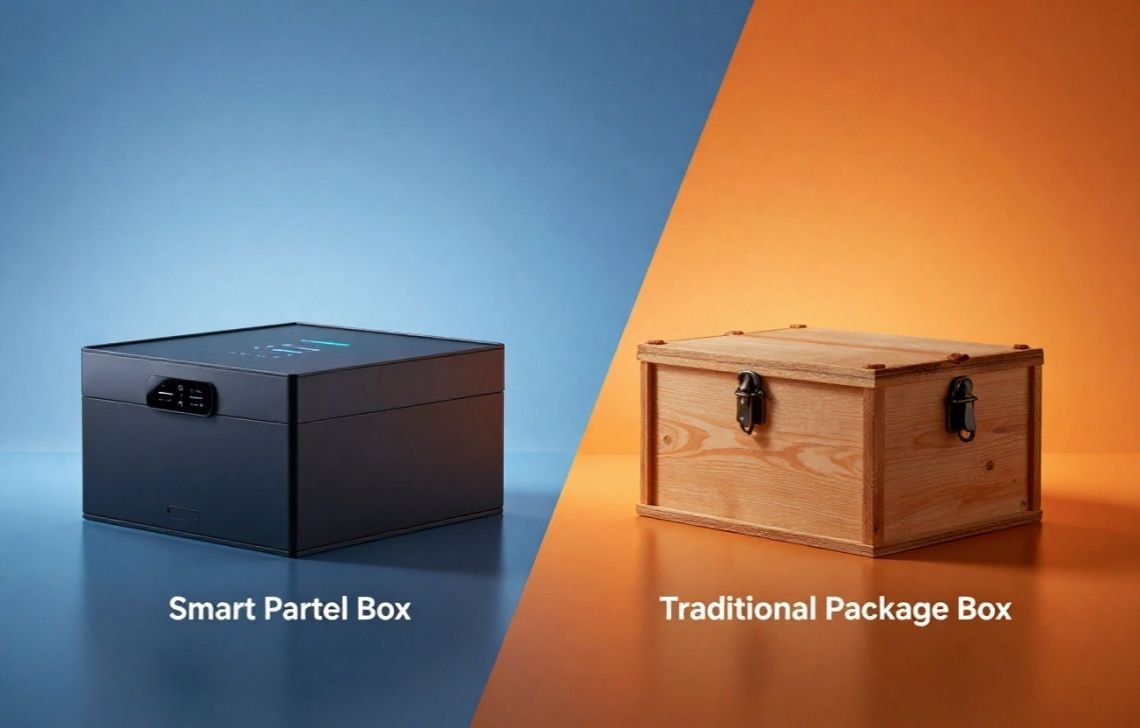
The modern consumer requires more than just a place for a courier to leave a package; they require a secure, technological gateway that bridges the gap between digital commerce and physical security. This need has led to a market divide between the Smart Parcel Box and the Traditional Package Box.
The Smart Parcel Box represents a sophisticated, high-tech evolution of the delivery receptacle. It is an engineered system designed to provide verified, barcode-based proof of delivery while maintaining a secure chain of custody through a specialized chute mechanism. Conversely, the Traditional Package Box typically refers to passive storage solutions, such as simple plastic bins, wooden crates, or non-barcoded metal lockboxes. While these offer a basic level of weather protection and visual concealment, they lack the integrated security and digital verification necessary for modern e-commerce.
In this exhaustive comparison, we will analyze the technical features, long-term performance, and security architecture of both solutions to help you determine the optimal choice for your property.
Side-by-Side Comparison: At a Glance
The following table outlines the fundamental differences between these two systems, based on technical specifications and operational capabilities.
Feature | Smart Parcel Box | Traditional Package Box |
Proof of Delivery | Unique Barcode Scan (Integrated) | Manual signature, photo, or none |
Multi-parcel Capability | Continuous secure delivery via anti-fishing chute | Often limited to a single-use lock or open bin |
Security Design | Baffled anti-fishing chute & locked compartment | Standard hinged lid or basic padlock |
Weather Resistance | Rust-resistant galvanised steel; fully weatherproof | Varies (often plastic or thin-gauge metal) |
Delivery Acceptance | Tracked, non-tracked, and "signed for" parcels* | Limited to non-signature items |
Warranty | Up to 5 Years Warranty | Standard 1-year or no warranty |
Support Infrastructure | UK-based Phone, WhatsApp & Email | Limited or generic overseas support |
In-Depth Feature Comparison
1. Proof of Delivery and Tracking Verification
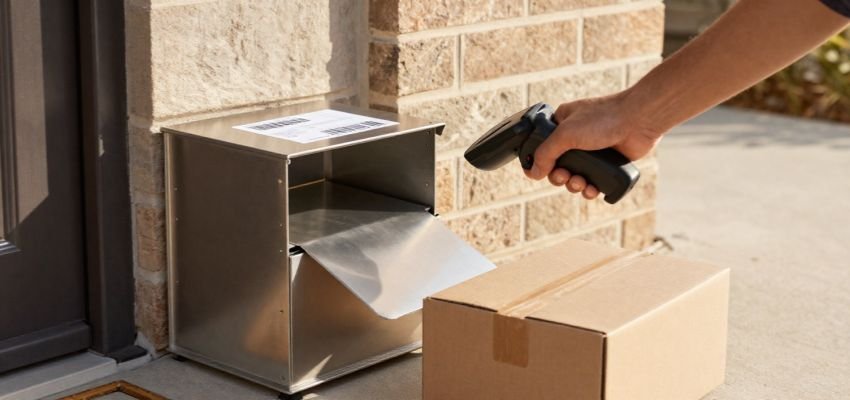
From a security standpoint, the “proof of delivery” (POD) is the most critical component of the transaction. A Smart Parcel Box addresses the “delivery dispute” problem by integrating a unique barcode into the unit itself. When a courier from a major service like DPD or Amazon arrives, they scan this barcode. This action provides a digital timestamp and GPS-verified confirmation that the item has been securely deposited into the box.
Crucially, the Smart Parcel Box facilitates the delivery of “signed for” parcels. Because the barcode is unique to your specific unit, it acts as a digital signature, allowing couriers to complete deliveries that would otherwise require a person to be physically present, subject to the retailer’s agreement.
In contrast, a Traditional Package Box offers no such technological handshake. The courier might take a photo of the box, but this is easily contested in the event of theft or non-delivery. There is no verified link between the courier’s handheld device and the box, leaving the homeowner at a disadvantage during insurance or retailer claims.
2. Access and Retrieval Mechanisms: The Physics of Anti-Fishing
The security of a Smart Parcel Box is rooted in its mechanical engineering. It utilizes a gravity-fed, baffled delivery chute system. When the courier opens the top or front lid, an internal plate blocks access to the lower holding compartment. Once the parcel is placed inside and the lid is closed, the plate drops, allowing the parcel to fall into the locked lower section.
This “anti-fishing” design is a fundamental consultant-grade recommendation. It prevents unauthorized individuals from using a hand or a tool to “fish” packages back out through the entry point. A Traditional Package Box usually lacks this complexity. Many rely on a simple lid that stays unlocked until the first parcel is delivered, or worse, remains unlocked entirely. If a Traditional Package Box uses a one-time snap-lock, it can only receive one delivery per day, leaving subsequent packages exposed on the doorstep.
3. Design, Build Quality, and Capacity
Material science plays a significant role in the longevity of outdoor security fixtures. The Smart Parcel Box is constructed from galvanised steel and is specifically powder-coated to be rust-resistant and weatherproof. It is available in a variety of “discrete” colors to blend into masonry or “vibrant” colors for high visibility.
The capacity options are designed to accommodate specific parcel volumes:
- Lift Top Models: Max parcel size of 320 x 205 x 120 mm (Ideal for small items).
- Standard Front/Rear Retrieval: Max parcel size of 330 x 275 x 255 mm.
- Large Front/Rear Retrieval: Max parcel size of 390 x 340 x 260 mm.
- Extra Large Front Retrieval: Max parcel size of 325 x 325 x 290 mm.
A Traditional Package Box is often manufactured using lighter materials like injection-molded plastic or thin-gauge metal. Over time, these materials are susceptible to UV degradation (becoming brittle) or oxidation (rust), which compromises both the aesthetics and the structural integrity of the security solution.
Performance: Handling Daily Delivery Demands
In the modern e-commerce environment, a single household may receive three or four deliveries in a single day from different carriers. The Smart Parcel Box excels in this high-demand scenario. Because the delivery chute is a one-way system, the compartment remains locked at all times. A DPD driver can deliver a morning package, and an Amazon driver can deliver an afternoon package into the same unit without ever having access to the items already inside.
This “interoperability” between different courier companies is a major advantage. While a Traditional Package Box might require you to share a padlock code with a courier (a significant security risk) or leave the box open, the Smart Parcel Box is a “passive-reception” device. It requires no interaction from the homeowner once it is installed; it simply works as a secure gatekeeper.
Total Cost of Ownership (TCO) and Value Analysis
When evaluating these solutions, we must look beyond the initial purchase price to the Total Cost of Ownership. A basic Traditional Package Box may be cheaper upfront, but it carries hidden costs:
- Risk of Theft: The replacement cost of one stolen £50 item can immediately negate the savings of a cheaper box.
- Time and Fuel: The “Sorry We Missed You” card results in trips to local sorting offices, costing time and fuel.
- Durability: Replacing a rusted or cracked plastic bin every two years is more expensive than investing in a unit with a long-term warranty.
The Smart Parcel Box includes “Free Delivery” and offers up to a 5-year warranty, demonstrating a commitment to long-term reliability. From a consultant’s perspective, the “peace of mind” value—knowing your deliveries are secure while you are at work or on holiday—is the primary return on investment.
Installation and Ease of Use
1. Versatile Setup Options
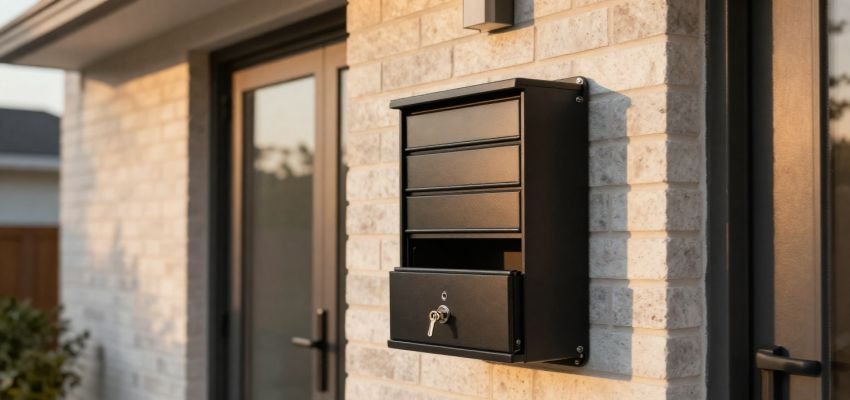
The Smart Parcel Box is designed for permanent installation, which is a key differentiator from the often portable and easily stolen Traditional Package Box. It offers four primary installation methods:
- Wall-Mounted: Secured at chest height near the entrance.
- Floor-Bolted: Anchored directly into concrete or stone on a porch or driveway.
- Gate and Fence Mounted: Utilizing the “Front and Rear Retrieval” models so couriers deliver from the street side while you retrieve from the secure property side.
- Integrated Installation: For premium properties, the box can be built directly into the fabric of a wall or pillar, providing a seamless and incredibly secure aesthetic.
Each unit is supplied with standard nuts and bolts, though we always recommend checking your specific mounting surface (e.g., brick vs. timber) to ensure the hardware is appropriate.
2. The User Experience
The process is streamlined into three steps:
- Shop: Buy from any website.
- Instruct: Use the delivery notes section at checkout to specify the Smart Parcel Box. (Many couriers, such as DPD, allow you to save this as a permanent preference).
- Collect: Return home and use your master key to access the lower compartment.
This contrasts with the potential friction of a Traditional Package Box, which may require the homeowner to reset locks daily or coordinate with neighbors if the box reaches capacity after a single delivery.
Customer Support and Reliability: A Proven Track Record
Reliability is measured by scale. The Smart Parcel Box has a significant global footprint:
- 100,000+ Installations worldwide.
- Operating in 10+ Countries and 500+ Cities.
- 98% Positive Feedback with a 4.6/5 Trustpilot rating.
This scale ensures that the product is “tried and tested” across different climates and courier ecosystems. Furthermore, the availability of UK-based support via phone and WhatsApp provides a level of professional accountability that generic Traditional Package Box brands—often sold through third-party marketplaces with no direct customer service—simply cannot match.
Pros and Cons Analysis
Smart Parcel Box
- Pros:
- Verified POD via unique integrated barcode.
- Advanced baffled anti-fishing chute for high-level security.
- Can receive multiple deliveries from different couriers daily.
- Built from heavy-duty, rust-resistant galvanised steel.
- Up to 5 years warranty with UK-based professional support.
- Multiple retrieval configurations (Front/Rear/Lift-Top).
- Cons:
- Requires a more involved initial installation (bolting/anchoring).
- Higher initial investment compared to a basic bin.
Smart Parcel Box
- Pros:
- Lower initial purchase price.
- Minimal installation (often just placed on the porch).
- Simple, intuitive lid mechanism.
- Cons:
- No digital proof of delivery; vulnerable to delivery disputes.
- Limited security; easy to “fish” items out of open-lid designs.
- Often limited to one delivery before the box is “full” or locked.
- Shorter lifespan due to lighter materials and lack of rust-proofing.
Use Cases: Which One is Right for You?
Scenario A: The High-Volume Home or Home-Based Business
If your household receives several packages a week, or if you run a business from home, the Smart Parcel Box is an essential tool. The “Front and Rear Retrieval” option is specifically recommended for homeowners with gated properties. This allows you to mount the box on your gate or fence; the courier delivers from the public street side, and you retrieve your goods from the private side of your property without ever stepping outside your perimeter.
Scenario B: The Occasional Shopper in Low-Risk Areas
For individuals who shop online only once or twice a month and live in areas with zero foot traffic, a Traditional Package Box may provide enough shelter from the rain. However, as delivery volumes increase across the country, the “low-risk” status of neighborhoods can change rapidly. Upgrading to a Smart Parcel Box is a proactive measure that secures your property against future delivery trends.
The Verdict: Why the Smart Parcel Box Wins for Modern Homes
While a Traditional Package Box serves as a basic deterrent against the elements, it fails to address the two primary challenges of modern delivery: security and verification. In an age where retailers require definitive proof to resolve missing item claims, the unique barcode system of the Smart Parcel Box is indispensable.
With its robust anti-fishing technology, high-capacity design, and the backing of a 5-year warranty, the Smart Parcel Box is the superior investment. It provides a permanent, professional-grade solution that eliminates the “Sorry We Missed You” card and ensures your home is equipped for the future of logistics. If you value your time, your property, and your peace of mind, the Smart Parcel Box is the definitive choice for secure home delivery.
FAQs
How does a Smart Parcel Box work for multiple couriers?
The Smart Parcel Box uses a one-way baffled chute. When a courier drops a package, it falls into a secure, locked compartment. When a second courier arrives, they can drop their package into the same chute. The items from the first delivery remain safely in the bottom compartment, inaccessible to anyone other than the keyholder.
Can a Traditional Package Box provide proof of delivery?
Generally, no. Most Traditional Package Box units lack a unique barcode. While a courier might take a photo of the box, this does not carry the same legal or logistical weight as a barcode scan that is uniquely tied to your specific installation and verified through the courier’s digital tracking system.
Is the Smart Parcel Box weatherproof?
Yes. The Smart Parcel Box is manufactured from galvanised steel and is finished with a rust-resistant powder coating. It is designed to withstand the UK’s varied weather conditions, keeping your parcels dry and the unit looking professional for years.
What size Smart Parcel Box do I need for large packages?
The choice depends on your average delivery size.
- For standard orders, the Front Retrieval model (330 x 275 x 255 mm max parcel size) is sufficient.
- For larger volume shoppers, the Extra Large model can accommodate parcels up to 325 x 325 x 290 mm.
If you only receive small items/envelopes, the Lift Top model (320 x 205 x 120 mm) is a space-saving option.