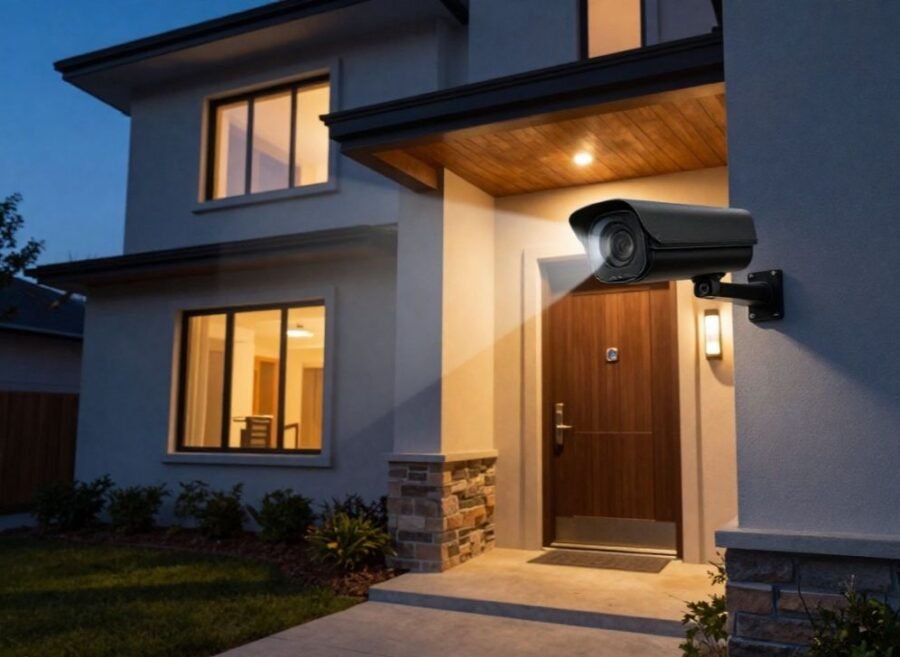

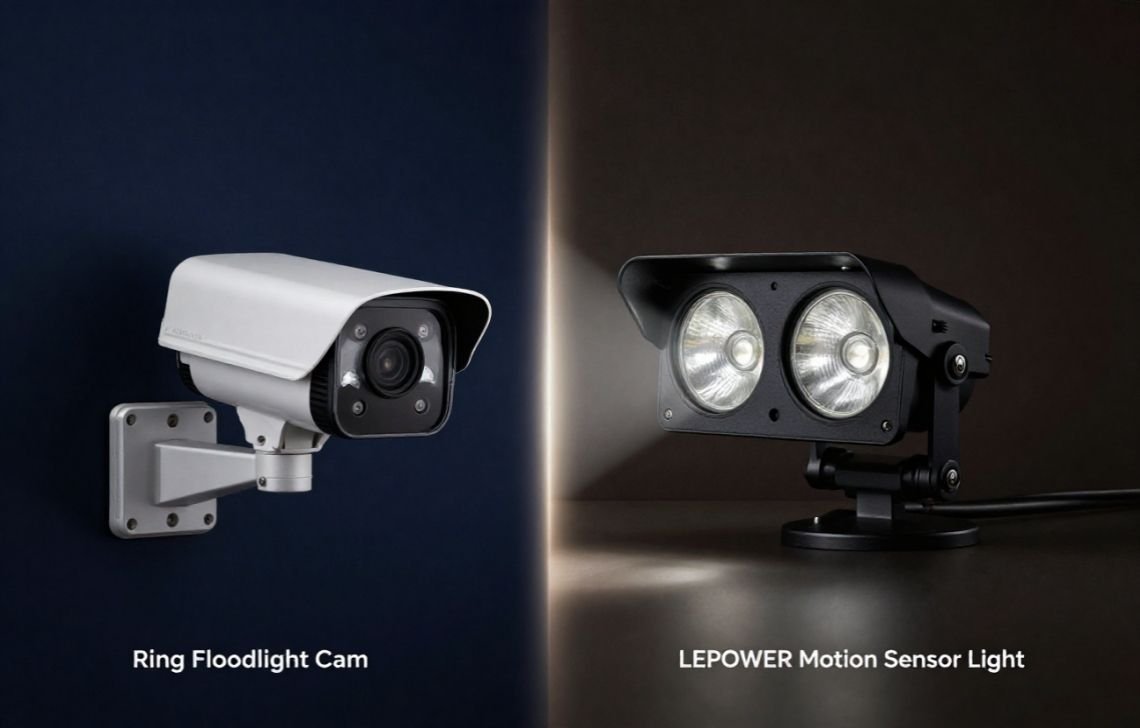
When designing a residential security perimeter, the architect must choose between two distinct technological philosophies. On one hand, you have the comprehensive digital surveillance approach, and on the other, the raw power of high-output illumination. This brings many homeowners to a critical decision point:
Choosing the right equipment requires understanding the fundamental difference between an “all-in-one surveillance hub” like Ring and a “high-performance illumination specialist” like LEPOWER. One offers a digital record of every event, while the other focuses on total visual dominance of the environment to deter intruders before they act.
In this guide, we will analyze the technical specifications, networking requirements, and architectural utility of both brands. Whether you need an outdoor security lights system that talks to your phone or a best motion sensor light that simply floods a driveway with 5200 lumens, this breakdown will clarify your path.
Quick Comparison: At a Glance
The following table compares the flagship Ring Floodlight Cam Plus (Wired) against the high-output LEPOWER 30W/4200LM Motion Light and its siblings.
Feature | Ring Floodlight Cam Plus | LEPOWER Motion Sensor Light |
Camera Resolution | 1080p HD with Retinal Vision | N/A (Lighting Only) |
Luminous Flux | 2000 Lumens | 3200LM / 4200LM / 5200LM |
Color Temperature | 3000° Kelvin (Warm White) | 5000° - 6000° Kelvin (Daylight White) |
Connectivity | 802.11 b/g/n @ 2.4GHz | None (Local Circuitry) |
Power Options | Hardwired or Plug-in (20ft) | Hardwired, Solar, or Battery |
Field of View | 140° Horizontal / 80° Vertical | Adjustable Multi-Head (Up to 270°) |
Audio/Siren | Two-Way Talk / 105dB Siren | None |
Price Point | Premium ($119.99 - $179.99) | Budget ($34.99 - $69.99) |
Warranty | 1-Year Limited | 12-Month Limited |
Features Deep Dive: Smart Tech vs. Raw Power
Ring’s Ecosystem and "Retinal Vision"
The Ring Floodlight Cam Plus is built around what the company calls “Retinal Vision.” From a technical standpoint, this is a synergy between 1080p hardware and proprietary image processing. It ensures that the “3000° Kelvin” light output doesn’t wash out the video feed, maintaining true-to-life color night vision even in total darkness.
For the security architect, the 105dB remote-activated siren is a critical deterrent. Measured at a distance of four inches, this decibel level is comparable to a power saw or a lawnmower. It is loud enough to alert neighbors in a suburban environment without violating most local noise ordinances, providing an active way to intervene from afar.
The Two-Way Talk feature also includes advanced noise cancellation. This is essential for urban environments where traffic or wind noise might otherwise muffle a conversation with a delivery person or a warning issued to a trespasser. It transforms a passive light into an interactive communication tool.
LEPOWER’s Lighting Strength
LEPOWER ignores the camera entirely to focus on “lumen density.” While the Ring unit is capped at 2000 lumens, LEPOWER offers specialized models like the 48W version, which pumps out a staggering 5200LM. This level of brightness is designed for commercial-scale visibility in a residential footprint.
These units utilize multi-head adjustable designs, often featuring two or three separate LED panels. An architect would favor this for L-shaped driveways or large backyards where a fixed camera lens might have blind spots. You can physically angle the heads to wrap light around corners, providing 270 degrees of coverage.
LEPOWER’s LED technology is also highly energy-efficient, using a fraction of the power required by old halogen bulbs. Their series includes specialized “Solar Powered” options (1000LM to 1600LM) and “Battery Operated” units. These allow for high-quality illumination in areas where running a 110V-240V hardwired line is cost-prohibitive.
Detection Capabilities: Radar vs. Infrared
Ring utilizes “Advanced Motion Detection” with “Customizable Motion Zones.” This allows you to draw specific polygons in the app to ignore public sidewalks while monitoring your porch. If you upgrade to the Ring Floodlight Cam Pro, you gain radar-powered “3D Motion Detection” and “Bird’s Eye View.”
Radar detection allows the system to track the exact path an intruder took across your lawn, represented as dots on an aerial map. This technical precision is far superior to standard infrared for reducing false alerts. It ensures you aren’t woken up by a swaying tree branch or a passing car’s headlights.
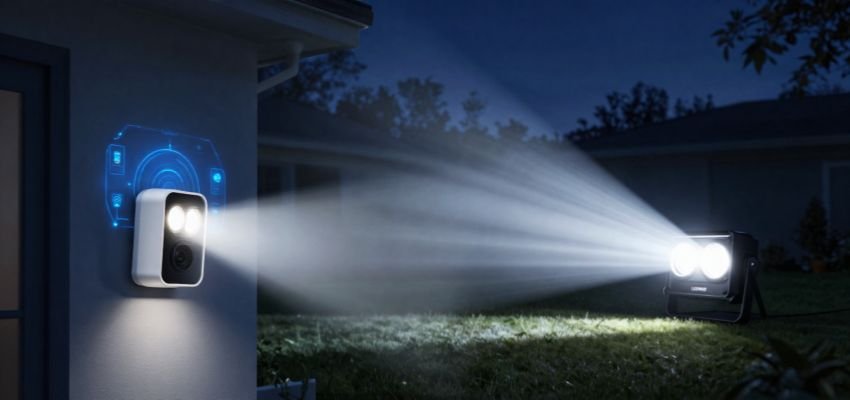
LEPOWER relies on traditional Passive Infrared (PIR) sensors. While it lacks digital zone-mapping, their “Basic Motion” and “Dusk to Dawn” series are incredibly reliable. They trigger the light the millisecond heat-based motion is detected, providing an instant physical deterrent that doesn’t rely on cloud processing or internet pings.
Performance & User Experience
Connectivity and Network Saturation
The Ring Floodlight Cam Plus operates on the 802.11 b/g/n @ 2.4GHz Wi-Fi frequency. For homeowners with dozens of smart devices, the 2.4GHz band can become congested, leading to lag or dropped connections. As an architect, I recommend ensuring a strong mesh Wi-Fi signal reaches the installation point.
If your network is prone to outages, the Ring’s utility drops significantly. While the lights will still trigger physically via the motion sensor, you lose the ability to record video or receive notifications. For high-security needs, the Ring Pro is often better as it supports dual-band 5GHz Wi-Fi for a more stable data stream.
Reliability in Extreme Conditions
Both brands are built to withstand the elements, but Ring’s operating range is specifically rated from -5°F to 122°F. This makes it a robust choice for most North American climates. The weather-resistant housing protects the delicate camera lens and sensor array from rain and snow.
LEPOWER units offer a “set-and-forget” reliability that smart cameras cannot match. Because they don’t require a handshake with a router or a cloud server, they are immune to “Smart Home Fatigue.” They function perfectly during internet outages, making them the preferred choice for remote cabins or areas with spotty service.
AI and Smart Alerts
Ring’s “Smart Alerts” and “AI Video Descriptions” provide a hands-on feel to security. Users report the AI is sophisticated enough to distinguish between a “brown squirrel” on a deck railing and a human visitor. One user even noted the system distinguished between a neighbor and a “husky walking a dog.”
These AI features require a subscription but offer incredible context. Instead of a generic “Motion Detected” alert, your phone might say, “A person is at your garage.” This saves time, allowing you to ignore the neighborhood cat and focus only on genuine security threats.
Installation & Power Versatility
The Ring Installation Process
Ring offers two main mounting paths: Wired and Plug-in. The Wired version is an integrated fixture designed to replace an existing floodlight on a standard junction box. The estimated install time is roughly 15 minutes, provided the wiring is already in place and in good condition.
For properties without existing wiring, the Plug-in version includes a 20-foot power cord. This allows for flexible mounting on a wall or ceiling. Ring also offers a professional installation service starting at $129, which includes mounting, wiring, device configuration, and hands-on training for the app.
LEPOWER’s Diversity of Placement
LEPOWER is the winner when it comes to power versatility. Their Solar Powered Series (like the 1600LM model) is perfect for mounting on a shed, fence, or barn where running electrical wire is impossible. These units charge during the day and provide reliable security lighting all night.
They also offer the SL-23 Garage Security Light and a Battery Operated Series for total wireless freedom. This diversity means you can have a consistent aesthetic and lighting quality across your entire property, regardless of whether a specific location has access to the main power grid.
Pricing & Long-Term Costs (The "Hidden" Factors)
Upfront Capital Investment
There is a stark price contrast between these two security philosophies. Ring is a premium investment, with the Floodlight Cam Plus retailing between $119.99 and $179.99. When you factor in the high-tech 1080p camera and 105dB siren, the price reflects the complexity of the hardware.
LEPOWER is the budget-friendly champion, with most units priced between $34.99 and $69.99. You can essentially outfit three sides of your home with LEPOWER lights for the price of a single Ring unit. For homeowners on a strict budget, this allows for much wider light coverage for the same initial cost.
The "Tech Tax" and Subscriptions
The true cost of Ring lies in the Ring Protect Plan. To save, share, or replay videos for up to 180 days, you must pay a monthly or yearly fee. Without this, you only get “Live View” and real-time notifications, which significantly limits the camera’s value as a forensic tool after a crime occurs.
LEPOWER has zero recurring costs. There is no subscription, no app to update, and no cloud storage to manage. Once the unit is installed, your only ongoing cost is the minimal electricity consumed by the LEDs. This “one-and-done” pricing model is highly attractive to those who want security without a monthly bill.
Pros and Cons: The Honest Breakdown
Ring Floodlight Cam Plus
Pros:
- Comprehensive Surveillance: Combines 1080p HD video with powerful 2000LM lights.
- Active Deterrence: The 105dB siren and Two-Way Talk allow you to stop an intruder before they enter.
- Smart Integration: Works seamlessly with Alexa to show video on Echo Show or Fire TV devices.
- Customizable Privacy: Includes privacy zones to black out neighbor properties and “Modes” for arming/disarming.
Cons:
- High Entry Cost: Significant upfront investment compared to traditional lights.
- Subscription Dependent: Most AI features and video history require a paid plan.
- Network Reliance: Performance is entirely dependent on a stable 2.4GHz Wi-Fi signal.
LEPOWER Motion Sensor Light
Pros:
- Massive Output: Up to 5200 lumens provides professional-grade brightness.
- No Monthly Fees: Zero subscriptions or hidden costs for the life of the product.
- Power Flexibility: Solar and battery options allow for installation anywhere on the property.
- Local Reliability: Functions perfectly without Wi-Fi or internet connectivity.
Cons:
- No Video Record: You will see the light turn on, but you won’t have evidence of what triggered it.
- No Remote Control: Cannot check the status of the light or view your yard from your phone.
- No Smart Automation: Does not integrate with broader smart home or alarm systems.
Who Should Choose What?
The "Surveillance Seeker"
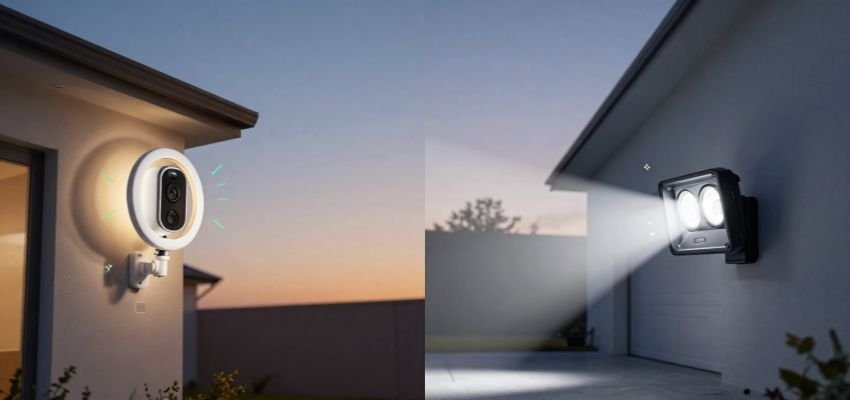
If you live in a high-traffic area or have issues with package theft, Ring is the superior choice. The ability to record video and interact with people at your door is invaluable. It is the best choice for those who want a digital witness and a security camera floodlight that alerts them in real-time.
The "Dark Corner Specialist"
For large rural properties or vast backyards, LEPOWER is the better tool. Its 4200LM to 5200LM output can turn night into day over a much larger area than the Ring. It is the best motion sensor light for illuminating dark woods or long driveways where camera detail is less important than sheer visibility.
The “Budget-Conscious Homeowner”
If you want to secure your home without a “tech tax” or recurring monthly subscriptions, LEPOWER offers the highest value. It provides professional-grade lighting and physical deterrence at a fraction of the cost, making it ideal for those who prefer simple, reliable hardware.
Verdict: Which One Should You Choose?
The decision between Ring vs LEPOWER ultimately depends on whether you value data or visibility.
Choose the Ring Floodlight Cam Plus if you want an active, smart participant in your home security. It is a sophisticated surveillance hub that provides video evidence, AI alerts, and the ability to shout at intruders from your smartphone, provided you have a stable Wi-Fi connection.
Choose the LEPOWER Motion Sensor Light if you want the most powerful illumination possible and total independence from subscriptions. It is a reliable, high-output workhorse that excels in lighting up large areas and works perfectly regardless of your internet status.
FAQs
Do I need a subscription for the Ring Floodlight Cam to work?
The camera will function for Live View and notifications for free. However, a Ring Protect Plan is required to save, share, or review any recorded video history for up to 180 days.
How bright is 4200LM compared to the Ring’s 2000 lumens?
4200LM is more than twice as bright as the Ring. While 2000 lumens is sufficient for a standard two-car driveway, 4200LM can illuminate a commercial-sized space or a very large backyard.
Can LEPOWER lights be controlled via an app?
No. LEPOWER lights are traditional security lights. They are adjusted via physical dials on the PIR sensor for sensitivity and time duration, rather than through a smartphone application.
What happens if the Wi-Fi goes out?
The Ring light will still turn on when it detects motion, but you will lose all video recording and phone alerts. The LEPOWER light will continue to operate with 100% functionality as it is not network-dependent.